South Dakota requires SR-22 filing before license reinstatement, but IID installation timing depends on your conviction class and whether you applied for a restricted permit during suspension.
IID Installation Must Precede SR-22 Filing If You Want a Restricted Permit
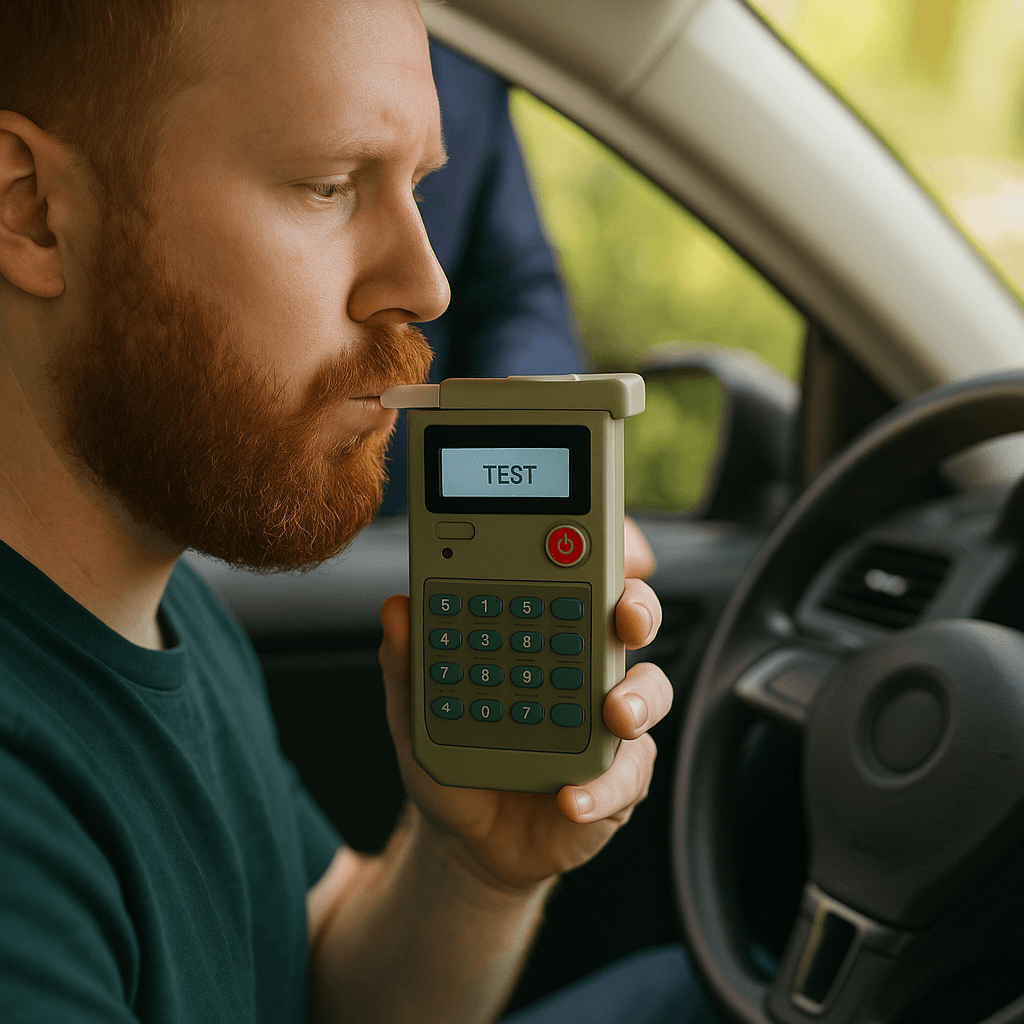
South Dakota requires ignition interlock device installation before issuing a restricted permit for first-offense DUI convictions with BAC at or above 0.17%, all second offenses, and any DUI involving a minor passenger. The DMV will not process your restricted permit application without proof of IID installation from an approved vendor, even if you've already filed SR-22. This means drivers who need to drive during their suspension period must install the device first, then file SR-22, then apply for the permit.
If you wait for full license reinstatement instead of applying for a restricted permit, the order reverses: SR-22 filing is required at reinstatement, but IID installation timing depends on your sentencing terms. Court orders typically specify IID duration starting from installation date, not conviction date, giving you flexibility on when to install if you're not driving during suspension.
The restricted permit pathway adds approximately $150–$200 in application and administrative fees on top of IID and SR-22 costs, but allows legal driving 30 days into your suspension period for first offenses and 60 days for subsequent offenses. Without the permit, you're suspended for the full term — 30 days minimum for first offense, 1 year minimum for second offense under South Dakota Codified Law 32-23-4.
SR-22 Filing Costs Stay Constant Regardless of IID Timing
South Dakota SR-22 filing fees run $25–$50 as a one-time charge through your insurance carrier, with no additional state processing fee. The filing itself triggers a 70–130% increase in your underlying auto insurance premium because you're now classified as high-risk. Monthly premiums for SR-22 policies after DUI typically range from $180–$320/mo depending on conviction class, prior violations, and whether you're insuring a vehicle you own or filing non-owner SR-22.
IID installation timing does not affect SR-22 filing cost or insurance premium calculation. Carriers price the SR-22 endorsement based on your DUI conviction and driving record, not on whether you've installed an interlock device. The IID itself costs $70–$125 for installation, $60–$90/mo for monitoring and calibration, and $50–$75 for removal — separate from insurance expenses.
Most mainstream carriers (State Farm, Geico, Progressive, Allstate) will file SR-22 for existing policyholders but typically non-renew at the end of your current term. New policies after DUI generally require non-standard market carriers: Bristol West, Dairyland, GAINSCO, The General, or Acceptance, all of which write SR-22 policies in South Dakota.
Find out exactly how long SR-22 is required in your state
Court Sentencing Specifies IID Duration, Not Installation Start Date
South Dakota judges order IID duration as part of DUI sentencing — typically 1 year for first offense with aggravating factors, 2 years for second offense, 3 years for third offense. The court order specifies duration but rarely mandates an installation deadline unless you're applying for a restricted permit. This gives drivers who aren't seeking a restricted permit discretion on when to install, as long as the device remains active for the full court-ordered period.
The IID requirement clock starts on installation date, not conviction date or reinstatement date. If your sentence requires 1 year of IID and you install the device 6 months after conviction, you'll be running the device for 18 months total from conviction. Drivers who delay installation to avoid monthly monitoring fees ($60–$90/mo) during a period they're not driving often miscalculate total cost — the device must stay installed for the full ordered duration regardless of when you start.
SR-22 filing periods run independently: South Dakota requires 2 years of continuous SR-22 coverage starting from reinstatement date for most first-offense DUI convictions, 3 years for second offense. The SR-22 clock and IID clock operate on separate timelines unless your court order specifies otherwise.
Restricted Permit Approval Requires IID Proof Before DMV Processing
South Dakota restricted permits allow driving to work, school, medical appointments, court-ordered programs (including DUI education and treatment), and IID service appointments. The permit does not allow recreational driving, errands unrelated to approved purposes, or driving outside specified time windows unless your court order or employer letter justifies expanded hours.
To obtain a restricted permit, you must provide the DMV with an IID installation certificate from a state-approved vendor, proof of SR-22 insurance, payment of the $100 restricted permit application fee, and completion of any court-ordered DUI education if your sentencing required it as a reinstatement prerequisite. The DMV will not accept your application without the IID certificate, which means installation must precede SR-22 filing if you're pursuing this pathway.
Processing time runs 7–10 business days after the DMV receives a complete application. Drivers who file SR-22 first, then attempt to install IID and apply for the permit in the same week often face delays because vendor installation appointments book 2–3 weeks out during high-demand periods. Install the device first, obtain your certificate, then file SR-22 and submit your permit application as a complete packet.
Non-Owner SR-22 Requires Different IID Considerations
Drivers who don't own a vehicle can satisfy South Dakota's SR-22 requirement with a non-owner policy, which provides liability coverage when driving a borrowed or rented vehicle. Non-owner SR-22 policies cost $40–$80/mo, significantly less than owner policies, but do not satisfy IID requirements if your court order mandates device installation.
South Dakota IID orders apply to any vehicle you operate, not just vehicles you own. If you're driving a borrowed vehicle under a restricted permit, that vehicle must have an IID installed, or you must use a portable breath-test device that meets state certification standards (rare and expensive: $1,200–$1,800 upfront). Most drivers satisfy IID requirements by installing the device on a vehicle they own or by adding it to a family member's vehicle with written consent and DMV notification.
Non-owner SR-22 paired with no IID installation is only viable if you're not applying for a restricted permit and will not drive at all during your suspension period. At full reinstatement, you'll need to file SR-22 and complete your court-ordered IID period on whatever vehicle you begin driving, whether owned, leased, or long-term borrowed.
Filing Lapse Consequences Reset Both SR-22 and Restricted Permit Eligibility
South Dakota treats any lapse in SR-22 coverage as a compliance violation. If your policy cancels for non-payment or you switch carriers without maintaining continuous coverage, your insurer notifies the DMV electronically within 10 days. The DMV suspends your license or restricted permit immediately, and your SR-22 filing period clock resets to zero.
Reinstating after an SR-22 lapse requires paying a $100 reinstatement fee, filing new SR-22 with a current policy, and restarting your full 2- or 3-year filing period from the new reinstatement date. If you had a restricted permit, it's revoked, and you must reapply (another $100 fee, new IID certificate, new SR-22 proof) with no guarantee of approval if the lapse occurred due to a DUI-related violation during the restricted period.
Maintaining continuous coverage means setting up automatic payments and confirming with your carrier 30 days before renewal that your policy will renew with SR-22 endorsement active. Non-standard carriers sometimes non-renew without explicit warning if your payment history shows late payments or if underwriting conditions change. Verify renewal in writing, not by phone.
Total Compliance Cost Breakdown for IID and SR-22 Combined
First-offense DUI drivers in South Dakota pursuing a restricted permit face the following stacked costs: IID installation $70–$125, IID monthly monitoring $60–$90/mo for 12 months ($720–$1,080 total), IID removal $50–$75, SR-22 filing fee $25–$50, SR-22 insurance premium increase $180–$320/mo for 24 months ($4,320–$7,680 total), restricted permit application $100, and reinstatement fee $100. Total two-year compliance cost ranges from $5,385 to $9,130 before accounting for DUI fines, court costs, or legal fees.
Second-offense costs increase significantly: IID duration extends to 24 months ($1,440–$2,160 monitoring cost), SR-22 filing period extends to 36 months ($6,480–$11,520 insurance cost), and suspension length increases to 1 year minimum before restricted permit eligibility. Restricted permit approval is discretionary for second offense and may be denied if aggravating factors were present.
Drivers who skip the restricted permit and wait for full reinstatement avoid the $100 permit fee and can delay IID installation until reinstatement, but lose legal driving privileges for the full suspension term and still face the same total IID and SR-22 duration requirements once reinstated.