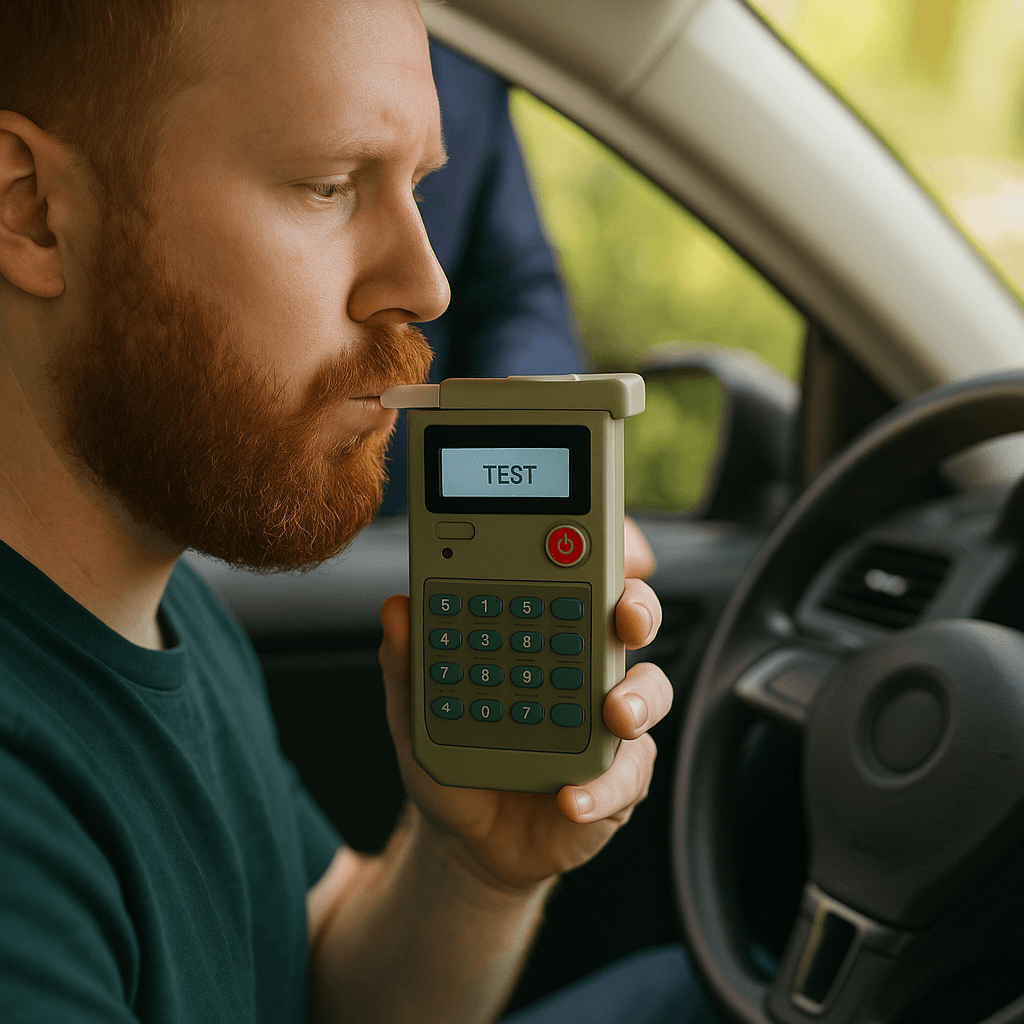
Ohio courts often order both SR-22 filing and ignition interlock installation after a DUI, but the sequence matters—filing SR-22 before IID installation can leave you uninsured during the device setup period.
Why the Sequence Between IID and SR-22 Filing Creates a Coverage Gap in Ohio
Ohio requires SR-22 filing to reinstate your license after a DUI suspension, but if your court sentencing includes ignition interlock device installation, you face two separate compliance timelines managed by two different agencies. The BMV handles SR-22 filing and license reinstatement. The court monitors IID installation and compliance. Neither coordinates deadlines with the other.
Most drivers install IID first because the court deadline arrives sooner—typically 10 to 30 days from sentencing. Then they file SR-22 to reinstate their license. This creates a 7- to 14-day window where you have an operational vehicle with IID installed but no active SR-22 coverage on file with the BMV. If you drive during this gap, even to the BMV or to work on a restricted license, you're driving without proof of financial responsibility.
Ohio treats this as a separate violation. If caught, your SR-22 filing period resets to day zero, your reinstatement is denied, and most carriers will non-renew your policy at term. The correct sequence is SR-22 filing first, IID installation second—but this requires coordinating with a non-standard carrier willing to write a policy on a suspended license before reinstatement.
How Ohio Court Deadlines and BMV Reinstatement Timelines Conflict After a DUI
Ohio courts issue IID installation orders at sentencing, with compliance deadlines ranging from 10 to 60 days depending on conviction class. First-offense OVI with BAC between .08 and .17 typically allows 30 days. First-offense OVI with BAC .17 or higher (high-tier) requires IID installation within 15 days in most counties. Repeat-offense OVI deadlines compress to 10 days in some jurisdictions.
The BMV operates on a separate clock. After your administrative suspension ends, you have 15 days to file SR-22 and pay reinstatement fees before the next suspension period begins. If your suspension was 90 days for a first-offense refusal, you cannot file SR-22 until day 91. If the court IID deadline falls on day 30, you're forced to install IID 61 days before you're eligible to file SR-22.
This mismatch forces drivers into one of two traps. Install IID early to satisfy the court, then drive without SR-22 coverage until reinstatement eligibility. Or delay IID installation until SR-22 filing, risking contempt of court and extended probation. Neither agency adjusts deadlines to accommodate the other. Coordinating both requires filing SR-22 on a suspended license, which most mainstream carriers refuse.
Find out exactly how long SR-22 is required in your state
Which Carriers Will File SR-22 on a Suspended License Before IID Installation in Ohio
State Farm, Geico, Allstate, and Progressive will file SR-22 for existing customers post-DUI, but all four require an active, valid license at policy inception. If your license is still suspended, they will not write a new policy. This eliminates the option to file SR-22 before reinstatement unless you're already insured with them and they agree to maintain coverage through suspension—rare after a DUI.
Non-standard carriers licensed in Ohio will write SR-22 policies on suspended licenses, but availability varies by conviction class and county. Bristol West, The General, and Acceptance Insurance write suspended-license SR-22 policies statewide. Dairyland and GAINSCO write them in most Ohio counties but exclude drivers with two or more OVI convictions within 5 years. Direct Auto and Safe Auto write suspended-license policies but require IID installation confirmation before binding coverage.
This creates a circular dependency. To file SR-22 before IID installation, you need a carrier willing to insure a suspended license without IID installed. Most non-standard carriers willing to do this charge 40% to 70% higher premiums than post-reinstatement rates—$210 to $340 per month for minimum liability SR-22 coverage in Ohio. The premium drops after reinstatement, but the initial filing locks in the higher rate for the first term.
What Happens If You Install IID Before Filing SR-22 in Ohio
Ohio Revised Code 4510.43 requires continuous SR-22 coverage from the date of reinstatement through the end of the filing period—3 years for first-offense OVI, 5 years for repeat-offense OVI, measured from the reinstatement date. If you install IID on day 30 post-sentencing but don't file SR-22 until day 91 when your suspension ends, any driving between day 30 and day 91 occurs without SR-22 coverage on file.
The BMV does not receive notice of your IID installation. The court does not notify the BMV when you satisfy the device requirement. If you're stopped during this window and cannot produce proof of SR-22 filing, the officer cites you for driving under suspension—a first-degree misdemeanor in Ohio carrying up to 6 months in jail and a $1,000 fine. Your SR-22 filing period resets to zero from the date of the new conviction.
Most carriers treat a second violation during the SR-22 period as automatic non-renewal. Even if the carrier doesn't cancel immediately, Ohio BMV policy treats any lapse or failure to maintain SR-22 as a separate suspension event, extending your total suspension time by the length of the lapse. A 10-day gap between IID installation and SR-22 filing adds 10 days to your suspension, pushing reinstatement further out and restarting the 3-year filing clock.
The Correct Filing Sequence to Avoid Coverage Gaps and Reset Risk
The only sequence that avoids coverage gaps in Ohio is SR-22 filing on the suspended license before IID installation, followed by reinstatement once both are complete. Contact a non-standard carrier willing to write SR-22 policies on suspended licenses within 7 days of sentencing. Provide the court IID installation order, your DUI conviction paperwork, and your current suspension notice from the BMV.
The carrier files SR-22 with the BMV while your license is still suspended. This establishes continuous coverage from the filing date forward. Once SR-22 is on file, schedule IID installation. The device installer notifies the court directly—you do not need to involve the BMV. After IID installation is complete and the court confirms compliance, return to the BMV with proof of SR-22 filing, IID installation certification, reinstatement fees, and any required DUI education certificates.
The BMV reinstates your license on that date. Your SR-22 filing period begins the same day—3 years for first-offense OVI, 5 years for repeat-offense OVI, measured from reinstatement. No coverage gap exists because SR-22 was filed before any driving occurred. This sequence costs more upfront due to suspended-license premiums, but it eliminates reset risk and keeps both the court and the BMV timelines satisfied without conflict.
How Ohio IID Requirements Vary by Conviction Class and BAC Level
Ohio OVI sentencing guidelines impose different IID requirements depending on BAC at arrest and prior conviction history. First-offense OVI with BAC between .08 and .169 does not mandate IID installation—the court may order it as a discretionary condition of probation, but it is not required by statute. First-offense OVI with BAC .17 or higher (high-tier) requires mandatory IID installation for at least 6 months under Ohio Revised Code 4510.13.
Repeat-offense OVI within 10 years requires mandatory IID installation regardless of BAC. Second-offense OVI within 6 years mandates IID for 1 year minimum. Third-offense OVI within 10 years mandates IID for 2 years minimum. If your conviction included a refusal to submit to breath or blood testing, the court may extend IID duration by 6 months beyond the statutory minimum as a probation condition.
SR-22 filing periods do not change based on IID installation. Ohio requires 3 years of SR-22 filing for all first-offense OVI convictions and 5 years for all repeat-offense OVI convictions, measured from reinstatement date. The IID requirement runs concurrently with SR-22 filing, but each has independent compliance monitoring—IID by the court, SR-22 by the BMV. Satisfying one does not shorten or eliminate the other.
What to Do If You Already Installed IID Before Filing SR-22 in Ohio
If you installed IID to meet the court deadline but have not yet filed SR-22, do not drive until SR-22 is filed and accepted by the BMV. The IID device does not provide proof of financial responsibility. Ohio law requires SR-22 filing before reinstatement, and driving on a suspended license with IID installed but no SR-22 on file is still driving under suspension.
Contact a non-standard carrier immediately and request SR-22 filing on your suspended license. Provide proof of IID installation—the court compliance certificate or installer confirmation letter—to demonstrate you've satisfied the device requirement. Most carriers will backdate SR-22 coverage to the policy effective date, but they will not backdate coverage to before the policy was purchased. If you drove between IID installation and SR-22 filing, that period remains uncovered.
Once SR-22 is filed, wait for BMV confirmation before driving. Ohio BMV typically processes SR-22 filings within 3 to 5 business days. You can verify filing status online at oplates.com or by calling the BMV reinstatement unit at 614-752-7600. Do not assume filing is complete until you receive written or online confirmation from the BMV showing SR-22 on file and reinstatement eligibility restored.