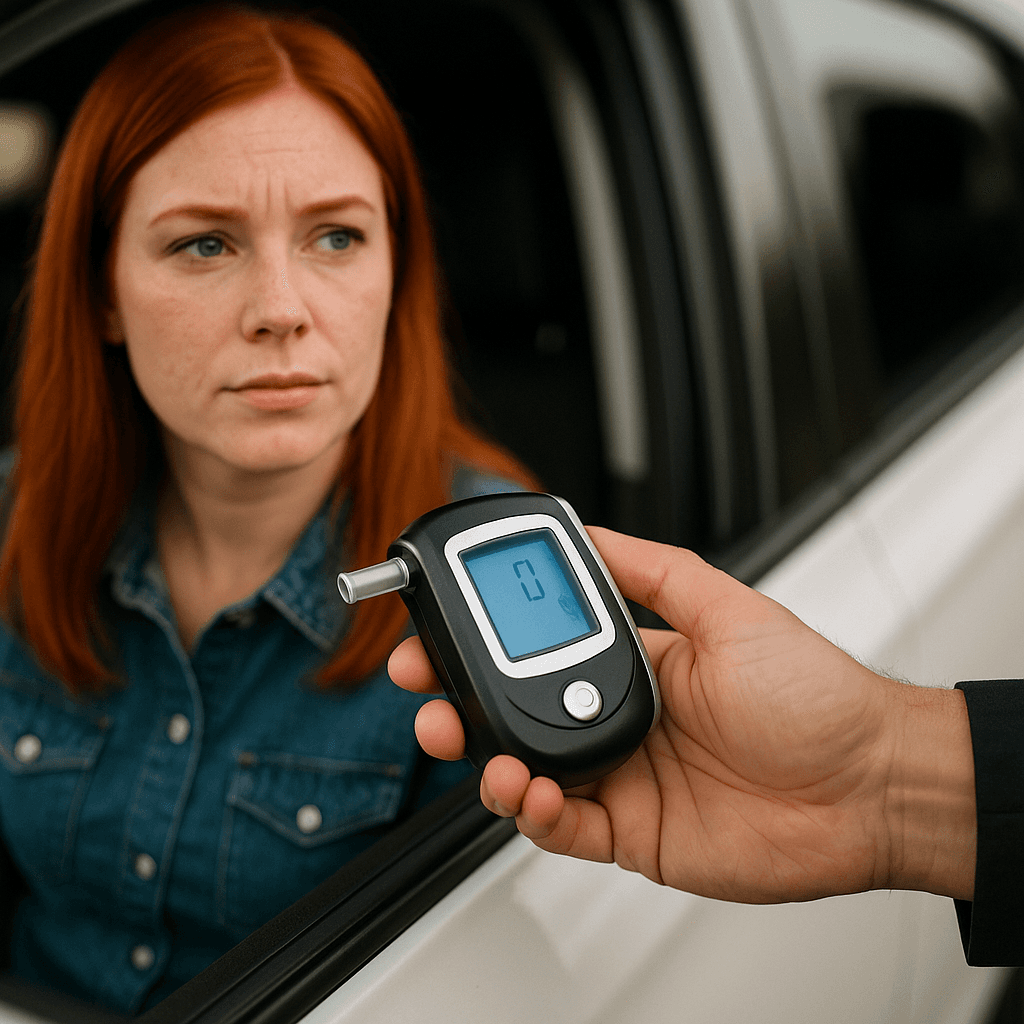
A DUI conviction triggers SR-22 filing and may affect your base access pass, security clearance review timeline, and JAG support eligibility. Wyoming requires 3-year filing from conviction date.
Wyoming SR-22 Filing Period Starts at Conviction Date, Not Reinstatement
Wyoming requires SR-22 filing for 3 years from your DUI conviction date, not from the date you reinstate your license. If you're convicted in March 2025 and your license suspension runs until September 2025, your SR-22 obligation ends in March 2028 — not September 2028. The Wyoming Department of Transportation sets this clock at sentencing, and most military members miscalculate by adding 3 years to their reinstatement date instead of their conviction date.
Your SR-22 must remain active and uninterrupted for the entire 3-year period. A single day of lapse — carrier cancellation, non-payment, policy termination — resets the filing period to day zero in Wyoming. The state treats lapses as non-compliance with court-ordered requirements, which can trigger a new suspension action and extends the timeline you're managing alongside your military obligations.
Most major carriers (State Farm, GEICO, Allstate, Progressive) will file SR-22 for existing customers but typically non-renew your policy at the end of the current term. New DUI-SR-22 policies generally require the non-standard market: Bristol West, Dairyland, The General, or Safe Auto. Availability varies at F.E. Warren AFB near Cheyenne versus Wyoming Army National Guard installations in smaller communities.
Base Access Pass Review Operates Separately from State DMV Reinstatement
Your installation pass and registration office reviews your driving privileges independently from Wyoming DMV reinstatement timelines. A DUI conviction triggers a mandatory incident report to your security manager and may result in pass suspension, revocation, or restricted on-base driving privileges while your civilian license is suspended. The installation commander or provost marshal sets the terms — not Wyoming statute.
F.E. Warren AFB Security Forces reviews all DUI incidents involving personnel with base driving privileges. Even after you reinstate your Wyoming license and file SR-22, your base pass may remain suspended until your unit commander, first sergeant, or security manager completes an additional review. This is not automatic reinstatement — you must request restoration of on-base driving privileges through your chain of command and provide proof of SR-22 filing, completion of DUI education, and any Ignition Interlock Device (IID) installation if required by Wyoming courts.
Some installations impose base-specific restrictions beyond state requirements: extended IID periods, restricted driving hours (duty travel only), or mandatory participation in the Air Force Alcohol and Drug Abuse Prevention and Treatment (ADAPT) program. These conditions apply even if Wyoming DMV has fully reinstated your civilian license.
Find out exactly how long SR-22 is required in your state
Security Clearance Review Timeline and Reporting Requirements
A DUI conviction is a reportable incident under the Continuous Evaluation (CE) system for all clearance holders. You must report the conviction to your security manager within the timeframe specified by your branch — typically within 3 business days for Air Force personnel at F.E. Warren. Failure to self-report can result in clearance suspension or revocation independent of the DUI itself.
The conviction triggers a security clearance review, but does not automatically revoke your clearance. The adjudication process evaluates mitigating factors: whether this is a first offense, your completion of court-ordered DUI education, sustained sobriety, participation in treatment programs, and command support letters. Most first-offense DUI cases without aggravating factors (injury, property damage, minor in vehicle, refusal to test) result in a Letter of Intent (LOI) rather than immediate revocation.
The review timeline varies widely — 60 days to 12 months depending on your clearance level (Secret, Top Secret, TS/SCI) and whether you hold a position of special trust. During the review period, you may remain in your current duty assignment or be temporarily reassigned to non-clearance-required duties. JAG offices at F.E. Warren can provide guidance on preparing your written response to the LOI, but cannot guarantee clearance retention. Your SR-22 filing status, proof of insurance compliance, and completion of all court-ordered requirements become part of the adjudication record.
Wyoming Ignition Interlock and Military Vehicle Exception Rules
Wyoming courts may order Ignition Interlock Device (IID) installation for 6 months to 3 years depending on your BAC level and prior offenses. First-offense DUI with BAC below 0.15% typically results in a 6-month IID requirement; BAC of 0.15% or higher or second offense within 10 years results in 12–18 months.
Wyoming law does not provide a blanket exemption for military-owned vehicles. You cannot drive a government vehicle — tactical vehicle, GSA fleet vehicle, or any DoD-owned asset — without IID installation during your restricted license period unless your unit commander submits a written waiver request to the Wyoming Circuit Court and the court grants an occupational exemption. Most commands will not submit this waiver because it exposes the unit to liability if you operate government property while under IID restriction.
This creates a duty performance gap: if your MOS or AFSC requires operating military vehicles and Wyoming courts have ordered IID installation, you may be temporarily reassigned to non-driving duties until your IID period expires. Some service members stationed at F.E. Warren install IID on their personal vehicle and arrange carpool or transportation support from unit members for duty requirements. Your first sergeant or commander can coordinate temporary duty reassignment, but this is not automatic — it depends on manning and mission requirements.
Non-Standard Market SR-22 Costs and Payment Options for Active Duty
SR-22 filing after a DUI in Wyoming typically costs $180–$340 per month for non-standard auto insurance, compared to $75–$120 per month for clean-record drivers. The filing fee itself is $25–$50 depending on carrier, but the premium increase comes from the DUI conviction and the requirement to carry higher liability limits than Wyoming's minimums.
Wyoming requires minimum liability coverage of 25/50/20 ($25,000 bodily injury per person, $50,000 per accident, $20,000 property damage). Courts and SR-22 filing requirements often mandate higher limits — 50/100/25 or 100/300/50 — which increases your monthly premium. Active duty personnel stationed at F.E. Warren can sometimes access USAA or Navy Federal for SR-22 filing, but approval depends on your driving history, rank, and length of service. Most first-offense DUI cases are referred to non-standard carriers.
Many non-standard carriers offer monthly payment plans, but most require a down payment equal to 2–3 months of premium. Some carriers allow allotment setup through DFAS, which prevents accidental non-payment during deployment or PCS. A single missed payment can trigger SR-22 lapse, which resets your 3-year filing clock and may result in new suspension action by Wyoming DMV. Setting up automatic allotment through myPay is the most reliable option for maintaining continuous SR-22 compliance during active duty.
Post-Conviction PCS Orders and SR-22 Portability to New Duty Station
If you receive PCS orders while your Wyoming SR-22 filing is active, your obligation does not automatically transfer to your new duty station state. Wyoming's 3-year filing requirement remains in effect regardless of where you are stationed. You must maintain Wyoming SR-22 filing until the conviction-date anniversary in year 3, even if you are now stationed in Texas, Georgia, or overseas.
Most states allow out-of-state SR-22 filings to satisfy their own requirements if you move during your filing period, but some states (California, New York) require you to obtain a new SR-22 from a carrier licensed in that state. This creates a dual-filing situation: you maintain Wyoming SR-22 to satisfy the original court order, and you obtain a new SR-22 in your new state to satisfy that state's licensing requirements. Your new state DMV will verify your Wyoming SR-22 status before issuing a new license.
If you PCS to a state that does not require SR-22 (such as an overseas assignment to Germany or Japan), you still must maintain your Wyoming SR-22 filing for the full 3-year period. Cancelling your SR-22 early — even if you no longer hold a Wyoming driver license — triggers a lapse notification to Wyoming DMV, which can result in suspension action and extends your compliance timeline. Verify portability rules with your new state DMV and your carrier before executing PCS orders.