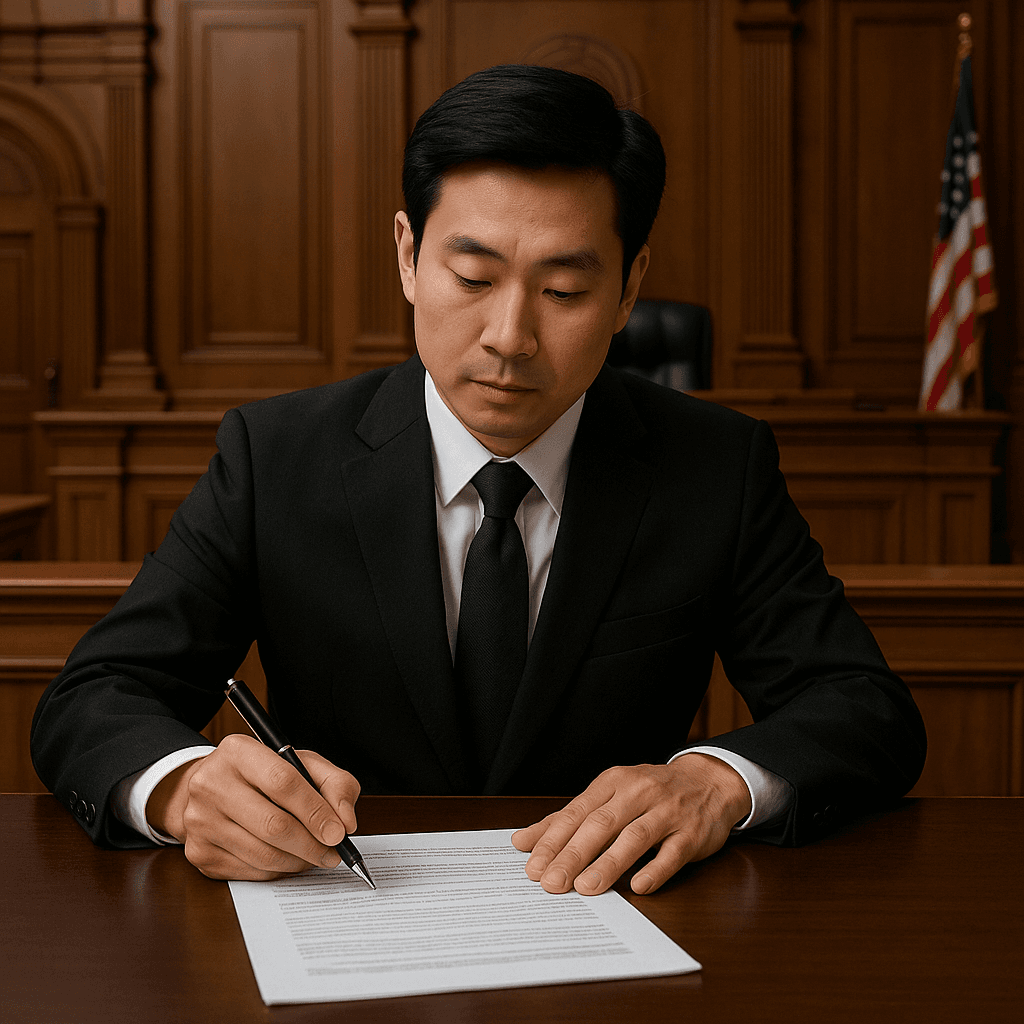
A DUI conviction in Hawaii triggers SR-22 filing, but for military members stationed at Joint Base Pearl Harbor-Hickam or Marine Corps Base Hawaii, the violation also affects base access, security clearances, and JAG proceedings.
Hawaii Requires 3-Year SR-22 Filing After DUI Conviction
Hawaii law mandates SR-22 filing for 3 years following a DUI conviction, measured from the conviction date, not the filing date or license reinstatement date. If you're convicted in January 2025, your SR-22 obligation runs through January 2028 even if your license is reinstated earlier. This duration applies to both civilian and military drivers convicted in Hawaii state courts.
The Hawaii Administrative Driver's License Revocation Office (ADLRO) processes your administrative license suspension separately from the criminal conviction. First-offense DUI typically triggers a 1-year license revocation. Second offense within 5 years increases revocation to 18 months to 2 years. Your SR-22 filing must remain continuous during and after the revocation period until the full 3-year requirement is satisfied.
Most major carriers (GEICO, USAA, Navy Federal) will file SR-22 for existing military customers but commonly non-renew at the next policy term. New SR-22 policies after DUI typically require non-standard carriers: Dairyland, The General, Bristol West, or GAINSCO. Monthly premiums for military members with DUI-SR-22 in Hawaii range from $180 to $320 depending on rank, BAC level, and whether the conviction was standard or aggravated. Estimates based on available industry data; individual rates vary by driving history, vehicle, coverage selections, and location.
Base Access Suspension Operates on Separate Military Timeline
A DUI conviction triggers immediate base access review under installation commander authority, separate from your state SR-22 requirement. At Joint Base Pearl Harbor-Hickam and Marine Corps Base Hawaii (Kaneohe Bay), most first-offense DUI convictions result in 6-month to 1-year base driving privilege suspension. This suspension applies only to driving on base — you may still enter as a pedestrian or passenger unless your command or security manager imposes additional restrictions.
Your base driving privileges do not automatically restore when Hawaii clears your civilian license or when you complete your SR-22 filing. Reinstatement requires completion of the military's Alcohol and Drug Control Officer (ADCO) program, commander approval, submission of updated insurance proof with SR-22 endorsement, and a new vehicle registration through the installation Pass and Registration office. Processing typically takes 30 to 60 days after your suspension period ends.
If you live on base and lose driving privileges, you cannot drive from your residence to the gate. Many service members arrange carpool with a spouse who holds a valid installation pass or use base shuttle services. Off-base housing becomes the more common solution for members facing longer suspensions, but breaking a lease early or relocating during a suspension window creates separate financial pressure most civilian DUI guides never address.
Find out exactly how long SR-22 is required in your state
Security Clearance Review Follows Different Triggers Than SR-22
A DUI conviction does not automatically revoke your security clearance, but it triggers a mandatory incident report under Adjudicative Guideline G (Alcohol Consumption) and Guideline J (Criminal Conduct). Your Security Manager must submit the incident within 3 business days of conviction. The adjudication timeline runs 6 to 18 months and operates independently of your SR-22 filing period or base driving suspension.
First-offense DUI with BAC under 0.15, no accident, no minor in vehicle, and full completion of sentencing requirements (DUI education, probation, fines, SR-22) typically results in clearance retention with a written warning. Aggravated DUI (BAC 0.15 or higher, refusal, injury, property damage) or second offense significantly increases the probability of clearance suspension or revocation. If your clearance is suspended, your SR-22 compliance in Hawaii has no direct influence on the DoD adjudication outcome — those reviews focus on pattern of conduct, rehabilitation evidence, and command input.
If your role requires an active clearance and it is suspended pending adjudication, your command may reassign you to non-classified duties, place you on administrative hold, or in some cases initiate administrative separation. Completing your Hawaii SR-22 filing on time demonstrates financial responsibility and legal compliance, which strengthens your adjudication case, but it does not substitute for the alcohol treatment and behavior documentation the clearance reviewers prioritize.
Court Sentencing, ADLRO Suspension, and JAG Overlap Create Compliance Stack
You face three parallel processes after a Hawaii DUI as a military member: Hawaii state court sentencing (fines, probation, DUI education, SR-22 filing), ADLRO administrative license action (revocation and reinstatement), and military administrative action (base access, clearance review, non-judicial punishment or court-martial depending on circumstances). Each process has separate timelines, separate reinstatement requirements, and separate consequences for non-compliance.
Hawaii state court typically sentences first-offense DUI to 14 hours minimum DUI education (Prime for Life or equivalent), $150 to $1,000 in fines, 1-year probation, and SR-22 filing proof within 30 days of sentencing. ADLRO runs the license revocation concurrently — you may apply for reinstatement after completing the revocation period, paying a $100 reinstatement fee, and submitting SR-22 proof. Military action may include non-judicial punishment (Article 15), reduction in rank, forfeiture of pay, and base driving suspension as described above.
The most common failure point is SR-22 lapse during the 3-year filing period. If your SR-22 policy cancels or lapses for non-payment even one day, Hawaii ADLRO receives electronic notice and re-suspends your license immediately. Re-reinstatement requires paying another $100 fee and restarting the entire 3-year SR-22 clock from the new filing date. Your military administrative record also reflects the lapse, which can trigger additional command action or delay clearance adjudication.
PCS Orders and Interstate SR-22 Transfer Rules for Hawaii Military DUI
If you receive PCS orders to another state while your Hawaii SR-22 requirement is active, the 3-year filing obligation follows you. You must notify your carrier of your new duty station address and ensure continuous SR-22 coverage in the new state. Most non-standard carriers operate in multiple states, but coverage availability and rates vary. California, Texas, and Virginia generally have broader non-standard carrier options than smaller duty stations in Alaska, North Dakota, or Wyoming.
Your new state DMV does not reset your SR-22 filing period. If you had 18 months remaining on your Hawaii SR-22 when you transferred to Camp Pendleton, you still owe 18 months of continuous California SR-22 filing. Hawaii ADLRO will continue to monitor your SR-22 status electronically through the national system. If your California SR-22 lapses, Hawaii receives notice and may issue a suspension warrant even though you no longer reside there.
Some military members attempt to register their vehicle in a non-SR-22 state using a family member's address to avoid filing costs. This constitutes insurance fraud and registration fraud in most states. If discovered during a traffic stop, accident, or command vehicle inspection, the consequences include criminal charges in the state of false registration, federal fraud charges if the registration was used to access base services, and administrative separation under Other Than Honorable conditions in some cases. The SR-22 premium difference is typically $80 to $150 per month — far less costly than the legal and career consequences of fraudulent registration.
Non-Owner SR-22 Option If You Sell Vehicle During Suspension
If you sell your vehicle during your base driving suspension or cannot afford to maintain insurance on a car you're prohibited from driving for 6 to 12 months, you still must maintain continuous SR-22 filing to satisfy Hawaii's requirement. Non-owner SR-22 policies provide liability coverage when you drive a borrowed or rental vehicle and fulfill the state's SR-22 filing mandate without requiring you to own a car.
Non-owner SR-22 policies in Hawaii typically cost $40 to $90 per month through non-standard carriers like Dairyland, The General, or Direct Auto. This is 50% to 70% less expensive than maintaining full coverage on a vehicle you cannot legally drive. The policy does not cover a vehicle you own, a vehicle registered to someone in your household, or a vehicle you drive regularly — it applies only to occasional use of borrowed vehicles.
If you purchase or register a vehicle later while your SR-22 requirement is still active, you must convert from non-owner SR-22 to standard SR-22 auto policy within 30 days. Most carriers allow this conversion mid-term without penalty. Failing to convert and driving your own vehicle under a non-owner policy voids coverage — if you're in an at-fault accident, the carrier denies the claim, you're personally liable for damages, and Hawaii ADLRO may suspend your license again for driving uninsured.