Delaware requires 3 years of SR-22 after a DUI. Liability-only meets the legal minimum for $60–$95/mo, but full coverage protects your vehicle and prevents a costly second violation cycle.
What Delaware's DUI SR-22 Requirement Actually Mandates
Delaware requires SR-22 filing for 3 years after a DUI conviction, measured from your conviction date or reinstatement date depending on whether you maintained continuous coverage during suspension. The state mandates minimum liability limits of 25/50/10 — $25,000 per person for bodily injury, $50,000 per accident, and $10,000 for property damage. SR-22 is not insurance itself; it's a filing your carrier submits to the Delaware Division of Motor Vehicles certifying you carry at least state-minimum liability.
Your carrier files SR-22 electronically within 24 hours of binding your policy, but the DMV processes reinstatement on a 3–5 business day cycle. If you let coverage lapse even one day during your 3-year period, your carrier notifies DMV immediately, your license suspends again, and your 3-year clock resets to zero from the new reinstatement date. This reset provision catches drivers who drop full coverage to save money mid-filing-period without understanding that any lapse triggers the restart.
Delaware does not require collision or comprehensive coverage by law. You can satisfy your SR-22 obligation with liability-only insurance. The decision between liability-only and full coverage is financial, not legal — but the financial exposure during a 3-year DUI period is higher than most drivers calculate before they drop coverage.
The Rate Reality: What Liability-Only and Full Coverage Actually Cost After a Delaware DUI
Liability-only SR-22 policies in Delaware after a DUI typically cost $60–$95 per month through non-standard carriers like The General, Bristol West, Dairyland, or GAINSCO. Full coverage — liability plus collision and comprehensive with a $500 or $1,000 deductible — runs $185–$280 per month from the same carriers. That $125–$185 monthly spread is the decision point, and it hinges entirely on whether you can afford to replace your vehicle out of pocket if you total it or it's stolen during your 3-year filing period.
Most mainstream carriers — State Farm, Geico, Allstate, Progressive — will file SR-22 for existing customers immediately after a DUI but non-renew at your policy term, typically 6 months later. If you're already with a standard carrier when your DUI conviction processes, get the SR-22 filed immediately and shop the non-standard market 60 days before your renewal date. Waiting until the non-renewal notice arrives leaves you scrambling with 10–15 days to bind new coverage before your SR-22 lapses.
Estimates based on available industry data; individual rates vary by conviction class, prior violations, vehicle value, zip code, and whether you're required to install an ignition interlock device alongside SR-22. First-offense standard DUI with no prior violations sits at the lower end of that range. Aggravated DUI with high BAC, refusal, or a minor in the vehicle pushes you toward the upper end or outside it entirely.
Find out exactly how long SR-22 is required in your state
Why 23% of DUI Drivers Face a Second At-Fault Claim Within 3 Years
Insurance Institute for Highway Safety data shows that drivers with a DUI conviction file at-fault claims at a rate 2.3 times higher than clean-record drivers during the 36 months following conviction. That translates to approximately 23% of DUI-SR-22 filers experiencing a second at-fault incident — collision, property damage, or injury liability — during their required filing period. Delaware is a tort state, which means if you cause a second accident during your SR-22 period, you are personally liable for all damages exceeding your liability limits.
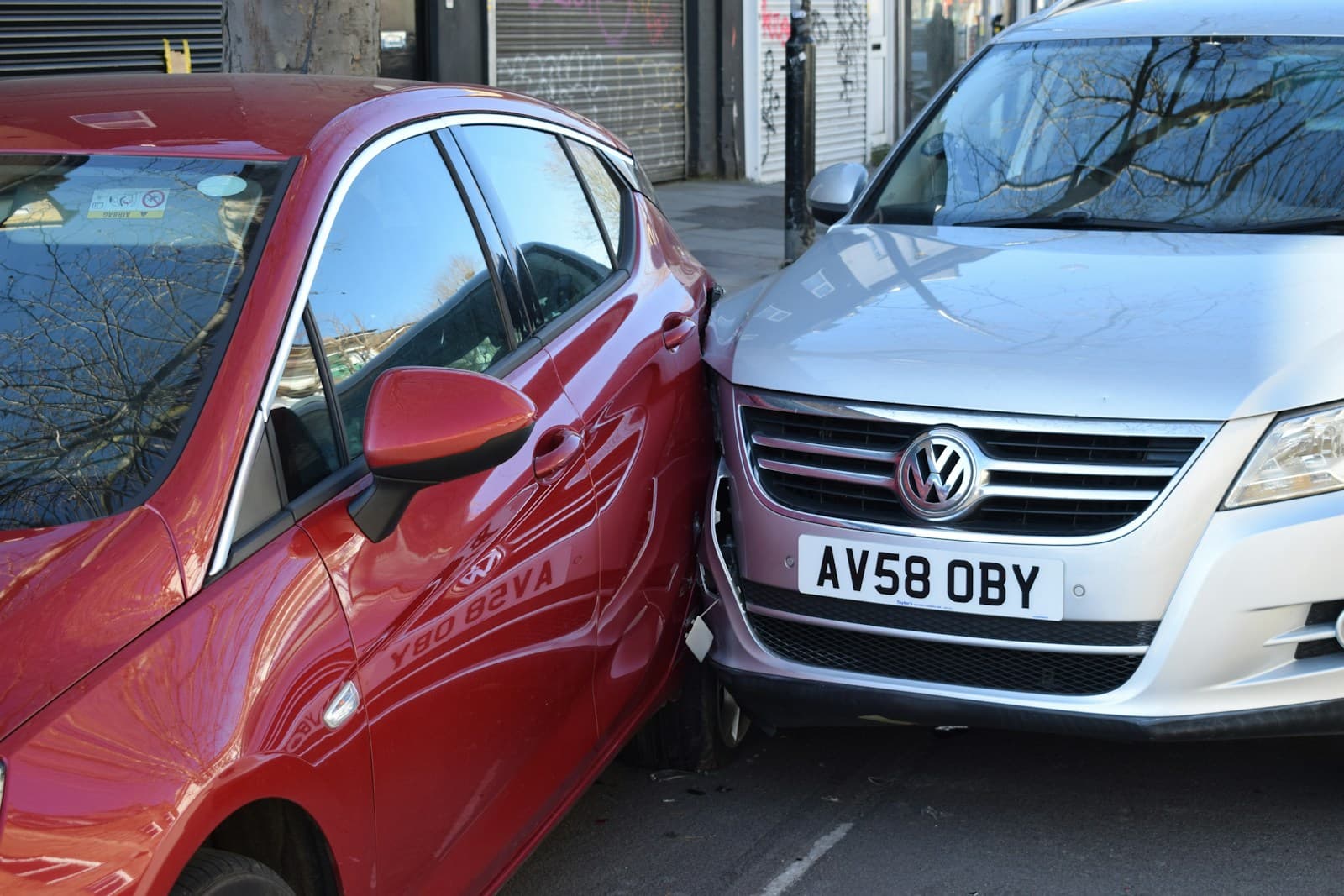
If you're carrying liability-only and you total your own vehicle in an at-fault crash, your policy pays nothing toward your car. If your vehicle is financed, you still owe the full loan balance. If you own it outright and it's worth $8,000, you're out $8,000 plus whatever you owe the other driver beyond your $25,000 per-person limit. That second scenario — owing the other driver more than your policy covers — is where liability-only becomes a debt trap. Delaware allows judgment creditors to garnish wages at 25% of disposable income until the debt is satisfied.
Collision and comprehensive coverage (full coverage) pay for your vehicle regardless of fault. Collision covers at-fault accidents. Comprehensive covers theft, vandalism, weather damage, and hitting a deer. Both carry a deductible, typically $500 or $1,000. If your vehicle is worth less than $3,000 and you own it outright, paying $125–$185 extra per month for full coverage doesn't pencil — you're paying more in annual premiums than the car is worth. If your vehicle is worth $8,000 or more, or if it's financed, full coverage is financial protection against the statistically elevated claim risk you're carrying during your DUI period.
When Liability-Only Makes Sense (and When It Becomes a Trap)
Liability-only works if your vehicle is worth less than $3,000, you own it outright, and you have $3,000 saved to replace it immediately if it's totaled or stolen. It also works if you're driving a non-owner SR-22 policy because you don't own a vehicle at all and rely on borrowed cars, rideshare, or public transit. In both cases, you're meeting Delaware's legal minimum, keeping your SR-22 active, and avoiding paying for coverage you don't need.
Liability-only becomes a trap when your vehicle is worth $5,000 or more, you're still making loan payments, or you cannot afford to replace the vehicle out of pocket. If any of those conditions apply and you drop collision and comprehensive to save $125/mo, you're self-insuring a $5,000–$15,000 asset during a 3-year period when your statistical claim risk is more than double a clean-record driver. One at-fault crash or one theft during those 36 months and you're either without a car or carrying a loan on a totaled vehicle.
The second trap is registration suspension. If your financed vehicle is totaled and you can't afford to replace it, you may stop paying your SR-22 policy because you no longer have a car to insure. Delaware requires continuous SR-22 even if you stop driving. Dropping coverage triggers an immediate license suspension and resets your 3-year filing clock. You'll owe reinstatement fees again, and you'll need to bind a new SR-22 policy — often a non-owner policy at $40–$65/mo — just to keep your clock running even though you're not driving. That cycle extends your total SR-22 obligation to 4 or 5 years instead of 3.
How Delaware Handles SR-22 Lapses and Filing Period Resets
Delaware DMV receives electronic notification from your carrier within 24 hours if your policy cancels or lapses for any reason — non-payment, voluntary cancellation, or carrier-initiated cancellation. Your license suspends immediately upon lapse notification. There is no grace period. Your 3-year SR-22 filing clock stops the day coverage lapses and does not resume until you bind new SR-22 coverage and DMV processes your reinstatement.
When you reinstate after a lapse, your 3-year filing period resets to zero from the new reinstatement date in most cases. If you carried SR-22 for 18 months, let it lapse for 30 days, then reinstated, you now owe 3 full years from the reinstatement date — not the remaining 18 months you had left. This reset rule is not advertised plainly by DMV or by carriers, and it's the single most common reason DUI-SR-22 filers in Delaware end up carrying SR-22 for 4, 5, or 6 years instead of the required 3.
Reinstatement after a lapse requires paying a $221 restoration fee to DMV, re-filing SR-22 with a carrier, and waiting 3–5 business days for DMV to process the reinstatement and mail your new license. If you're driving during that window, you're driving on a suspended license, which is a separate criminal charge in Delaware and adds another violation to your record. Avoiding lapses is not optional if you want to finish your SR-22 period on time.
What Full Coverage Actually Protects During Your 3-Year Filing Period
Full coverage in Delaware means liability plus collision and comprehensive. Collision pays to repair or replace your vehicle after an at-fault crash, minus your deductible. Comprehensive pays if your car is stolen, vandalized, damaged by weather, or you hit a deer. Both coverages are subject to your vehicle's actual cash value — if your car is worth $7,000 and it's totaled, your carrier pays $7,000 minus your deductible, not the $12,000 you paid for it two years ago.
Full coverage does not protect you from liability exceeding your policy limits. If you carry Delaware's minimum 25/50/10 liability and you cause an accident that injures two people with $40,000 each in medical bills, your policy pays $25,000 to the first person and $25,000 total across both under the per-accident limit, leaving you personally liable for $30,000. Increasing liability limits to 100/300/100 costs an additional $15–$30/mo through most non-standard carriers and eliminates most personal exposure risk for drivers without significant assets.
Full coverage also includes your lender's interest if your vehicle is financed. Your lienholder requires collision and comprehensive as a condition of the loan. If you drop full coverage to save money and your lender discovers the lapse — they will, through regular audits — they will force-place coverage on your vehicle at 2–3 times the cost of a standard policy and bill you directly. That force-placed policy satisfies the lender but does not satisfy Delaware's SR-22 requirement because it's not filed in your name. You'll be paying for two policies simultaneously and your SR-22 will still be lapsed.
How to Switch Coverage Mid-Filing-Period Without Triggering a Lapse
You can switch from full coverage to liability-only, or from one carrier to another, during your 3-year SR-22 period as long as there is zero gap in coverage. The safest process: bind your new liability-only policy with SR-22 filing, confirm DMV has received the new SR-22 filing electronically (call DMV directly at 302-744-2506 and verify), then cancel your old full-coverage policy effective the same day or the next day. Do not cancel the old policy first and hope the new SR-22 files in time. DMV processes SR-22 filings on a 24–72 hour cycle, and any gap triggers suspension and clock reset.
If your vehicle is paid off and you're confident you can self-insure the replacement cost, switching to liability-only can save $1,500–$2,200 annually. If your financial situation changes during your filing period — job loss, major expense, income reduction — liability-only keeps your SR-22 active and your license valid while you manage cash flow. The decision is reversible. You can switch back to full coverage at any time by binding a new policy with the same lapse-free process.
Before you switch, confirm your vehicle's current value using Kelley Blue Book or NADA. If it's depreciated below $4,000 and you own it outright, liability-only is defensible. If it's worth $6,000 or more, or financed, keep full coverage unless you have the replacement cost saved and accessible. The $125/mo you save by dropping collision and comprehensive evaporates in one at-fault crash or one theft.