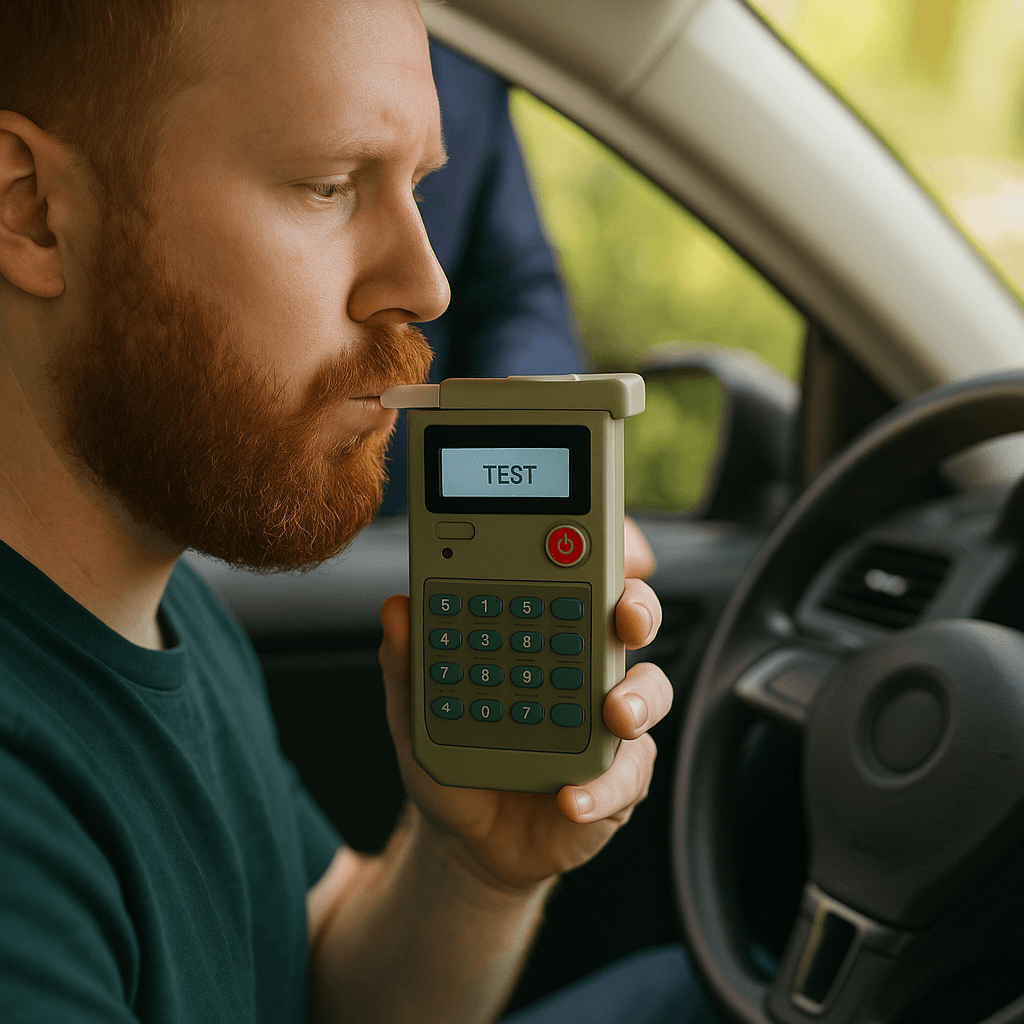
Texas courts give you 30 days to install an ignition interlock device after sentencing, but your SR-22 can't file until installation is verified. Miss the sequence and you reset your compliance clock.
Texas sets your IID installation deadline at sentencing, and your SR-22 filing can't start until the device is verified
Texas courts order ignition interlock device (IID) installation at sentencing with a 30-day compliance window from the order date. Your SR-22 filing requirement runs separately but cannot begin until your carrier receives proof of IID installation from the device provider. Most drivers assume the clock starts when they file SR-22, but Texas counts from your license reinstatement date — which requires both active SR-22 on file and verified IID installation. Filing SR-22 before IID installation wastes coverage months because the state won't reinstate your license without both.
Carriers that write post-DUI policies in Texas — Bristol West, Direct Auto, Dairyland, GAINSCO — require an IID compliance letter from your device provider before they'll file your SR-22 certificate with DPS. Installation alone isn't enough. The provider must submit proof to DPS, then issue you a compliance letter confirming the device is active and monitored. This creates a 7- to 14-day lag between installation and SR-22 eligibility that most drivers don't anticipate when planning their reinstatement timeline.
Shift workers face a compressed compliance window because IID providers schedule installation appointments during business hours, typically 8 a.m. to 5 p.m. Monday through Friday. If you work nights, weekends, or rotating shifts, you're burning paid time off or risking a no-call-no-show to meet the court's 30-day deadline. Missing that window triggers a probation violation in most Texas DUI cases, extending your restricted license period and adding supervised compliance requirements that cost $60–$80 per month.
An occupational license covers your commute route and work hours only — any deviation registers as a violation on your IID monitoring report
Texas occupational licenses (also called hardship licenses or essential need licenses) restrict you to court-approved routes and times: home to work, work to home, and specifically listed errands like medical appointments, DUI education classes, or childcare. Your petition must include exact addresses, specific time windows, and the shortest route between each location. The court approves these routes at the hardship hearing, and your IID monitoring report logs every trip with GPS coordinates and timestamps.
If your shift rotates or changes weekly, you must petition the court to amend your occupational license every time your schedule changes. Texas courts require 10–15 days' notice for hardship license amendments, and most charge a $50–$100 modification fee per amendment. Employers that post schedules one week out create a compliance problem — you can't legally drive a route or time window not on your current court order, even if it's still work-related. Violating your occupational license terms appears on your IID monitoring report as an unauthorized trip, which your probation officer reviews monthly.
Your IID logs every ignition attempt, rolling retest result, GPS coordinate, and trip duration. If you start your car outside your approved time window — even by 15 minutes — the device records it as a violation. Two or more violations in a monitoring period (typically 30 days) trigger a probation compliance review. Texas courts treat IID violations as probation violations, which can extend your restricted license period by 90–180 days or convert your probation to supervised status with weekly reporting.
Find out exactly how long SR-22 is required in your state
Non-standard carriers price SR-22 policies with IID as a monthly cost, not a six-month term — your premium stays locked only if you maintain continuous coverage
Texas SR-22 policies with an active IID requirement run $140–$240 per month for minimum liability coverage (30/60/25). Carriers in the non-standard market — Bristol West, Direct Auto, Dairyland, GAINSCO, Safe Auto — quote post-DUI policies on a month-to-month payment structure because lapse rates in this risk class exceed 40% annually. Your premium quote is valid for the first policy term (typically six months), but renewal pricing depends on your payment history, IID compliance record, and whether you maintained continuous coverage without a gap.
A single missed payment triggers a 10-day notice of cancellation, and reinstatement after cancellation costs $50–$75 in carrier fees plus a new SR-22 filing fee of $25–$50. More critically, any lapse in SR-22 coverage — even one day — resets your filing period to day zero in Texas. If you're required to carry SR-22 for two years and you lapse at month 18, you start a new two-year clock from the date you refile. Shift workers with irregular paychecks face higher lapse risk because most carriers withdraw payments on the policy due date regardless of your pay schedule.
Some non-standard carriers offer a pay-per-mile discount for drivers with occupational licenses because your court-restricted routes cap your annual mileage at 3,000–6,000 miles per year. Direct Auto and GAINSCO both offer mileage-based pricing in Texas that can reduce premiums by 15–25% if you install a carrier-provided mileage tracker. This stacks on top of your IID, creating two monitoring devices, but the premium reduction averages $25–$40 per month for drivers who commute under 10 miles each way.
Your IID provider charges $75–$125 per month for monitoring, calibration, and violation reporting — this cost runs parallel to your SR-22 premium
Texas-approved IID providers — LifeSafer, Intoxalock, Smart Start, Guardian Interlock — charge a installation fee of $70–$150, then a monthly monitoring fee of $75–$125 that covers device calibration, data reporting to DPS, and 24/7 lockout support. Calibration appointments occur every 30–60 days depending on your provider and your violation history. Each appointment costs $0 if included in your monitoring fee or $20–$40 if your plan charges per-visit.
Your IID cost is separate from your SR-22 insurance premium. A Texas driver on a two-year SR-22 requirement with a two-year IID order pays $140–$240/month for insurance plus $75–$125/month for the device — a combined monthly compliance cost of $215–$365. If you're on a restricted income or working a shift job with irregular hours, this creates a $2,600–$4,400 annual expense that runs for the longer of your two compliance periods.
Texas does not offer an indigency waiver for IID costs, but some providers offer a sliding-scale payment plan for drivers who qualify based on income documentation. LifeSafer and Intoxalock both provide a reduced monitoring rate ($60–$75/month) if you submit proof of income below 200% of federal poverty level. This requires paystubs, tax returns, or a benefits award letter, and approval takes 7–10 business days — which means you need to apply before your court-ordered 30-day installation deadline.
If your employer requires you to drive a company vehicle, Texas law allows a work vehicle exemption — but your personal vehicle must still have the IID installed
Texas Transportation Code §521.2476 permits an employer exemption for commercial vehicles or company-owned vehicles if your job requires operating that vehicle as a condition of employment. Your attorney must petition for this exemption at your hardship license hearing, and the court requires a notarized letter from your employer on company letterhead stating: (1) your job title, (2) the requirement to operate a company vehicle, (3) the vehicle's VIN, and (4) confirmation that the vehicle is owned by the employer, not leased to you personally.
The exemption applies only to the specific vehicle listed in the court order. If your employer rotates vehicles, assigns you a different truck, or changes your role, the exemption becomes invalid and you're driving without IID compliance. Your personal vehicle still requires IID installation even if you never drive it — Texas counts it as a violation if you own or have access to a vehicle without an installed device during your IID compliance period.
Shift workers in delivery, transportation, or field service roles often assume the work vehicle exemption eliminates their IID requirement. It does not. You still pay for installation and monitoring on your personal vehicle, and your SR-22 requirement still applies to your personal auto insurance policy. The exemption only prevents your employer's vehicle from needing the device, which protects your job but does not reduce your out-of-pocket compliance costs.
Your SR-22 filing period in Texas starts the day DPS reinstates your license, not the day your carrier files the certificate
Texas measures your SR-22 filing period from your license reinstatement date, which occurs only after DPS receives: (1) your SR-22 certificate from a licensed carrier, (2) proof of IID installation from an approved provider, (3) payment of your reinstatement fee ($125 for DUI license suspension), and (4) completion of your DUI education program (12–32 hours depending on conviction class). Most drivers complete these steps on different dates, and the last item to clear triggers reinstatement.
If your court orders two years of SR-22 and you refile your certificate six months after reinstatement due to a lapse, you do not have 18 months remaining — you have a new two-year period starting from the refile date. Texas does not prorate SR-22 time served. Each lapse resets the clock to zero, regardless of how long you maintained coverage before the gap.
Carriers that specialize in post-DUI SR-22 policies in Texas include Bristol West, Direct Auto, Dairyland, GAINSCO, The General, and Safe Auto. Availability varies by county — GAINSCO writes statewide, but Bristol West and Direct Auto limit underwriting to metro areas including Dallas-Fort Worth, Houston, San Antonio, and Austin. Drivers in rural counties often have only one or two carrier options, and premiums in those areas run 20–30% higher due to limited competition.