You need to drive for work, your DUI conviction requires an ignition interlock, and your employer's vehicle doesn't have one installed. Oregon's hardship permit solves part of this—but creates a coverage gap most drivers miss.
What Oregon's Hardship Permit Actually Allows With an IID Requirement
Oregon's hardship permit—formally called a Hardship Driving Permit (HDP)—lets you drive to and from work, during work hours, and for medical appointments while your license is suspended for a DUI. If your conviction includes an ignition interlock device requirement, the permit allows you to operate an employer-owned vehicle without an IID installed, but only during scheduled work shifts and only for job duties. You cannot use the hardship permit to drive your personal vehicle. You cannot use it for errands, childcare, or any non-work purpose.
The permit costs $75 and requires proof of SR-22 insurance filing, a completed application, employer verification on company letterhead, and payment of all reinstatement fees. Oregon DMV issues the permit for the duration of your suspension—typically 90 days for a first-offense DUI, one year for a second offense, and three years for a third offense. The IID requirement does not disappear during the hardship period. If you drive any vehicle you own or regularly use outside work hours, that vehicle must have an IID installed.
Most drivers assume the hardship permit replaces the IID requirement. It does not. It creates a narrow exemption for employer-owned vehicles during work only. Your personal vehicle remains subject to the full IID mandate, and your SR-22 filing must stay active for the entire filing period—usually three years from conviction date in Oregon—even if you're not driving your own car.
How SR-22 Coverage Works When You're Only Driving Someone Else's Vehicle
Oregon requires continuous SR-22 coverage for three years after a DUI conviction, measured from the conviction date. The filing must remain active whether or not you own a vehicle, and whether or not you're actively driving. If you're using a hardship permit to drive only your employer's vehicle, you have two coverage options: a non-owner SR-22 policy or maintaining coverage on a vehicle you own but cannot legally drive without an IID.
A non-owner SR-22 policy provides liability coverage when you drive vehicles you do not own—exactly the situation a hardship permit creates. Monthly premiums for non-owner SR-22 policies in Oregon range from $40 to $90 per month for DUI drivers, depending on conviction class and prior violations. The policy satisfies Oregon's SR-22 filing requirement and provides the state-mandated minimum liability limits: $25,000 bodily injury per person, $50,000 per accident, and $20,000 property damage. Your employer's commercial auto policy covers the vehicle during work hours; your non-owner policy covers liability gaps and satisfies your personal SR-22 obligation.
If you own a vehicle but are restricted to driving only your employer's vehicle under the hardship permit, you still need coverage on your personal vehicle to maintain the SR-22 filing. Canceling your owned-vehicle policy will trigger an SR-22 lapse notice to Oregon DMV, which immediately suspends your hardship permit and resets your SR-22 filing clock to zero. Most drivers in this situation maintain a parked-vehicle policy with comprehensive-only coverage—no liability, no collision, just enough to keep the SR-22 active. This runs $50 to $120 per month depending on vehicle value and your driving record.
Find out exactly how long SR-22 is required in your state
Shift Work Complications: Start Times, Route Restrictions, and Employer Documentation
Oregon's hardship permit restricts you to driving during scheduled work hours, to and from work, and during work-related duties only. If you work rotating shifts, overnight shifts, or on-call schedules, you must provide DMV with a detailed employer letter specifying shift start and end times, work locations, and expected routes. The permit does not grant 24-hour driving privileges. If your shift starts at 11 p.m., you can drive starting at 11 p.m. If you're stopped at 10:30 p.m. on your way to work, you are driving outside your permit restrictions and face immediate arrest for driving while suspended.
Employers must submit verification on company letterhead including your job title, work address, shift schedule, supervisor contact information, and a statement that driving is essential to your job duties. Oregon DMV reviews the letter for specificity—generic statements like "may be required to drive" are insufficient. The letter must confirm that you will be operating a company-owned vehicle, that the vehicle is covered under the employer's commercial auto policy, and that your duties require driving during work hours. If your job involves delivery, service calls, or multi-site work, the letter must describe typical routes and destinations.
If your schedule changes—shift times move, you transfer locations, you switch from day to night shifts—you must notify DMV within 10 days and submit updated employer documentation. Driving outside your documented schedule violates the hardship permit terms. A second violation during the hardship period results in permit revocation and an additional one-year license suspension, stacked on top of your existing DUI suspension.
What Happens If You're Stopped Driving Outside Permit Hours or in the Wrong Vehicle
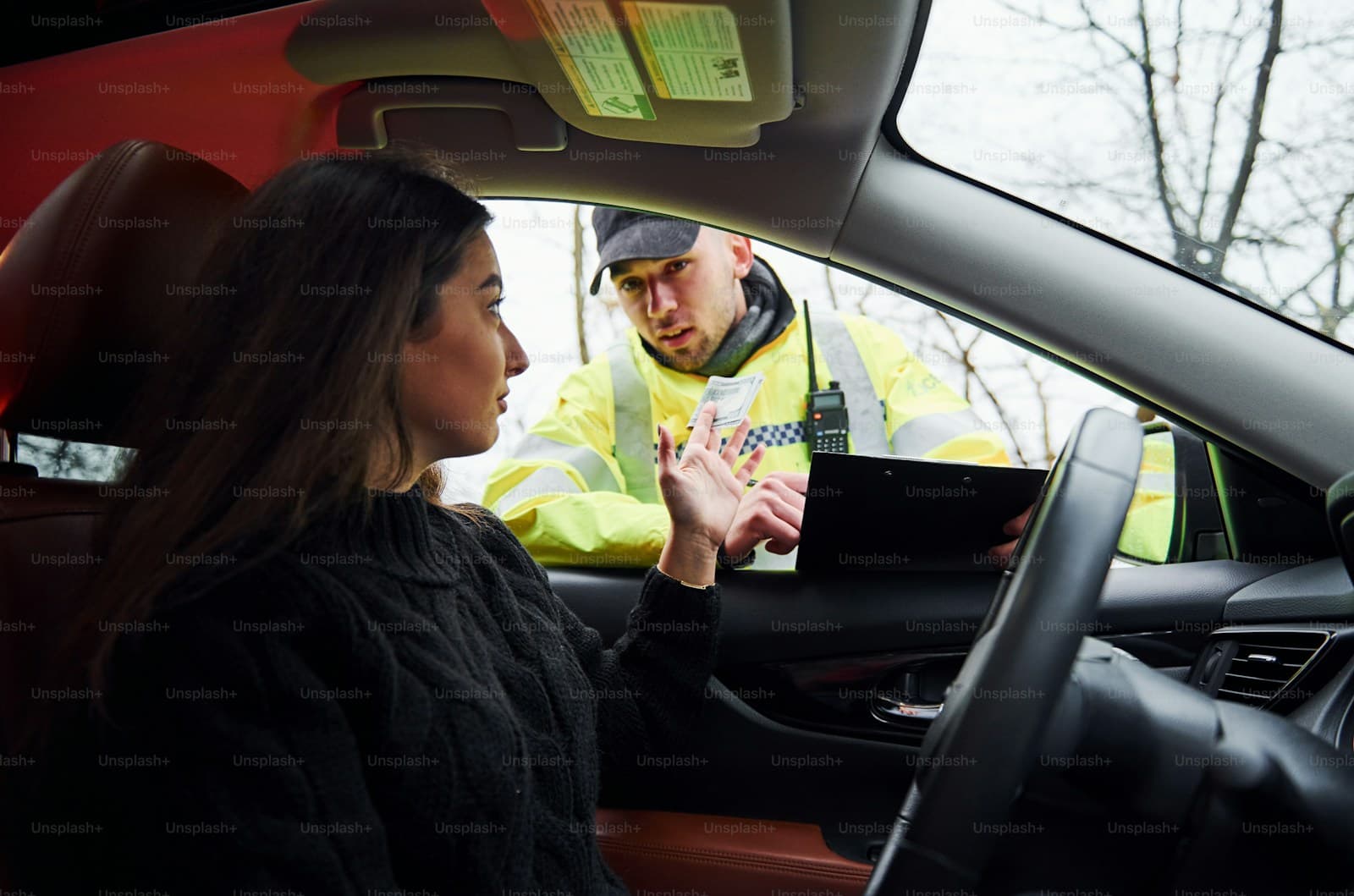
Oregon State Police and local law enforcement have access to hardship permit restrictions during traffic stops. If you're stopped driving outside documented work hours, in a vehicle other than your employer's, or on a route not covered by your permit documentation, you will be arrested for driving while suspended—a Class A misdemeanor carrying up to one year in jail and a $6,250 fine. The hardship permit is immediately revoked. Your underlying DUI suspension is extended by one year. Your SR-22 filing period does not pause during this extension—it continues running, meaning you're paying for SR-22 coverage while unable to drive at all.
If you're involved in an at-fault accident while driving outside permit restrictions, your non-owner SR-22 policy may deny the claim. Most non-owner policies include an exclusion for vehicles you own or regularly use, and they require you to be legally authorized to drive at the time of the accident. Driving outside hardship permit hours means you were not legally authorized. Your employer's commercial policy will cover the vehicle and third-party liability, but you may face personal liability for damages exceeding policy limits.
Hardship permit violations are reported to DMV within 48 hours. Your SR-22 carrier receives notice of the violation, which triggers a mid-term policy review. Carriers writing high-risk DUI policies—Dairyland, Bristol West, GAINSCO, The General—will typically non-renew at the next policy term rather than cancel mid-term, but your renewal premium will increase 30% to 60% after a driving-while-suspended charge. If you're convicted of the new charge, most non-standard carriers will non-renew entirely, forcing you into the assigned risk pool where premiums for SR-22 coverage run $200 to $400 per month.
How to Structure Coverage and IID Installation If You Own a Vehicle You Can't Drive
If you own a vehicle but are restricted to driving only your employer's vehicle under a hardship permit, you face a coverage trap: canceling your personal auto policy triggers an SR-22 lapse and suspends your permit, but maintaining full coverage on a vehicle you cannot legally drive wastes $100 to $200 per month. The solution is a parked-vehicle policy with SR-22 endorsement. This policy drops liability and collision coverage, keeps comprehensive coverage only, and maintains the SR-22 filing. You're covered for theft, vandalism, weather damage, and fire while the vehicle sits unused, and Oregon DMV receives continuous SR-22 compliance confirmation.
Parked-vehicle SR-22 policies in Oregon cost $50 to $120 per month depending on vehicle value, ZIP code, and your DUI conviction class. Add $25 per month for the SR-22 endorsement fee. This is still cheaper than maintaining full liability and collision on a vehicle you're prohibited from driving. When your hardship period ends and your full license is reinstated—assuming you've completed all DUI court requirements, paid reinstatement fees, and maintained three years of SR-22 filing—you can convert the parked policy back to full coverage.
If you plan to sell the vehicle during the hardship period to eliminate insurance costs entirely, you must secure a non-owner SR-22 policy before canceling your vehicle policy. The non-owner policy must be active and filed with Oregon DMV before the vehicle policy cancellation takes effect. Any gap—even one day—between the two policies triggers an SR-22 lapse notice, suspends your hardship permit, and resets your three-year SR-22 filing period to day zero. Coordinate the transition with your carrier in writing, confirm the non-owner SR-22 filing date, and do not cancel the vehicle policy until you receive DMV confirmation of the new filing.
Employer Vehicle Coverage Gaps and Who Pays When Something Goes Wrong
Your employer's commercial auto policy covers the vehicle, but it does not necessarily cover you as a driver with a DUI conviction and a hardship permit. Most commercial policies include driver eligibility requirements: valid license, acceptable MVR, no DUI convictions within three to five years. Operating under a hardship permit means you do not have a valid standard license—you have a restricted permit. Some commercial carriers exclude hardship permit drivers entirely. Others charge the employer an additional premium to add you as a listed driver.
If your employer's policy excludes you and you're involved in an at-fault accident during a work shift, the employer's carrier may deny coverage for your portion of the claim. You would be personally liable for bodily injury and property damage up to Oregon's statutory minimums—$25,000 per person, $50,000 per accident, $20,000 property damage—and any amount exceeding those limits. Your non-owner SR-22 policy would cover you as excess liability only if the employer's policy pays first. If the employer's policy denies the claim outright, your non-owner policy may also deny on the grounds that you were operating a vehicle you do not own during excluded use.
Before starting work under a hardship permit, request written confirmation from your employer's insurance carrier that you are an approved driver under the commercial policy, that the hardship permit satisfies their driver eligibility requirements, and that coverage applies during your documented work hours. If the carrier excludes you, ask your employer to request a rider adding you as a listed driver. If the employer refuses or the carrier will not write the rider, you are driving uninsured during work hours despite holding a non-owner SR-22 policy—and the financial liability for any accident falls entirely on you.