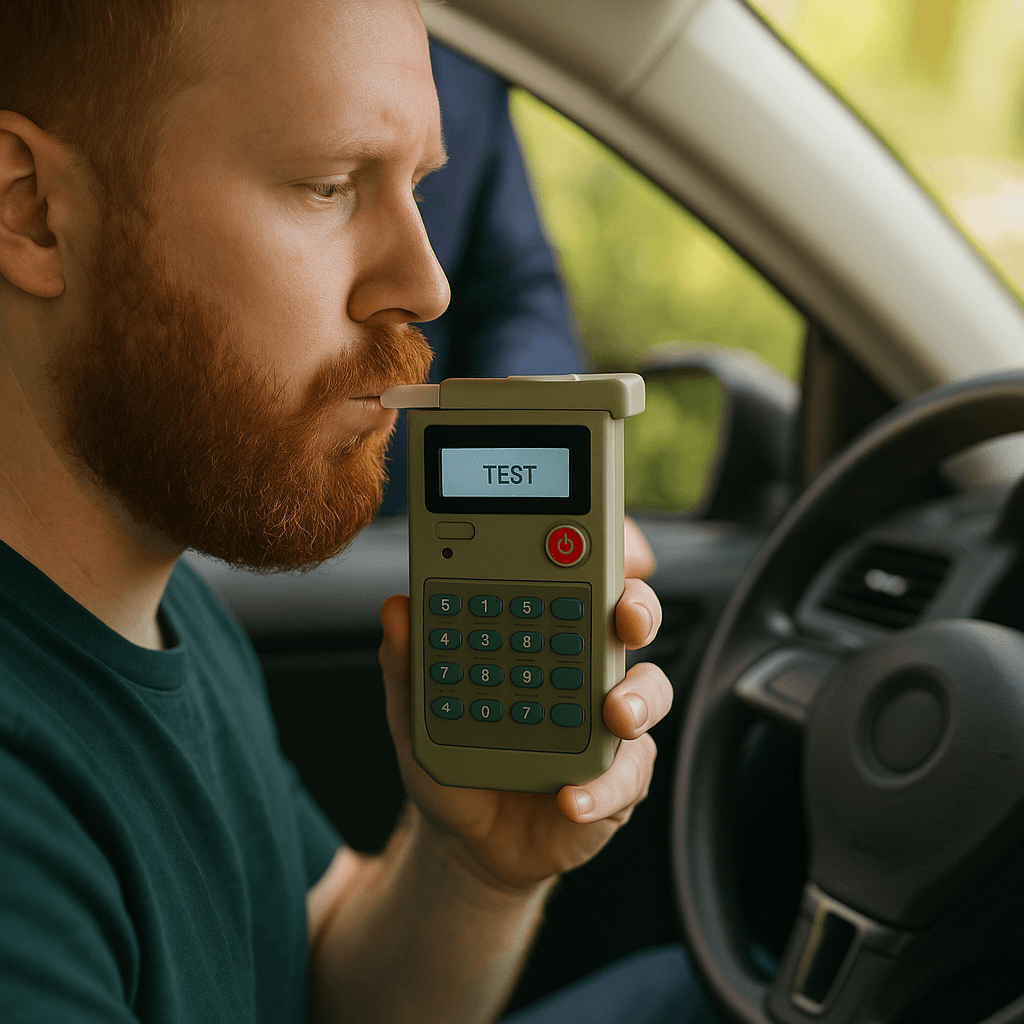
New Mexico's ignition interlock rules don't automatically account for rotating shifts or graveyard schedules. Here's how to petition for modification before installation locks you into an unworkable calibration schedule.
Why Standard Interlock Calibration Windows Conflict with Shift Work
New Mexico requires interlock calibration every 30 to 60 days depending on your conviction class and device provider. Most vendors schedule calibration appointments between 8 a.m. and 5 p.m. on weekdays. If you work rotating shifts, overnight schedules, or 12-hour rotations common in healthcare, manufacturing, or emergency services, those windows don't exist in your availability.
Missing a calibration appointment triggers a lockout after 7 days in New Mexico. Your device will display a warning countdown, then refuse to start your vehicle. The lockout doesn't pause your required installation period — you're still accruing monitored time toward your 12-month minimum (first offense) or 24-month minimum (second offense), but you can't drive. Most providers charge a $50 to $75 lockout reset fee on top of the missed appointment fee.
The conflict isn't theoretical. A 2022 survey of New Mexico interlock providers found that 18% of lockout incidents stemmed from missed calibration appointments, and nearly half of those drivers worked non-standard schedules. The state's interlock statute doesn't create automatic exemptions for shift workers, but it does allow court-ordered modifications during sentencing or through your probation officer if you can document schedule conflict.
How to Petition for Modified Calibration Requirements at Sentencing
New Mexico Statutes Section 66-8-102 gives district courts discretion to modify interlock conditions if they create demonstrable hardship that interferes with employment. The statute doesn't define hardship, but New Mexico case law establishes that inability to meet calibration windows due to work schedule qualifies — if you present documentation at sentencing.
You need three elements in your petition: a letter from your employer on company letterhead confirming your shift schedule and noting that missed shifts for calibration would result in discipline or termination; a proposed alternative calibration schedule showing specific days and times you are available; and verification from an approved interlock provider that they can accommodate your proposed schedule. Most public defenders and DUI attorneys in New Mexico are familiar with this process, but many don't file the motion unless you specifically request it.
Timing is critical. You must file the petition before the sentencing hearing or within 10 days of sentencing if new employment begins after your court date. After interlock installation, modification requests go through your probation officer and require a formal motion to modify conditions of probation — a process that typically takes 45 to 90 days and doesn't pause your calibration obligations in the interim. Most drivers who wait until after installation either rack up lockout violations or lose their jobs trying to meet standard calibration windows.
Find out exactly how long SR-22 is required in your state
What Happens If You're Already Installed and Working Shift Schedules
If your interlock is already installed and you started a shift job afterward, you're not locked into the original calibration schedule permanently, but the modification process is slower and requires probation officer approval. Contact your assigned probation officer immediately — not the interlock provider. Providers cannot modify court-ordered calibration frequency or timing without written authorization from probation or the court.
You'll need the same documentation package: employer letter, proposed schedule, and provider confirmation of availability. Your probation officer submits a motion to modify to the sentencing court. New Mexico district courts typically rule on modification motions within 30 to 60 days, but there's no statutory deadline. During that window, you remain subject to the original calibration schedule. Missing appointments while waiting for modification approval still triggers lockouts and violation reports to the court.
Some probation officers recommend temporary unpaid leave or shift trades to avoid violations during the modification period. That's not a legal requirement, but it reflects the practical reality: courts view missed calibration as non-compliance with sentencing terms, and repeated violations can result in interlock period extension or probation revocation regardless of pending modification motions. If you're in this position, document every missed calibration with your employer's shift schedule and file a hardship affidavit with your probation officer to create a paper trail showing good-faith compliance effort.
Alternative Compliance Options for Drivers Who Cannot Meet Any Calibration Window
New Mexico does not offer portable breathalyzer or remote calibration devices as interlock alternatives. If your work schedule genuinely cannot accommodate any calibration window — for example, you work 21-day offshore rotations in the oil and gas industry or 14-day wildland firefighting deployments — your options narrow to three paths.
First, you can petition for a restricted interlock license that limits your driving to specific routes and times when calibration is possible. New Mexico allows restricted licenses for work, medical appointments, DUI education, and interlock servicing. The restriction doesn't shorten your required interlock period, but it confines your driving obligation to windows where calibration is logistically feasible. Most district courts approve restricted licenses if you provide employer verification that restricted hours meet job requirements.
Second, you can request supervised probation with suspended interlock requirement during active deployment or rotation periods, with interlock reinstated during your off-rotation home periods. This extends your total probation length but allows you to work without accruing lockout violations. Courts rarely approve this for standard shift work, but it's been granted in New Mexico for military deployment, offshore energy work, and long-haul trucking where the driver is out of state for weeks at a time.
Third, if neither option works and your employment is your primary income source, some drivers choose to serve the full license suspension period without applying for interlock-restricted driving privileges, then reinstate with full privileges after the suspension ends. For a first-offense DUI in New Mexico, that's a 12-month revocation. You lose driving privileges entirely, but you avoid the interlock cost (typically $90 to $125/month for device lease, calibration, and monitoring) and the compliance burden. You'll still need SR-22 insurance when you reinstate, and your rates will reflect the full suspension period, but you eliminate the calibration conflict.
How Interlock Violations Affect Your SR-22 Requirement and Insurance Rates
New Mexico requires SR-22 filing for 3 years following DUI conviction, measured from your reinstatement date, not your conviction date. If your interlock period is extended due to calibration violations or lockouts, your SR-22 requirement doesn't extend with it — the 3-year clock starts when you reinstate with full privileges after completing interlock.
But interlock violations do appear on your MVR and affect your insurance rates independently of the underlying DUI. Insurers view missed calibration, failed rolling retests, and lockout incidents as continuation of high-risk behavior. A DUI with clean interlock completion typically results in a 70% to 110% rate increase in New Mexico's non-standard market. A DUI with interlock violations pushes that increase to 120% to 180%, and some carriers — including Bristol West and Dairyland — add a $15 to $30 per month surcharge for active interlock violations on your record.
Lockout incidents are reported to the New Mexico Motor Vehicle Division within 48 hours and forwarded to the sentencing court and your probation officer. If you accumulate three or more lockouts in a 12-month period, most New Mexico district courts extend your interlock requirement by 6 to 12 months. That extension restarts your SR-22 filing clock because your reinstatement date moves forward. Effectively, every lockout cycle adds 3 years of SR-22 requirement on the back end.
Finding SR-22 Coverage That Accommodates Interlock and Shift Work
Most New Mexico drivers with DUI-interlock requirements are in the non-standard insurance market. Mainstream carriers — State Farm, Geico, Allstate, Progressive — will file SR-22 for existing customers but typically non-renew at the end of your policy term. New policies after DUI generally require non-standard carriers like GAINSCO, The General, Acceptance, or Direct Auto, all of which write interlock-required policies in New Mexico.
Non-standard carriers don't offer discounts for clean interlock records, but they do surcharge for violations. If your work schedule has already generated lockout incidents, expect quotes $40 to $70 per month higher than a DUI with clean interlock compliance. Some carriers — particularly Acceptance and Bristol West — require you to provide interlock service records at renewal to verify compliance status. If you're mid-modification and have documented lockouts with probation officer acknowledgment, include that documentation with your application. It won't eliminate the surcharge, but it may prevent declination.
If you're shopping for coverage before interlock installation and you know your shift schedule will create calibration conflicts, disclose that to your agent or the carrier underwriting team. Some non-standard carriers have preferred provider relationships with interlock vendors that offer extended service hours or weekend calibration. GAINSCO, for example, works with Smart Start locations in Albuquerque and Las Cruces that offer Saturday calibration windows. That doesn't solve graveyard shift conflicts, but it expands your available window before you're locked into a standard provider.