California allows restricted driving with an IID during suspension, but shift workers face strict time windows and zero tolerance for deviation. Here's how the program actually works when your job doesn't fit the 5-to-9 template.
What California's IID Restricted License Actually Covers for Work Commutes
California's IID restricted license allows driving to and from work, DUI education classes, IID service appointments, and court-ordered obligations during suspension. The restriction applies 24/7 once the device is installed and the restricted license is issued by DMV, but the physical license order specifies approved driving purposes — and those purposes are interpreted more narrowly than the statute suggests.
Shift workers hit two problems. First, DMV restricted license orders often encode specific time windows for work commutes based on employer verification forms submitted at application. If your shift changes after approval or you pick up overtime hours outside the stated window, you're technically driving outside restriction. Second, the IID itself logs every trip with GPS timestamp and ignition data, creating an auditable record that probation officers and DMV compliance units can request at any time.
The gap between statutory eligibility and actual approval becomes visible when your employer verification lists variable hours or rotating shifts. DMV processing clerks default to the narrowest interpretation: if your form says "variable 2pm-10pm or 10pm-6am," expect the restricted order to approve one shift block, not both. Amending the order after issuance requires a new DMV hearing in most cases.
How Interlock Devices Track Shift Work and What Triggers Violations
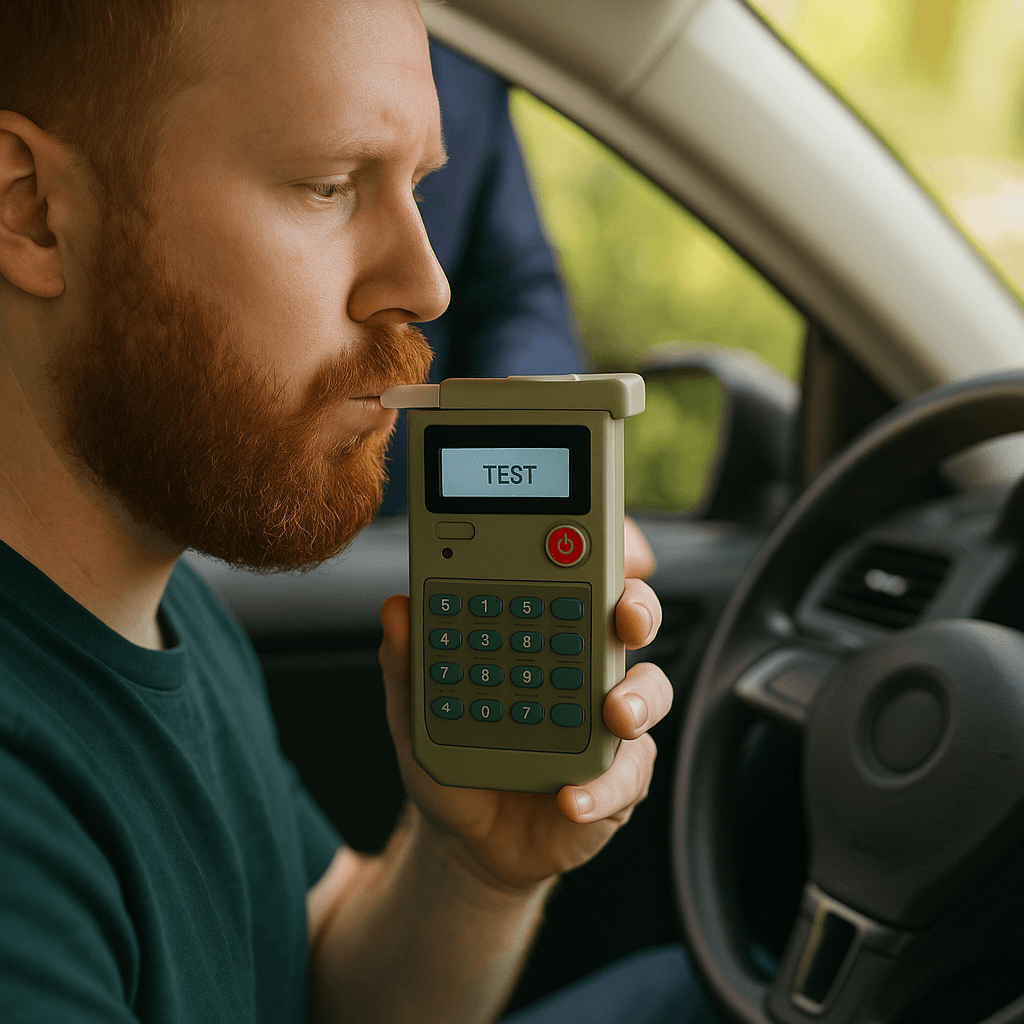
Every IID-equipped vehicle logs ignition events, rolling retest prompts, failed breath samples, and GPS coordinates. California-approved devices (Intoxalock, LifeSafer, Smart Start, Guardian Interlock) report monthly to DMV, and probation officers can pull reports on demand. The device doesn't know your approved restriction windows — it just records every trip.
A violation occurs when DMV or probation cross-references your trip log against your restricted license order and finds driving outside approved times or purposes. This happens most often during monthly monitoring reviews for repeat-offense DUI or when a probation officer requests an audit after a missed appointment. First-offense drivers with standard probation face lighter monitoring, but the data exists regardless.
Shift workers generate ambiguous trip patterns. A 10pm ignition event could be the start of a graveyard shift commute or a personal errand. The IID logs the trip; the restricted license order determines legality. If your order approves "employment 6am-6pm" and your actual shift is 10pm-6am, every commute is a potential violation even though you're driving to work. DMV doesn't auto-flag these discrepancies — but once reviewed, the violation is retrospective and documented.
Find out exactly how long SR-22 is required in your state
Employer Verification Forms and Shift Schedule Changes
California DMV Form DL 6 (Verification of Employment) anchors your restricted license approval. Your employer certifies your work address, shift times, and days worked per week. DMV uses this to set approved driving windows. The form works cleanly for 9-to-5 jobs. It fails for shift work, on-call schedules, and employees with multiple job sites.
If your shift changes after your restricted license is issued, DMV requires updated employer verification and a potential amendment hearing. You cannot simply drive the new hours because your job demands it. The restricted order governs, not the employment reality. Many shift workers discover this only after a probation check or a DMV compliance review six months into their restriction period.
Some employers refuse to complete DL 6 for liability reasons or because HR doesn't understand the form's purpose. Night-shift workers at staffing agencies face additional barriers — the agency may not know your actual assignment hours when DMV requests verification. If you cannot produce employer verification, DMV defaults to the statutory minimum restriction: DUI classes and IID service only, no work commute approval.
SR-22 Filing Requirements During IID Restriction Period
California requires SR-22 filing for the entire DUI suspension and restriction period. First-offense DUI triggers 3 years of SR-22 from conviction date. The SR-22 must remain active while you hold a restricted license and after full reinstatement. Letting the SR-22 lapse during restriction voids your driving privilege immediately and resets your suspension clock in most cases.
Non-standard carriers that write IID-restricted drivers include Acceptance Insurance, Dairyland, Bristol West, and GAINSCO. Monthly premiums for DUI-SR-22 policies with IID restriction average $180-$290 in California depending on age, county, and violation count. Los Angeles and San Francisco counties run higher due to density and claims frequency.
Most mainstream carriers — State Farm, Geico, Allstate, Progressive — will file SR-22 for current policyholders but non-renew at term after DUI conviction. Shift workers need non-standard market access because employment gaps or late-night commutes increase perceived risk. Expect higher deposits and six-month policy terms instead of twelve-month. SR-22 filing fees run $15-$25 per filing depending on carrier.
What Happens When Your Shift and Restriction Order Don't Align
If your restricted license approves 7am-7pm work commutes and your actual shift is 11pm-7am, you face a choice: request an amendment hearing before driving the new hours, or drive without restriction compliance and risk documented violations. Amendment hearings take 4-8 weeks to schedule at most California DMV offices. You cannot legally drive the mismatched hours while waiting for the hearing.
Some drivers assume probation officers or DMV won't notice. IID data proves otherwise. Monthly compliance reports flag trip frequency and timing patterns. A probation officer reviewing your log sees 15 ignition events between 10pm-midnight over 30 days. If your restriction order shows no approved night driving, those trips become violation evidence. Consequences range from extended restriction periods to full license revocation depending on violation count and offense class.
The safest path: submit updated DL 6 employer verification and request an amendment hearing the day your shift changes. Do not drive outside approved hours until the amended order is issued. If your employer cannot verify night hours or your job is inherently variable, your restricted license may not support that employment. California's IID program was designed for static schedules, and deviation is treated as non-compliance regardless of employment necessity.
Costs Beyond the IID: Insurance and Compliance During Restriction
IID installation costs $70-$150, monthly monitoring fees run $60-$90, and removal fees average $50-$100. California offers a reduced-cost IID program for low-income drivers, capping monthly fees at $35-$40 through participating providers. Shift workers face higher fuel costs if the IID-required service appointments conflict with work hours — most providers require in-person calibration every 30-60 days during business hours.
SR-22 insurance premiums compound the cost. A clean-record driver in California pays $85-$140/month for liability coverage. After DUI with SR-22 and IID restriction, that same driver pays $180-$290/month in the non-standard market. Annual insurance cost increase: $1,140-$1,800. Premiums drop after the SR-22 period ends, but most drivers don't return to standard market rates until 5-7 years post-conviction.
Budget for $2,500-$3,200 total first-year cost: IID installation and monitoring ($850-$1,230), SR-22 insurance premium increase ($1,140-$1,800), and DMV reinstatement fees ($125). Shift workers with variable income face cash flow mismatches — IID fees and insurance premiums bill monthly, but overtime or gig income may not. Missing one IID payment can trigger device lockout and a probation violation.