Oklahoma felony DUI convictions require SR-22 filing for up to 10 years and force you into the non-standard market. Here's what coverage is available, which carriers will write you, and how conviction class changes your filing timeline.
What Makes a DUI a Felony in Oklahoma and How Does It Change SR-22 Filing?
Oklahoma classifies a DUI as a felony under three conditions: second offense within 10 years, third or subsequent offense at any time, or first offense causing great bodily injury. Felony DUI conviction triggers a 10-year SR-22 filing requirement from the date of conviction, compared to 3 years for a first-offense misdemeanor DUI. The SR-22 clock starts on your conviction date, not your reinstatement date—a distinction that adds months to most drivers' actual filing periods because license reinstatement follows sentencing, IID installation, and DUI education completion.
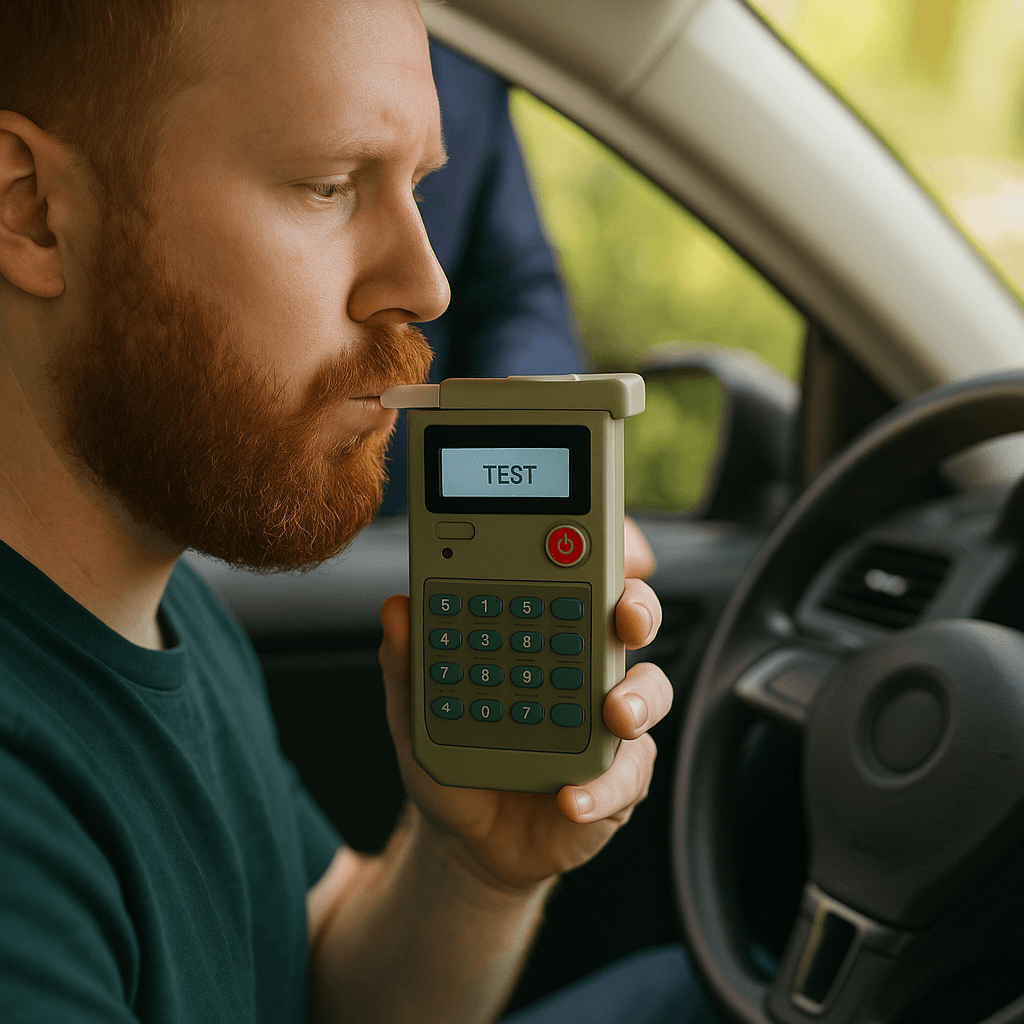
Oklahoma Department of Public Safety requires continuous SR-22 coverage for the entire duration. A single day of lapse cancels your filing and resets the 10-year clock to zero, requiring you to restart from day one. Your carrier must notify DPS within 10 days of policy cancellation or non-renewal, which triggers immediate license suspension. Most felony DUI convictions also carry mandatory ignition interlock device requirements—18 months minimum for second offense, 4 years for third offense—and your SR-22 policy must cover the IID-equipped vehicle specifically.
Felony conviction class also determines carrier acceptance. Mainstream carriers—State Farm, Geico, Allstate, Progressive—will file SR-22 for existing customers through the end of the current policy term but non-renew at expiration for felony convictions. New policies require the non-standard market, and only Bristol West and Direct Auto regularly write felony DUI policies in Oklahoma during the first 12 months post-conviction. Acceptance opens after year two when Dairyland, GAINSCO, and Acceptance enter the market.
Which Carriers Write Felony DUI SR-22 Policies in Oklahoma?
Bristol West and Direct Auto are the only two carriers consistently writing new felony DUI policies in Oklahoma within the first year of conviction. Both operate in the non-standard market and price felony DUI at $185–$310/mo for state minimum liability, depending on BAC level, prior violations, and county of residence. Bristol West requires proof of IID installation before binding coverage and will not write policies for drivers with felony DUI plus prior at-fault accidents in the past 3 years. Direct Auto accepts stacked violations but prices them at the top of the range.
After 24 months from conviction, your carrier pool expands to include Dairyland, GAINSCO, Acceptance, Safe Auto, and The General. These carriers price felony DUI at $140–$240/mo for state minimum, reflecting lower underwriting risk as time passes. Dairyland and GAINSCO offer the lowest rates in this tier but require clean driving records aside from the DUI—no subsequent speeding tickets, lapses, or at-fault accidents since conviction. Safe Auto and The General accept additional violations but charge accordingly.
Kemper and Titan enter the market at year five post-conviction for drivers who have completed their SR-22 filing period cleanly. These carriers bridge the gap between non-standard and standard markets, pricing felony DUI at $95–$160/mo. No Oklahoma carrier will write a new policy while an SR-22 lapse is active on your record. You must reinstate, refile, and maintain coverage for at least 90 days before most non-standard carriers will quote you.
Find out exactly how long SR-22 is required in your state
How Much Does SR-22 Insurance Cost After Felony DUI in Oklahoma?
Oklahoma felony DUI drivers pay $185–$310/mo for state minimum SR-22 coverage in the first year post-conviction, compared to $85–$140/mo for drivers with clean records. The felony conviction multiplier ranges from 2.2x to 3.6x depending on your BAC level, prior offenses, and whether your conviction included injury or property damage. Aggravating factors—BAC over 0.15, refusal of chemical test, minor in vehicle—push rates to the top of the range regardless of carrier.
The SR-22 filing fee itself is $25–$50 in Oklahoma, paid once at policy inception and again at each policy renewal. This fee is separate from your premium and covers the carrier's administrative cost of filing Form SR-22 with DPS. Some carriers charge the fee upfront, others roll it into your first month's premium. Bristol West and Direct Auto both charge $50; Dairyland charges $25.
Rates decrease as time passes if you maintain continuous coverage and avoid new violations. Drivers who complete 3 years of clean SR-22 filing see rates drop to $120–$200/mo even while the SR-22 requirement continues. By year seven, rates approach $95–$150/mo for state minimum if no lapses or new violations have occurred. Full coverage—collision and comprehensive added to liability—runs $340–$580/mo in year one for felony DUI drivers, making it unaffordable for most until year three or later.
What Happens If You Let Your SR-22 Lapse During the 10-Year Requirement?
Oklahoma law treats SR-22 lapse as immediate grounds for license suspension. Your carrier notifies DPS within 10 days of cancellation, non-renewal, or non-payment, and DPS suspends your license the day they process the notice—no warning letter, no grace period. The 10-year SR-22 filing clock resets to zero on the lapse date, meaning you restart the entire requirement from the beginning regardless of how many years you had already completed.
Reinstatement after lapse requires three steps in sequence. First, purchase a new SR-22 policy from a carrier willing to write lapsed drivers—a much smaller pool than the already-limited felony DUI market. Second, pay a $250 reinstatement fee to DPS plus any outstanding fines or fees from the original conviction. Third, maintain the new SR-22 policy for a minimum of 90 days before DPS will process your reinstatement application. Total time from lapse to reinstatement averages 4–6 months if you act immediately.
Carriers treat lapsed SR-22 drivers as higher underwriting risk than active filers. Bristol West will not write new policies for drivers with lapses in the past 24 months. Direct Auto accepts lapses but prices them $40–$70/mo higher than continuous filers. GAINSCO requires 6 months of continuous coverage with another carrier before they will quote a lapsed driver. The reinstatement penalty is severe enough that most felony DUI drivers benefit from paying their premium on autopay and maintaining six months of premium reserves to avoid accidental lapse.
Can You Reduce the 10-Year SR-22 Filing Period in Oklahoma?
Oklahoma statute does not provide early termination or reduction of the SR-22 filing period for felony DUI convictions. The 10-year duration is mandatory and begins on your conviction date, not your reinstatement date or release from incarceration. Completing probation, IID requirements, or DUI education programs does not shorten the SR-22 period. You must maintain continuous SR-22 coverage for the full 120 months from conviction to satisfy state requirements.
Some drivers confuse the IID requirement timeline with the SR-22 timeline. Oklahoma felony DUI carries mandatory ignition interlock—18 months minimum for second offense, 4 years for third offense—but completing your IID period does not end your SR-22 obligation. Both requirements run independently. Your SR-22 must remain active for the full 10 years even after IID removal, and your policy must be updated to reflect IID removal to avoid coverage gaps.
The only mechanism to challenge the 10-year period is through direct appeal of the underlying conviction or post-conviction relief, both of which require legal representation and rarely succeed on SR-22 duration grounds alone. If your conviction is overturned or reduced to a misdemeanor on appeal, DPS will adjust your SR-22 requirement to match the amended conviction class—typically reducing the period to 3 years. Expungement does not terminate active SR-22 requirements in Oklahoma, though it may prevent future violations from stacking.
What Coverage Limits Should You Carry With Felony DUI SR-22 in Oklahoma?
Oklahoma requires SR-22 filers to carry minimum liability limits of 25/50/25: $25,000 per person for bodily injury, $50,000 per accident for bodily injury, and $25,000 for property damage. These are the statutory minimums DPS accepts for SR-22 compliance, and most felony DUI drivers choose state minimum to keep premiums affordable during the first 1–3 years of the filing period when rates are highest. State minimum costs $185–$310/mo for felony DUI drivers in year one; increasing limits to 50/100/50 adds $40–$70/mo.
Higher limits become financially viable and legally protective after year three. Drivers who cause injury or property damage in an at-fault accident face personal liability for any amount exceeding their policy limits, and Oklahoma allows injured parties to garnish wages and attach assets to collect judgments. A serious injury accident with state minimum limits can produce $100,000–$500,000 in excess liability. Increasing to 100/300/100 limits costs $220–$380/mo for felony DUI drivers in year three, compared to $185–$310/mo for state minimum—a smaller percentage increase as base rates decline.
Uninsured motorist coverage is optional in Oklahoma but worth carrying for felony DUI drivers. Oklahoma has a 26% uninsured driver rate, among the highest in the nation, and UM coverage pays your medical bills and lost wages if you are hit by an uninsured driver. Adding UM at 25/50 limits costs $15–$25/mo for non-standard policies. Collision and comprehensive coverage are optional and expensive—$340–$580/mo total for full coverage in year one—making them impractical unless you are financing a vehicle and your lender requires them.