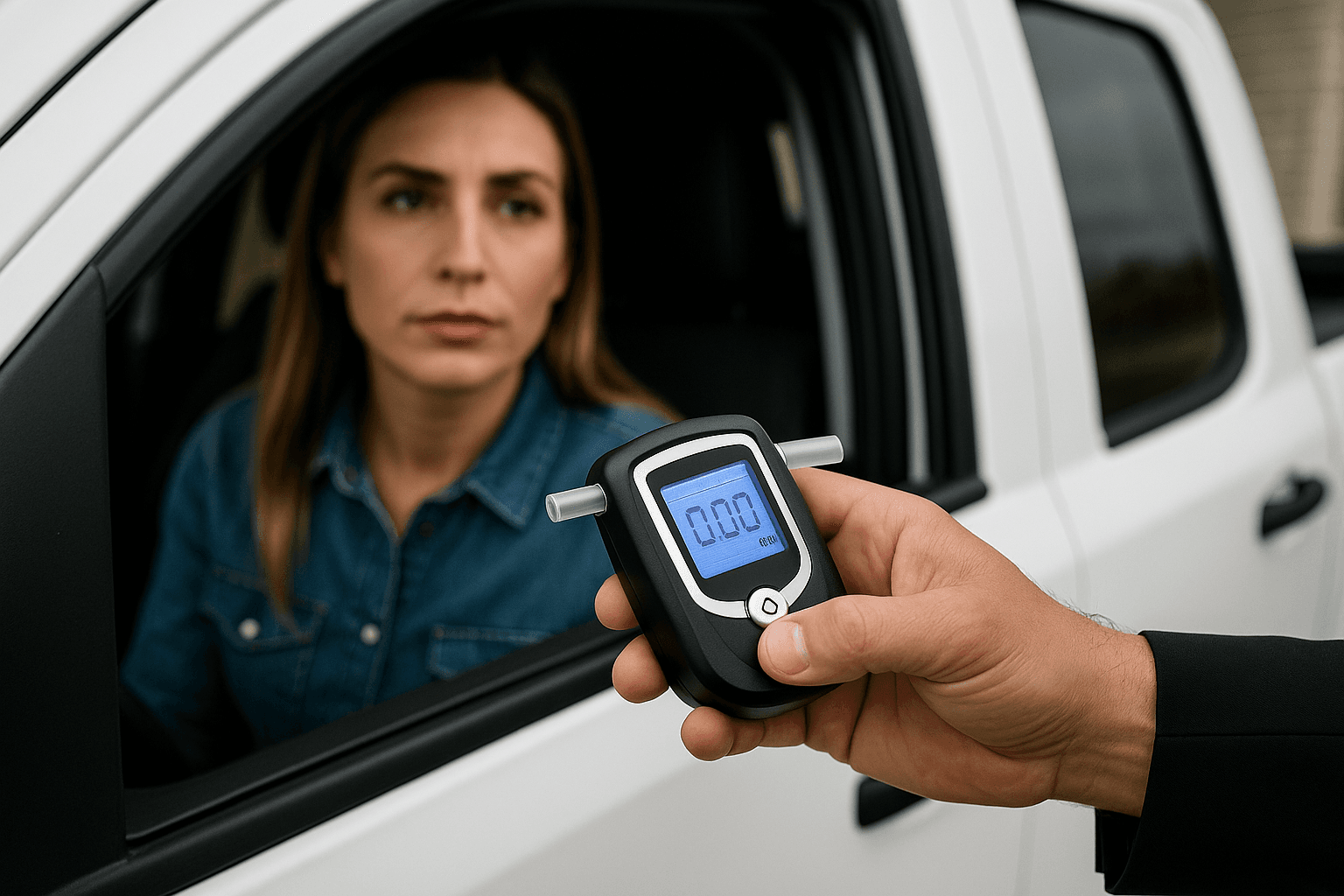
Delaware charges first-offense DUI as a felony if your BAC was 0.15% or higher, or if a minor was in the vehicle. That felony conviction closes the door to standard carriers and triggers a three-year SR-22 filing requirement most drivers didn't know applied on first offense.
Delaware Charges First-Offense DUI as a Felony Under Two Conditions
Delaware charges first-offense DUI as a felony — not a misdemeanor — if your blood alcohol content measured 0.15% or higher at the time of arrest, or if a passenger under age 18 was in the vehicle. Most states reserve felony DUI for repeat offenses or injury crashes, but Delaware Revised Code Title 21 §4177 classifies these aggravated circumstances as felonies on first conviction. The distinction isn't academic: felony DUI conviction closes the door to every major standard-market carrier and triggers a three-year SR-22 filing requirement that begins the day your license is reinstated, not the day you were convicted.
If your BAC was below 0.15% and no minor was present, your first-offense DUI is charged as a misdemeanor. The SR-22 filing requirement is the same — three years — but carrier acceptance differs significantly. Misdemeanor DUI convictions allow placement with a handful of non-standard carriers who specialize in high-risk drivers. Felony DUI convictions limit your options to three or four non-standard carriers operating in Delaware, and pricing reflects that scarcity.
Delaware does not distinguish between DUI and DWI. Both terms reference the same offense under state law. The conviction class — felony versus misdemeanor — depends entirely on BAC level and passenger age, not injury or property damage.
SR-22 Filing Runs Three Years From Reinstatement Date, Not Conviction Date
Delaware requires continuous SR-22 filing for three years after a DUI conviction, measured from the date your license is reinstated — not the date you were convicted or sentenced. If your license was suspended for 12 months and you wait six months before applying for reinstatement, your SR-22 clock doesn't start until reinstatement is granted. Most drivers miscalculate this window and file SR-22 too early, then let coverage lapse before the actual requirement ends.
The Delaware Division of Motor Vehicles tracks SR-22 filing status electronically. If your carrier cancels your policy or you let coverage lapse for any reason during the three-year period, the DMV receives a cancellation notice within 24 hours. That lapse resets your three-year clock to zero. You must refile SR-22, pay a $100 reinstatement fee, and restart the full three-year period from the new filing date.
Your carrier files SR-22 directly with the DMV on your behalf. You do not file it yourself. The filing fee ranges from $15 to $50 depending on carrier, and the fee is charged once at policy inception — not annually. You must maintain continuous liability coverage at Delaware's minimum limits throughout the filing period: $25,000 bodily injury per person, $50,000 bodily injury per accident, $10,000 property damage per accident.
Find out exactly how long SR-22 is required in your state
Felony DUI Closes Standard-Market Carriers and Raises Rates 150-200%
State Farm, Geico, Allstate, Progressive, and USAA do not write new policies for drivers with felony DUI convictions in Delaware. If you held a policy with one of these carriers before your conviction, they will file SR-22 for you as an existing customer — but most non-renew at policy term. Felony convictions trigger underwriting rules that classify you as uninsurable in the standard market for five to seven years post-conviction, regardless of SR-22 compliance.
Non-standard carriers who accept felony DUI in Delaware include Dairyland, Bristol West, The General, and GAINSCO. Availability varies by county and driver profile. Monthly premiums for liability-only coverage with SR-22 filing typically range from $180 to $280 per month for felony DUI conviction, compared to $70 to $110 per month for misdemeanor DUI. The rate increase reflects felony conviction classification, not just the SR-22 filing requirement. Collision and comprehensive coverage costs an additional $90 to $150 per month if your vehicle carries a loan or lease requirement.
If you do not own a vehicle, you can satisfy Delaware's SR-22 requirement with a non-owner SR-22 policy. Non-owner policies provide liability coverage when you drive a borrowed or rented vehicle, and they maintain your SR-22 filing status without requiring you to insure a specific car. Monthly premiums for non-owner SR-22 range from $50 to $90 per month for felony DUI conviction. This is the lowest-cost path to SR-22 compliance if you rely on rideshare, public transit, or borrowed vehicles during your filing period.
Delaware Requires Ignition Interlock Device for All DUI Convictions
Delaware mandates ignition interlock device installation for all DUI convictions — first offense, misdemeanor, and felony — under Title 21 §4177D. The IID requirement runs for four months minimum on first-offense misdemeanor DUI, 12 to 18 months on first-offense felony DUI, and 18 to 24 months on repeat-offense convictions. Your IID period overlaps with your SR-22 filing period but follows a separate timeline set by the court and monitored by the Delaware IID program administrator, not your insurance carrier.
You must install the IID before your license is reinstated. The device connects to your vehicle's ignition system and requires a breath sample before the engine starts. Installation costs $75 to $150, and monthly monitoring and calibration fees range from $75 to $100. These costs are separate from your SR-22 insurance premium. Your carrier does not discount your SR-22 policy for IID compliance — the device satisfies a court requirement, not an underwriting incentive.
If you drive a company vehicle for work, Delaware law allows a work-use exemption that permits you to drive an employer-owned vehicle without an IID during work hours only. The exemption does not apply to your personal vehicle, and you must carry proof of the court-issued exemption and your employer's written authorization in the company vehicle at all times. Your SR-22 filing requirement continues regardless of whether you use the work exemption.
License Reinstatement Requires SR-22 Filing, Fees, and DUI Program Completion
Delaware suspends your driver's license for 12 months on first-offense felony DUI conviction. You may apply for reinstatement after completing the suspension period, paying a $200 reinstatement fee, filing proof of SR-22 insurance, installing an ignition interlock device, and completing a court-ordered alcohol evaluation and treatment program. All five requirements must be satisfied before the DMV issues a reinstated license. Missing any single requirement delays reinstatement and extends your SR-22 filing clock.
The Delaware DUI program consists of an assessment conducted by a state-approved substance abuse evaluator, followed by 12 to 24 hours of group education or individual counseling depending on assessment results. Program fees range from $300 to $800. The program must be completed before you apply for reinstatement, and the evaluator submits completion certification directly to the DMV. You do not submit proof yourself.
Once all requirements are satisfied, you must visit a Delaware DMV office in person to apply for reinstatement. You cannot reinstate online or by mail. Bring your SR-22 filing confirmation, IID installation certificate, DUI program completion certificate, and payment for the $200 reinstatement fee. The DMV issues a reinstated license the same day if all documents are verified. Your three-year SR-22 filing period begins that day.
Moving Out of Delaware Does Not End Your SR-22 Requirement
If you move to another state before your three-year SR-22 period ends, Delaware's filing requirement follows you. You must notify your carrier of your address change and request that they file SR-22 in your new state of residence. Most non-standard carriers write policies in multiple states and can transfer your SR-22 filing without canceling your policy. If your carrier does not operate in your new state, you must find a new carrier who writes SR-22 in that state before you cancel your Delaware policy. Allowing your Delaware SR-22 to lapse — even for one day — resets your three-year clock to zero.
Your new state may impose its own SR-22 filing requirements in addition to Delaware's. If your new state requires SR-22 for DUI convictions, you must satisfy both Delaware's three-year requirement and your new state's requirement simultaneously. Your carrier files a single SR-22 form with both states, but your filing period is the longer of the two requirements. If your new state does not require SR-22 for out-of-state DUI convictions, you continue filing only to satisfy Delaware's requirement until the three-year period ends.
Florida and Virginia do not accept SR-22 filings. These states require FR-44 filings instead, which mandate higher liability limits than SR-22. If you move to Florida or Virginia, you cannot transfer your Delaware SR-22. You must obtain an FR-44 policy and file it with your new state, but Delaware's three-year SR-22 requirement continues separately. You must maintain both filings — FR-44 in your new state and SR-22 to satisfy Delaware — until Delaware's requirement expires.