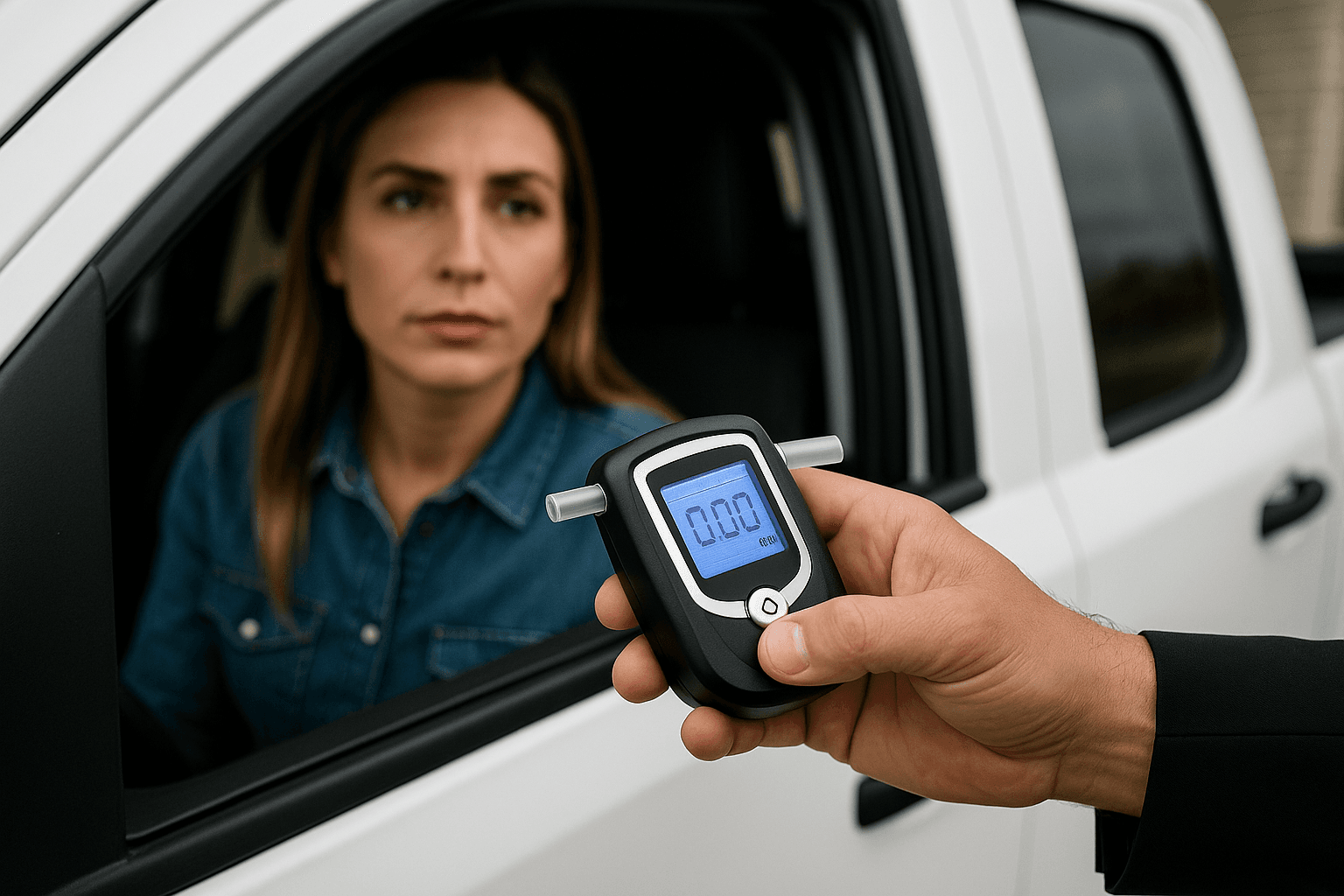
Missouri's DUI compliance starts at arrest, not conviction. Get the SR-22 filing sequence, IID installation timeline, and hardship license window right or you'll reset your entire reinstatement clock.
Missouri's DUI Clock Starts at Arrest, Not Conviction
Your SR-22 filing period in Missouri begins the day you're arrested for DUI, not the day you're convicted. The Department of Revenue suspends your license administratively within 15 days of arrest if you refused chemical testing or failed with a BAC of 0.08% or higher. That suspension runs parallel to any criminal court proceedings, which typically take 60 to 120 days to resolve.
Most drivers assume they should wait for their court date to start the SR-22 process. That's a costly mistake. If you file SR-22 on the day of conviction four months after arrest, you've already burned four months of your required filing period with no credit. Missouri counts SR-22 compliance from the date your license is reinstated, not from arrest or conviction, but reinstatement can't happen until you satisfy all court and DMV requirements simultaneously.
The sequence matters because Missouri stacks three separate compliance tracks: DMV administrative suspension, criminal court sentencing, and SR-22 insurance filing. All three must align before you can reinstate. Missing the timing on any one piece resets the entire process.
What Happens in the First 15 Days After Your Missouri DUI Arrest
Missouri's Department of Revenue mails a Notice of Suspension within 15 days of your arrest. If you refused breath or blood testing, your license suspends for one year. If you took the test and failed, the suspension is 90 days for a first offense. These are administrative suspensions and occur whether or not you're convicted in criminal court.
You have 15 days from the date of the notice to request an administrative hearing to contest the suspension. Most DUI attorneys file this petition automatically because it delays the suspension start date by 30 to 60 days while the hearing is scheduled. That delay doesn't extend your total suspension period, but it keeps you driving legally while you arrange SR-22 coverage and evaluate IID installation options.
If you don't request a hearing or you lose the hearing, the suspension begins immediately. At that point, your only legal driving option is a hardship license, which requires proof of SR-22 insurance and an ignition interlock device installed in any vehicle you operate.
Find out exactly how long SR-22 is required in your state
SR-22 Filing Comes Before IID Installation in Missouri
Missouri requires SR-22 insurance before you can apply for a hardship license or reinstate your full license after a DUI suspension. The SR-22 is a certificate your insurance carrier files with the Department of Revenue proving you carry at least Missouri's minimum liability limits: $25,000 per person, $50,000 per accident for bodily injury, and $25,000 for property damage.
You cannot install an ignition interlock device and start driving on a hardship license until your SR-22 is on file with the state. The IID provider will not activate the device without proof of insurance, and the DMV will not issue a hardship license without both the SR-22 filing and IID compliance confirmation. That means SR-22 is the first domino.
Most non-standard carriers file SR-22 electronically within 24 to 48 hours of binding your policy. Bristol West, Dairyland, and The General write DUI-SR-22 policies in Missouri and typically quote monthly premiums between $110 and $190 depending on your county, vehicle, and prior coverage history. Mainstream carriers like State Farm or Geico will file SR-22 for existing customers but usually non-renew the policy at the end of the term.
Ignition Interlock Device Requirements and Installation Timing
Missouri requires an ignition interlock device for all DUI offenders seeking a hardship license or reinstatement after refusal or repeat-offense convictions. First-offense DUI with BAC under 0.15% does not require IID for full reinstatement after the suspension period ends, but you'll need one if you want to drive during the suspension under a hardship license.
The IID must be installed by a state-approved provider. Missouri's approved vendor list includes LifeSafer, Intoxalock, and Smart Start. Installation costs run $70 to $150, with monthly monitoring and calibration fees of $60 to $90. The device requires calibration every 30 to 60 days, and any violation (failed breath test, missed calibration, tampering attempt) extends your IID requirement and can revoke your hardship license.
You can schedule IID installation the same day your SR-22 is filed. Most providers install within 48 to 72 hours of your appointment request. Once installed, the provider sends electronic confirmation to the Department of Revenue, which clears the IID compliance requirement for hardship license issuance. The sequence: SR-22 filed, IID installed, hardship license issued. Missing any step halts the process.
Hardship License Eligibility and Application Process
Missouri offers a Limited Driving Privilege (hardship license) that allows you to drive to work, school, medical appointments, court-ordered programs, and alcohol treatment during your DUI suspension. You're eligible to apply 45 days into a first-offense suspension or immediately if your suspension is for refusal.
To qualify, you must show proof of SR-22 insurance, proof of IID installation, enrollment in a Substance Abuse Traffic Offender Program (SATOP), and payment of a $45 reinstatement fee. The SATOP requirement is non-negotiable and cannot be waived. Classes run 10 to 12 weeks and cost $300 to $500 depending on your evaluation tier.
The hardship license is not automatic. You file a petition with the circuit court in the county where you were arrested, and a judge reviews your employment, family responsibilities, and compliance with pre-trial conditions. Approval typically takes 14 to 30 days. If denied, you can reapply after 30 days. Once granted, the hardship license remains valid until your full license is eligible for reinstatement, provided you maintain continuous SR-22 coverage and zero IID violations.
How Long You'll Carry SR-22 After a Missouri DUI
Missouri requires SR-22 filing for two years following reinstatement of your driver's license after a DUI suspension. The two-year clock does not start at arrest, conviction, or the beginning of your suspension. It starts the day your license is reinstated, which means your total SR-22 duration depends on how long your suspension lasts and how quickly you complete all reinstatement requirements.
If you're suspended for 90 days and reinstate on day 91, you'll carry SR-22 for two years from that reinstatement date. If your suspension is one year and you reinstate after 12 months, your SR-22 requirement runs for two years from that point. Any lapse in SR-22 coverage during those two years resets the filing period to zero and triggers a new one-year suspension for failure to maintain financial responsibility.
Your insurance carrier is required to notify the Department of Revenue if your policy cancels or lapses for any reason. That notification is automatic and triggers immediate license suspension. Reinstatement after an SR-22 lapse requires filing a new SR-22, paying a $20 reinstatement fee, and serving any additional suspension period the DMV imposes. Most carriers will not backdate coverage to cure a lapse, so continuity is critical.
What a Missouri DUI Does to Your Insurance Rates
A DUI conviction in Missouri typically increases your auto insurance premium by 70% to 130% compared to your pre-conviction rate. If you were paying $90 per month before the DUI, expect quotes in the $150 to $210 per month range after conviction, assuming you move to a non-standard carrier willing to write DUI-SR-22 policies.
Mainstream carriers treat DUI as a near-automatic non-renewal trigger. State Farm, Allstate, and Progressive will file SR-22 for current customers but typically decline to renew the policy when the term ends. That forces most DUI offenders into the non-standard market: Bristol West, Dairyland, GAINSCO, The General, or Acceptance. These carriers specialize in high-risk drivers and price accordingly, but they're often the only option available immediately post-conviction.
Your rate will remain elevated for three to five years, the period most carriers look back when calculating risk. After three years with no additional violations, you may qualify to move back to a standard carrier at lower rates, but you'll still carry the SR-22 filing for the full two-year post-reinstatement period Missouri requires. Shop aggressively once your SR-22 requirement ends. Rates vary widely among carriers, and the non-standard market you entered post-DUI is not your permanent home.