You just received your DUI conviction in Greenville and now face stacked compliance: court sentencing, ADSAP enrollment, possible IID installation, license suspension, and SR-22 filing to get reinstated. Here's the actual timeline and what triggers each phase.
What Happens at Your DUI Arraignment in Greenville Municipal or County Court
Your arraignment occurs 30–60 days after arrest, depending on whether you're charged in Greenville Municipal Court (misdemeanor first offense) or General Sessions Court (felony or repeat offense). You enter your plea, the judge sets bond conditions if not already done at booking, and you receive your preliminary hearing date.
If you plead guilty or no contest at arraignment, sentencing happens immediately or within 10 days. If you plead not guilty, your case moves to a preliminary hearing where the solicitor presents evidence and the judge decides if probable cause exists to proceed to trial. Most first-offense DUI cases in Greenville resolve at this stage through plea negotiation.
Greenville County processes roughly 1,200 DUI cases annually, with 70–80% resolving before trial. First-offense standard DUI (BAC 0.08–0.15%) typically results in 48 hours jail or 48 hours public service, $400 fine, 6-month suspension, and ADSAP enrollment. Aggravated DUI (BAC 0.16%+) triggers 30–90 days jail, $500–$1,000 fine, and longer ADSAP requirements.
When Your License Suspension Starts and How Long It Runs
South Carolina imposes an administrative suspension through the DMV within 30 days of your arrest if you refused the breath test or blew 0.15% or higher. This runs separately from your court-imposed suspension and lasts 6 months for refusal, 90 days for high BAC. If you requested an Administrative Hearing within 30 days of arrest and lost, the suspension begins the day the hearing officer issues the order.
Your court-imposed suspension starts the day of sentencing, not conviction date. First-offense standard DUI: 6 months. First-offense aggravated DUI or refusal: 90 days minimum, up to 1 year. Second offense within 10 years: 1 year. Third offense: 2 years. These periods do not run concurrently with the administrative suspension—the longer period controls, and any overlap does not shorten your total suspension time.
You become eligible for a provisional license (Route Restricted License) after serving the minimum hard suspension period: 30 days for first offense, 60 days for second offense, 120 days for third offense. The provisional license allows work, school, ADSAP, medical appointments, and court-ordered programs only. You must install an Ignition Interlock Device (IID) for the provisional period if required by your conviction class.
Find out exactly how long SR-22 is required in your state
ADSAP Enrollment Requirement and How It Affects Your SR-22 Timeline
South Carolina requires all DUI offenders to complete the Alcohol and Drug Safety Action Program (ADSAP) before the DMV will reinstate your license. You enroll within 30 days of sentencing at one of the state-approved providers in Greenville County—Phoenix Center and Behavioral Health Services of Pickens County serve the area. The assessment costs $100, and the program fee ranges from $50 to $350 depending on the track assigned.
ADSAP assigns you to one of four tracks based on your assessment score: Track I (4 hours education), Track II (16 hours education), Track III (20 hours education plus follow-up), or Track IV (intensive outpatient treatment). First-offense standard DUI typically lands in Track II, completed in 2–4 weeks. Aggravated or repeat offenses trigger Track III or IV, which can run 8–12 weeks. You cannot apply for reinstatement until ADSAP issues your completion certificate to the DMV.
Most Greenville drivers mistime their SR-22 filing by trying to file before ADSAP completion. The DMV will not accept your reinstatement application—and therefore cannot start your SR-22 filing period—until ADSAP completion is on file. If you file SR-22 early, you're paying for coverage the state isn't counting yet.
When Your SR-22 Filing Period Actually Starts in South Carolina
South Carolina's SR-22 filing period starts on your reinstatement date, not your conviction date or suspension start date. This means if you were convicted January 1, suspended for 6 months, completed ADSAP in April, paid your reinstatement fee, and the DMV processed your reinstatement on July 15—your 3-year SR-22 clock starts July 15 and runs until July 15 three years later.
The length of your filing period depends on conviction class. First-offense standard DUI: 3 years from reinstatement. Second offense within 10 years: 3 years. Third offense or felony DUI: 5 years. Implied-consent refusal without conviction: 3 years. These periods are set by SC Code § 56-1-400 and do not reset unless you let your SR-22 lapse—which triggers a new suspension and a new 3- or 5-year filing period starting from your next reinstatement.
Greenville drivers commonly add 4–8 months to their filing requirement by delaying ADSAP enrollment or not tracking the reinstatement date carefully. The DMV does not send a reminder when your filing period ends. You must request a cancellation letter from your carrier and verify with the DMV that your requirement is satisfied before dropping SR-22 coverage.
Which Carriers Write SR-22 After DUI in Greenville and What It Costs
Most major carriers—State Farm, Geico, Allstate, Progressive—will file SR-22 for existing customers after a DUI but typically non-renew at the end of your 6-month policy term. If you were uninsured at the time of arrest or your carrier dropped you, you're shopping the non-standard market: Bristol West, Dairyland, The General, National General, and Acceptance all write SR-22 DUI policies in South Carolina.
First-offense DUI triggers a 70–130% rate increase over your pre-conviction premium, with SR-22 filing adding $25–$50 annually to your policy cost. A Greenville driver with clean prior record paying $110/mo before DUI typically sees rates jump to $190–$250/mo after conviction. Aggravated DUI or repeat offense pushes rates to $280–$400/mo. Liability-only SR-22 policies (state minimum 25/50/25 coverage) run $140–$220/mo for first-offense DUI drivers in the Greenville metro area.
Estimates based on available industry data; individual rates vary by driving history, vehicle, coverage selections, and exact location. Non-standard carriers quote differently—some charge flat high rates regardless of violation details, others tier by conviction class and prior record. Shopping at least three non-standard carriers typically produces a 15–30% rate spread for the same coverage limits.
Ignition Interlock Device Requirement and How It Layers With SR-22
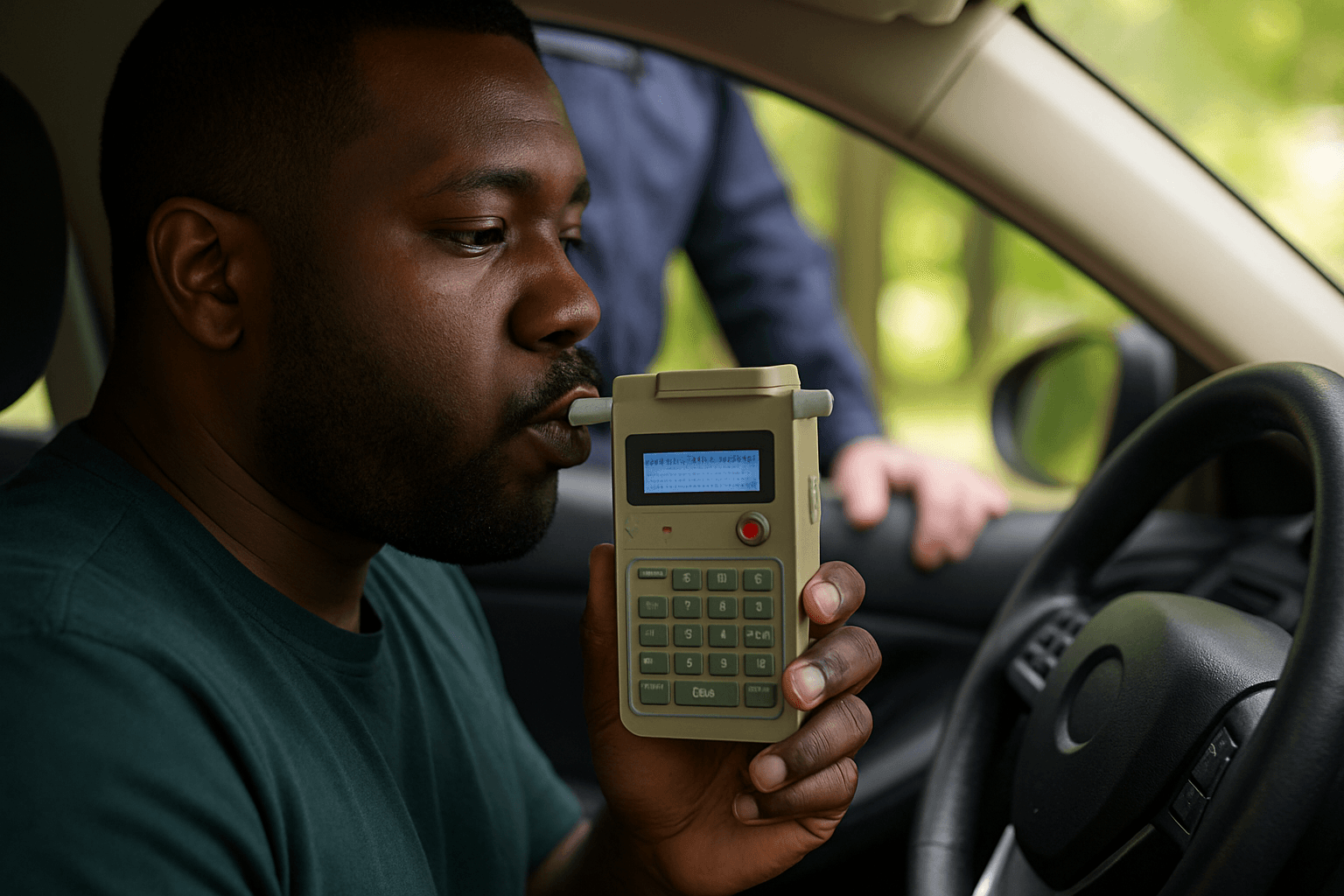
South Carolina requires an Ignition Interlock Device (IID) for your provisional license period if you were convicted of aggravated DUI (BAC 0.15%+), refused the breath test, or are a repeat offender. First-offense standard DUI (BAC 0.08–0.14%) does not require IID unless the judge orders it as a condition of probation. The IID requirement runs for the length of your provisional license period, typically the remainder of your suspension after you serve the hard 30–60 day period.
You pay for IID installation ($150–$200) and monthly monitoring ($75–$100) out of pocket. The device must be installed by a state-approved vendor before the DMV will issue your provisional license. Your insurance carrier does not pay for the IID, but some non-standard carriers offer slight rate reductions if you install one voluntarily because it signals compliance.
IID and SR-22 are separate compliance requirements managed by different agencies—the court or DMV orders IID, the DMV orders SR-22 filing. Your SR-22 carrier does not track your IID compliance. If your IID vendor reports a violation (failed start, tampering, missed calibration), the DMV can extend your provisional period or revoke it entirely, which does not stop your SR-22 clock but does mean you're paying for SR-22 coverage you cannot legally use to drive.
What Happens If You Let Your SR-22 Lapse Before the Filing Period Ends
If your SR-22 policy cancels for non-payment or you drop coverage before your 3- or 5-year filing period ends, your carrier is required by law to notify the South Carolina DMV electronically within 10 days. The DMV suspends your license immediately—no grace period, no warning letter. You are now driving on a suspended license if you continue operating a vehicle, which is a separate criminal offense carrying up to 30 days jail and $300 fine for first offense.
To reinstate after an SR-22 lapse, you pay a $100 reinstatement fee, file new SR-22, and your filing period resets to zero. If you were 2 years into a 3-year requirement and lapsed, you now owe 3 full years from the new reinstatement date. South Carolina does not credit time served before the lapse. A single missed payment that triggers a lapse can add 1–3 years to your total SR-22 obligation.
Greenville drivers switching carriers mid-filing-period must ensure continuous coverage with zero gap days. The new carrier files SR-22 before the old policy cancels, and you verify with the DMV that both filings show in their system. Most non-standard carriers allow you to backdate coverage by 24–48 hours if you catch a lapse immediately, but this is not guaranteed and requires calling the carrier and the DMV the same day you discover the gap.