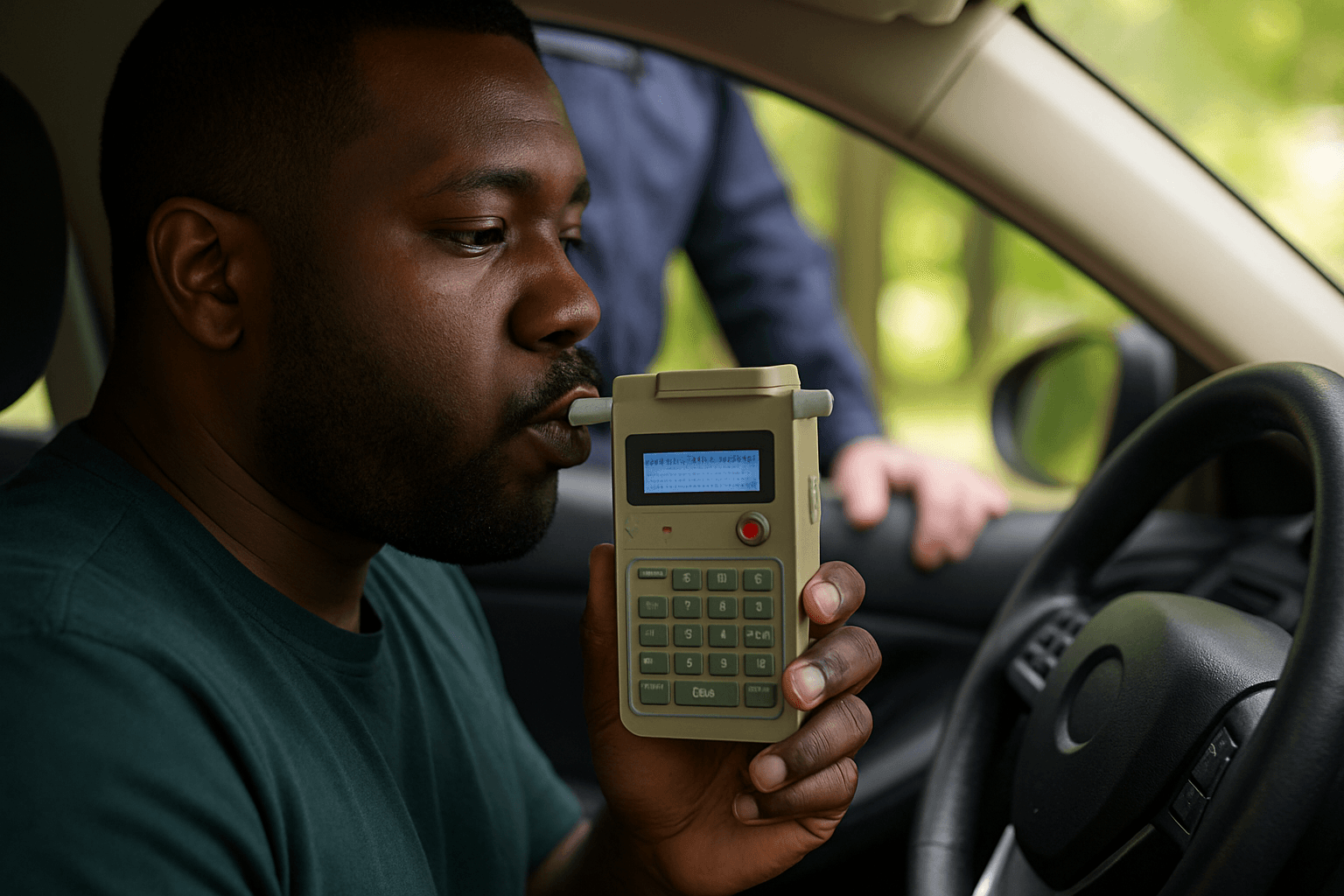
You just received a DUI conviction and your employer let you go — or you can't get to work and lost hours. Georgia's hardship license rules and SR-22 filing timeline determine whether you can stay employed while your full license is suspended.
Georgia Hardship License Eligibility Starts 30 Days After DUI Conviction
Georgia allows you to apply for a limited driving permit (hardship license) 30 days after your DUI conviction or administrative license suspension, whichever date is earlier. The permit authorizes driving to work, school, medical appointments, DUI school, and court-ordered substance abuse treatment — which means job loss is not automatic even if your full driving privileges are suspended for 12 months.
The 30-day window starts on your conviction date if you entered a plea or were found guilty, or on the date the Georgia Department of Driver Services (DDS) issued your administrative suspension notice if you refused a breath test or blew 0.08 or higher. Most drivers miscalculate this — the administrative suspension clock starts at arrest if you refuse testing, not at conviction.
You file for the hardship permit at a DDS Customer Service Center with proof of enrollment in a DUI Alcohol or Drug Use Risk Reduction Program (Risk Reduction Program), an SR-22 filing from a Georgia-licensed insurer, the $25 permit fee, and a $210 reinstatement fee. The permit is valid for the duration of your suspension minus the first 30 days, but requires active SR-22 coverage the entire time. If your SR-22 lapses for even one day, DDS cancels the hardship permit and your suspension clock resets to zero.
SR-22 Filing Must Be Active Before You Apply for the Hardship Permit
Georgia DDS will not process your hardship license application without an active SR-22 certificate on file. The SR-22 is an endorsement your insurer files electronically with DDS certifying you carry at least Georgia's minimum liability limits: $25,000 bodily injury per person, $50,000 bodily injury per accident, and $25,000 property damage. You cannot file the SR-22 yourself — it must come from a licensed insurer authorized to write policies in Georgia.
Most mainstream carriers (State Farm, Geico, Allstate, Progressive) will file SR-22 for existing customers after a first-offense DUI but typically non-renew the policy at the end of the term. If you were dropped immediately or don't currently have coverage, you'll need a non-standard market carrier: Direct Auto, Acceptance, The General, Dairyland, and GAINSCO all write DUI-SR-22 policies in Georgia. Expect monthly premiums between $140 and $280 for minimum liability with SR-22, compared to $65–$95 pre-DUI.
The SR-22 filing itself costs $25–$50 depending on carrier, paid once at policy inception. Georgia requires the SR-22 remain active for 3 years from your conviction date for a first-offense DUI, or 5 years for a second offense within 5 years. If you cancel your policy or let it lapse, the carrier notifies DDS within 24 hours and your hardship permit is revoked immediately.
Find out exactly how long SR-22 is required in your state
What Job Loss After DUI Means for SR-22 Cost and Coverage Decisions
Losing your job removes your ability to pay for full coverage on a financed vehicle, which forces a choice: drop the car and switch to non-owner SR-22 insurance, or keep the car and risk a lapse that resets your entire SR-22 filing period. Non-owner SR-22 policies provide liability-only coverage when you drive a vehicle you don't own — rental cars, employer vehicles, borrowed cars. They satisfy Georgia's SR-22 requirement and cost significantly less than standard auto policies: $45–$85/mo compared to $140–$280/mo for an owned vehicle.
If your car is financed or leased, your lender requires comprehensive and collision coverage. Dropping that coverage triggers a lender-placed insurance policy at 3–5 times normal cost, billed directly to your loan balance. Most drivers in this situation surrender the vehicle voluntarily or let it be repossessed, then switch to non-owner SR-22 to maintain their hardship permit and avoid restarting the 3-year filing clock.
Non-owner SR-22 is available from the same non-standard market carriers: Direct Auto, Acceptance, The General, and GAINSCO all write it in Georgia. The policy does not cover vehicles you own, lease, or regularly use (defined as more than 12 times per year), so if you're borrowing a family member's car to get to work daily, you need a standard policy listing that vehicle. Misrepresenting this to save money is material misrepresentation — the carrier will deny any claim and cancel your policy, which cancels your SR-22 and revokes your hardship permit.
Georgia Hardship Permit Restrictions and Employer Documentation Requirements
Georgia's limited driving permit authorizes travel only for work, school, medical treatment, DUI school, court-ordered programs, and "necessary household duties." DDS defines work travel as direct route between home and workplace, and between multiple work sites if your job requires it. You must carry proof of employment (letter from employer on company letterhead with your work schedule and address) in the vehicle at all times. If stopped outside permitted hours or routes, you face a misdemeanor charge for driving on a suspended license, which adds 2 additional points and extends your suspension.
Employers are not required to accommodate a hardship license. If your job requires a CDL, involves driving a company vehicle, or includes driving clients or goods as a primary duty, most employers terminate immediately after a DUI conviction regardless of hardship permit eligibility. If your job requires occasional driving (sales calls, site visits, deliveries), some employers allow you to continue with restrictions — a coworker drives, or you use rideshare and bill mileage.
The hardship permit does not authorize rideshare driving (Uber, Lyft), delivery app work (DoorDash, Instacart), or any commercial use. These platforms run continuous background checks and deactivate drivers immediately after a DUI conviction. Applying for a hardship permit to work these jobs wastes the $235 in DDS fees because the platforms will not reinstate you until your full license is restored and the DUI is outside their lookback period (typically 7 years).
First 30 Days After Conviction: No Driving at All, Plan for Job Transition
Georgia law prohibits all driving for the first 30 days after DUI conviction or administrative suspension, whichever is earlier. There is no hardship exception for this initial period. If your job requires any driving or commuting and you have no alternative transportation, you will lose hours or be terminated unless you arrange leave, remote work, or rideshare in advance.
Most employers do not hold positions open for 30 days without pay. If you're hourly and cannot work remotely, expect termination or significant hour reduction. Use this 30-day period to enroll in the Risk Reduction Program (required before hardship permit application), secure SR-22 insurance, and line up alternative employment that fits hardship permit restrictions if your current job won't accommodate the conviction.
Some Georgia employers in manufacturing, logistics, and healthcare offer shift-based roles with on-site attendance that do not require driving as a job duty. If you can reach the workplace via rideshare, public transit, or a ride from a family member, the hardship permit becomes irrelevant to employment — you only need it if commuting by car is your only option. Calculate this cost: $8–$15/day in rideshare each way ($320–$600/mo) versus $140–$280/mo for SR-22 insurance plus vehicle cost. For many drivers in metro Atlanta, rideshare is cheaper than keeping a car after DUI if the job itself doesn't require driving.
Ignition Interlock Requirement and Employment Impact
Georgia requires ignition interlock device (IID) installation for all DUI convictions with BAC of 0.15 or higher, refusal of breath/blood testing, or any second or subsequent DUI. The device is installed in your vehicle at your expense ($75–$125 installation, $75–$100/mo monitoring) and requires you to provide a clean breath sample before the engine starts and at random intervals while driving.
If your conviction requires IID, your hardship permit is conditional on having the device installed and maintaining the monitoring contract for the full suspension period (minimum 12 months for first offense, 18 months for second offense). You cannot install IID on a vehicle you don't own, which means non-owner SR-22 does not satisfy the IID requirement — you must own or lease a vehicle and install the device in it.
This creates a cost trap: you're required to maintain a vehicle ($200–$400/mo payment), SR-22 insurance ($140–$280/mo), and IID monitoring ($75–$100/mo), totaling $415–$780/mo, while unemployed or underemployed. Many drivers in this situation cannot afford compliance and drive illegally, which converts a misdemeanor DUI into a second conviction if caught. If IID is required and you cannot afford vehicle ownership, you serve the full suspension period without a hardship permit and rely on non-driving employment and alternative transportation for 12–18 months.
DUI Conviction Class and SR-22 Duration in Georgia
Georgia distinguishes between standard DUI (BAC 0.08–0.149, no aggravating factors) and DUI per se (BAC 0.15+, refusal, minor in vehicle, accident causing injury). Standard first-offense DUI triggers 12-month license suspension (reduced to 120 days with early reinstatement if you complete Risk Reduction Program and install IID voluntarily), 3-year SR-22 filing requirement, and hardship permit eligibility after 30 days.
DUI per se or aggravated DUI (0.15+ BAC, refusal, injury, child endangerment) triggers 12-month hard suspension with no early reinstatement, mandatory IID for 12 months, 3-year SR-22 requirement, and hardship permit eligibility after 30 days conditional on IID installation. Second DUI within 5 years triggers 3-year license suspension, 5-year SR-22 requirement, mandatory IID for 18 months, and hardship permit eligibility after 18 months (not 30 days).
The SR-22 filing period starts on your conviction date, not your reinstatement date. If you're convicted January 1, 2025, your 3-year SR-22 requirement ends January 1, 2028, regardless of whether you applied for a hardship permit or waited out the full suspension. Maintaining continuous coverage for the full period is mandatory — a single-day lapse resets the 3-year clock to zero and revokes any active permit or reinstated license.