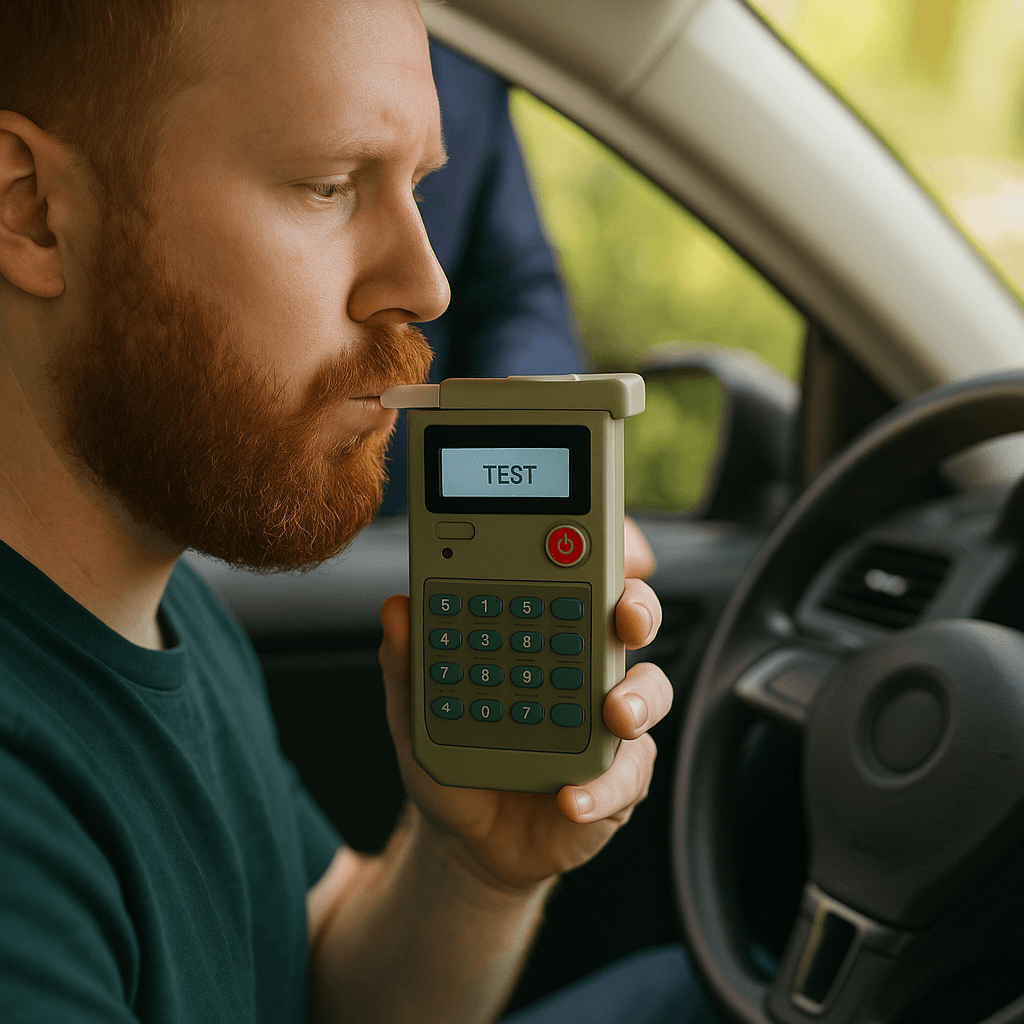
Wisconsin doesn't make you surrender a financed car after a DUI, but your lender's insurance clause might. Here's how to protect your vehicle through the non-renewal window.
Wisconsin Law Does Not Require Vehicle Surrender After DUI
Wisconsin statute does not require you to forfeit, surrender, or sell a financed vehicle after a DUI conviction. Your car is not seized by the court, and the DMV does not place a hold on your title. The vehicle remains your property throughout the revocation period, OWI education requirements, and SR-22 filing obligation.
The legal threat to keeping your car comes from your lender, not the state. Every auto loan agreement includes an insurance continuity clause requiring you to maintain comprehensive and collision coverage at minimum specified limits. If your policy lapses or cancels and you do not replace it within the grace period — typically 10 to 30 days depending on lender — the loan agreement grants the lender the right to repossess the vehicle or force-place lender-purchased insurance at your expense.
Most Wisconsin drivers lose financed cars after DUI not because of a court order, but because their carrier non-renews the policy at the end of the term and they fail to secure replacement coverage before the lender's deadline. The repossession happens 45 to 90 days after conviction during the policy transition window, not on the day of sentencing.
What Happens to Your Current Auto Policy After a Wisconsin DUI
Wisconsin requires carriers to file SR-22 for existing customers upon request, but filing the SR-22 does not prevent the carrier from non-renewing your policy at the end of the current term. State Farm, Allstate, Progressive, and Geico will typically complete your existing policy period and file the SR-22 if your license is valid or reinstated, but most issue a non-renewal notice 30 to 60 days before your term ends.
Your policy does not cancel immediately unless you had a lapse in coverage at the time of the DUI arrest or your carrier discovers undisclosed prior violations during the underwriting review triggered by the conviction report. If the policy remains active, you have until the renewal date to find replacement coverage. This window is your repossession risk period.
Carriers are not required to offer you a renewal quote after OWI conviction. Once the non-renewal notice arrives, you cannot extend the existing policy. The termination date is final, and your lender's insurance requirement does not pause while you shop for a new carrier.
Find out exactly how long SR-22 is required in your state
Your Lender's Insurance Clause and the Repossession Timeline
Every auto loan and lease agreement includes a section titled Insurance Requirements or Collateral Protection. This clause requires you to maintain comprehensive and collision coverage with minimum limits — typically 100/300/100 liability plus full physical damage coverage with a deductible no higher than $1,000. The agreement requires continuous coverage with no lapses.
When your policy non-renews or cancels, your insurer sends a cancellation notice to your lender electronically through the lienholder notification system. Most lenders allow a grace period of 10 to 30 days from the cancellation date for you to provide proof of replacement coverage. If you do not submit a new declarations page showing the lender as lienholder and meeting the coverage requirements, the lender may repossess the vehicle or force-place a lender-purchased policy at annual premiums often exceeding $2,000 and add that cost to your loan balance.
Repossession after DUI is not immediate. The typical timeline: conviction reported to carrier within 30 days, non-renewal notice issued 60 days before term end, policy terminates on renewal date, lender notified electronically, grace period begins, repossession authorized 10 to 30 days later if no replacement proof provided. You have roughly 90 to 120 days from conviction to secure compliant replacement coverage before the repo risk becomes acute.
How to Maintain Coverage and Keep Your Vehicle
Start shopping for SR-22 coverage the day you receive your non-renewal notice, not the week before your policy expires. Non-standard carriers that write post-DUI policies in Wisconsin include Dairyland, Progressive Commercial, Bristol West, and The General. Monthly premiums for financed vehicles requiring comprehensive and collision typically range from $180 to $340 depending on your vehicle value, prior insurance history, and whether this is a first or repeat OWI.
Request an SR-22 quote that meets your lender's coverage requirements. Standard SR-22 liability-only policies satisfy the state filing requirement but violate your loan agreement if they do not include comprehensive and collision. Your lender does not care whether you have SR-22 — they care whether you have full coverage on the vehicle securing their loan. Most non-standard carriers will quote both in a single policy.
Submit your new declarations page to your lender before your old policy terminates. Lenders require the new policy to list them as lienholder and loss payee in the lienholder section of the dec page. If the lienholder field is blank or lists a prior lender, your proof of insurance is invalid and the grace period clock continues running. Contact your new carrier and request a lienholder update if the initial dec page does not show your current lender's name and loan number exactly as it appears on your financing statement.
What If You Cannot Afford Full Coverage After DUI
If monthly premiums for comprehensive and collision coverage exceed your budget and you cannot maintain the lender-required coverage, you have three options before repossession. First, request a loan modification or coverage waiver from your lender in writing explaining your DUI conviction and premium increase. Most lenders deny these requests because reducing collateral protection increases their loss exposure, but documented financial hardship occasionally results in a temporary reduction in required limits or deductible flexibility.
Second, refinance the vehicle through a credit union or subprime lender willing to accept liability-only or reduced physical damage coverage in exchange for a higher interest rate or shorter loan term. This is rarely cost-effective — the interest rate increase typically exceeds the insurance savings — but it prevents repossession if you are within a few payments of paying off the loan.
Third, sell or surrender the vehicle voluntarily before repossession. Voluntary surrender avoids the repossession fee — typically $300 to $600 in Wisconsin — and the damage to your credit score is slightly less severe than involuntary repo. If you owe more than the vehicle's value, negotiate a deficiency payment plan with the lender before surrender. You will still owe the difference between the sale price and your loan balance, but the lender cannot report the repossession tradeline to credit bureaus, preserving some access to future financing.
SR-22 Filing Requirement and Reinstatement Timeline
Wisconsin requires SR-22 filing for 3 years after first-offense OWI conviction and typically 3 to 5 years for repeat offenses or aggravated OWI with high BAC or minor passenger. The filing period begins on your reinstatement date, not your conviction date or revocation start date. If your license is revoked for 6 months and you wait an additional 4 months before reinstating, your SR-22 period does not start until month 10.
You cannot reinstate your Wisconsin license without proof of SR-22 on file with the DMV. Your carrier files the SR-22 electronically upon policy purchase, and DMV processing typically takes 3 to 7 business days before reinstatement eligibility shows in the system. You must also complete the OWI assessment, any court-ordered treatment or education, pay the reinstatement fee of $200, and install an ignition interlock device if required by your sentencing order or if this is a repeat offense.
If your SR-22 policy lapses or cancels at any point during the 3-year filing period, your carrier notifies DMV electronically and your license is re-suspended immediately. The filing period resets to zero, meaning you must complete a new 3-year filing period from the date you refile. A single missed payment that results in policy cancellation can add 3 years to your total SR-22 obligation and trigger a new round of reinstatement fees and occupational license applications.