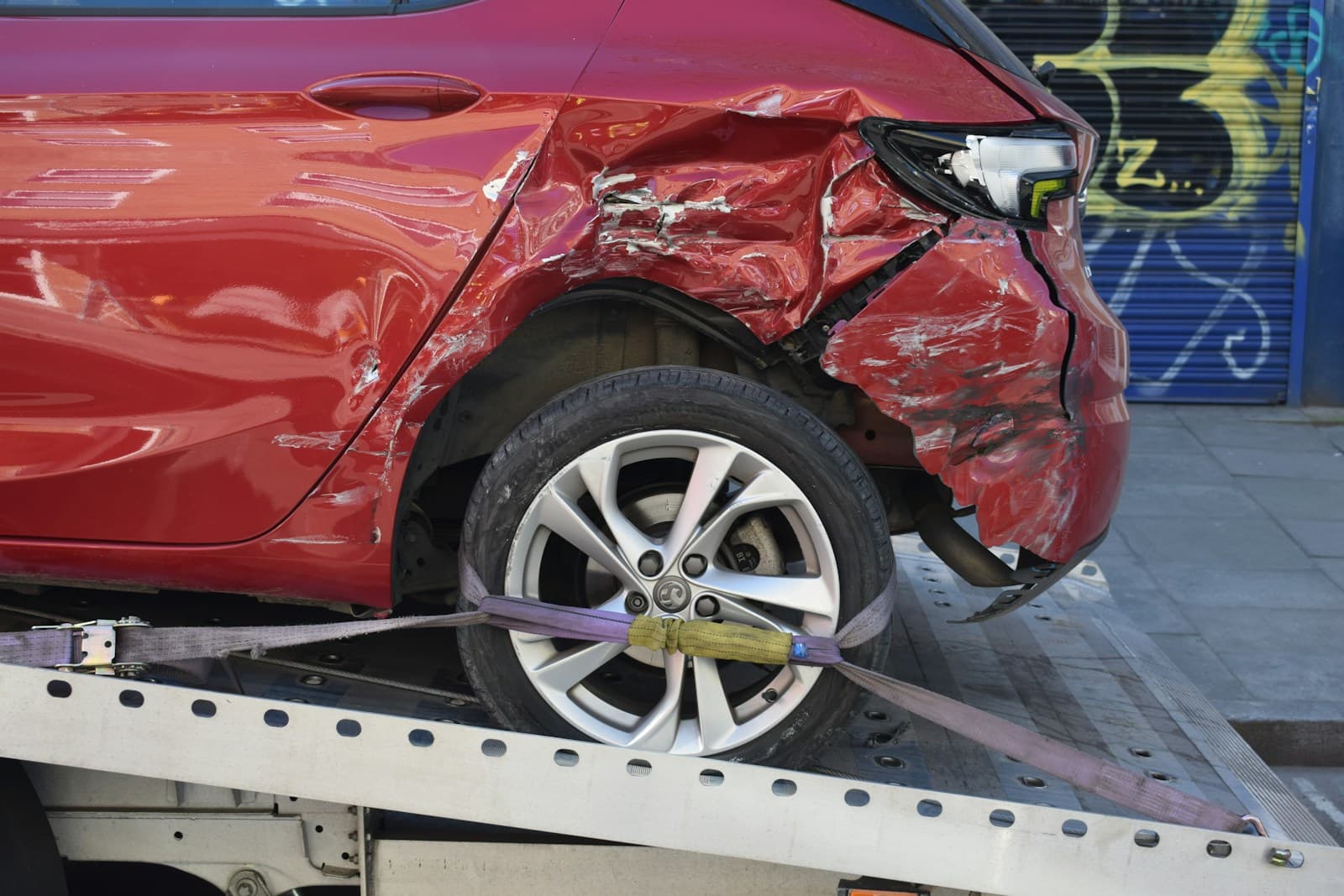
Mississippi doesn't seize your financed vehicle for a DUI conviction, but your lender can repossess if SR-22 lapses trigger a coverage gap or rate increases force missed payments.
Mississippi DUI Convictions Do Not Create Vehicle Liens
Mississippi has no statute allowing vehicle seizure or forfeiture based solely on a DUI conviction. Your financed car remains your property and your lender's collateral exactly as it was before the arrest. The DUI creates license suspension and SR-22 filing requirements, but it does not give the state or any agency a claim on the vehicle itself.
Your loan agreement requires continuous full-coverage insurance as a condition of financing. A DUI triggers SR-22 filing, which most mainstream carriers handle by non-renewing your policy at term. If you enter a coverage gap between your old policy's cancellation and your new SR-22 policy's effective date, your lender receives a lapse notice from the state and can declare you in default. That contractual breach — not the conviction — is what opens the door to repossession.
Mississippi courts treat vehicle repossession as a contract matter between you and your lender. The DUI is relevant only to the extent it disrupts your ability to meet the insurance clause in your financing agreement. Stay insured with valid SR-22 on file, and the car stays in your driveway.
How SR-22 Filing Protects Your Vehicle From Repossession
Mississippi requires SR-22 filing for 3 years after a DUI conviction, measured from your reinstatement date. The SR-22 is not insurance — it's a compliance certificate your carrier files electronically with the Mississippi Department of Public Safety proving you carry at least the state minimum liability coverage: 25/50/25. Your lender requires full coverage (comprehensive and collision), so your SR-22 policy must exceed the state minimum to satisfy both the state and your loan agreement.
When you secure an SR-22 policy, your carrier adds you as the named insured, lists your financed vehicle, and files the SR-22 form with the state the same day. Your lender receives a copy of the declarations page showing them as the lienholder. This closes the loop: the state sees continuous SR-22 compliance, and the lender sees continuous full-coverage insurance. Both requirements are satisfied by the same policy.
If your SR-22 policy lapses for any reason — missed payment, cancellation, coverage reduction below state minimums — your carrier files an SR-26 cancellation notice with the state within 10 days. The state suspends your license immediately, and your lender receives the lapse notice within 15 days. Most loan agreements allow repossession after 30 days of uninsured status. Maintaining SR-22 without interruption is the single most important action to protect the vehicle.
Find out exactly how long SR-22 is required in your state
Rate Increases After DUI Create Payment Default Risk
A first-offense DUI in Mississippi typically triggers a 70–110% rate increase when you move from your prior carrier to an SR-22 non-standard policy. If you were paying $140/mo for full coverage before the conviction, expect $240–$295/mo after. Aggravated DUI (BAC over 0.15, child in vehicle, or accident with injury) pushes increases to 110–150%, and repeat-offense DUI can double your prior premium or more.
Most drivers finance vehicles with monthly budgets calculated around pre-DUI insurance costs. A $100–$150/mo insurance increase creates immediate cash flow pressure, especially when stacked with DUI court costs, reinstatement fees, and IID installation. If you miss loan payments because the insurance increase consumed your margin, the lender can repossess under the payment default clause — completely separate from the insurance requirement clause.
Carriers writing SR-22 after DUI in Mississippi include Bristol West, Dairyland, The General, GAINSCO, and Direct Auto. State Farm and Geico will file SR-22 for existing customers but typically non-renew at your six-month term. Progressive writes some DUI-SR-22 policies in Mississippi but prices aggressively. Securing three quotes from non-standard carriers before your current policy expires gives you the best chance of keeping the monthly cost manageable enough to avoid payment default.
What Happens If You Sell or Trade the Financed Vehicle
Selling or trading a financed vehicle after a DUI does not end your SR-22 requirement. Mississippi requires continuous SR-22 filing for the full 3-year period regardless of whether you own a car. If you sell your financed vehicle and do not immediately replace it with another insured vehicle, you must switch to a non-owner SR-22 policy to maintain compliance.
A non-owner SR-22 policy costs $25–$50/mo and provides liability-only coverage when you drive vehicles you do not own. It satisfies the state's SR-22 filing requirement but provides no coverage for a vehicle you own or finance. If you trade your financed car for another financed car, your SR-22 transfers to the new vehicle on the same policy term — your carrier updates the VIN, re-files the SR-22 with the new vehicle listed, and notifies the new lender. The 3-year clock does not reset.
If you pay off your loan or trade down to a vehicle you own outright, you are no longer contractually required to carry full coverage. You can reduce your SR-22 policy to liability-only, which drops your premium significantly. Mississippi only requires SR-22 proof of liability minimums — comprehensive and collision are lender requirements, not state requirements. Once the lien is released, you control your coverage level.
Reinstatement Timeline and SR-22 Filing Deadlines
Mississippi suspends your license for 90 days after a first-offense DUI conviction (120 days if you refused the breathalyzer under implied consent). You cannot drive during the suspension period, even with SR-22 on file. After the suspension ends, you must pay a $100 reinstatement fee, provide proof of SR-22 filing, and complete a DUI education program before the Department of Public Safety reinstates your license.
Your 3-year SR-22 filing period begins on your reinstatement date, not your conviction date. If you are convicted in January but do not complete reinstatement requirements until April, your SR-22 obligation runs until April three years later. Most drivers miscalculate this and cancel SR-22 too early, which triggers a new suspension and resets the entire filing clock to zero.
You can secure SR-22 insurance before your reinstatement date. In fact, you must have the SR-22 filed with the state before the Department of Public Safety will process your reinstatement. Carriers issue SR-22 policies with future effective dates, allowing you to lock coverage 30–60 days before your suspension ends. This prevents a coverage gap and ensures your lender sees continuous insurance throughout the suspension period, even though you are not legally allowed to drive yet.
Lender Communication After DUI Conviction
Your auto lender does not receive direct notice of your DUI conviction, but they do receive lapse notices from the state if your insurance cancels or your SR-22 filing is terminated. Most lenders also monitor your payment history and credit report, where DUI-related collections (court costs, reinstatement fees, IID charges) may appear and flag you for elevated default risk.
If your insurance lapses or you miss a loan payment, contact your lender immediately. Most lenders offer 10–15 day grace periods on payments and will work with you on short-term deferrals if you communicate proactively. Lenders lose money on repossession — they would rather keep you current and paying. Silence is interpreted as abandonment, which accelerates repossession timelines.
If your lender force-places insurance after a lapse, the cost is typically $200–$400/mo and provides only the minimum coverage required to protect their collateral interest. Force-placed insurance does not satisfy Mississippi's SR-22 requirement because the policy is issued in the lender's name, not yours. You must secure your own SR-22 policy to reinstate your license, which means carrying two policies simultaneously until the lender removes the force-placed coverage. Avoiding the lapse in the first place is always cheaper.