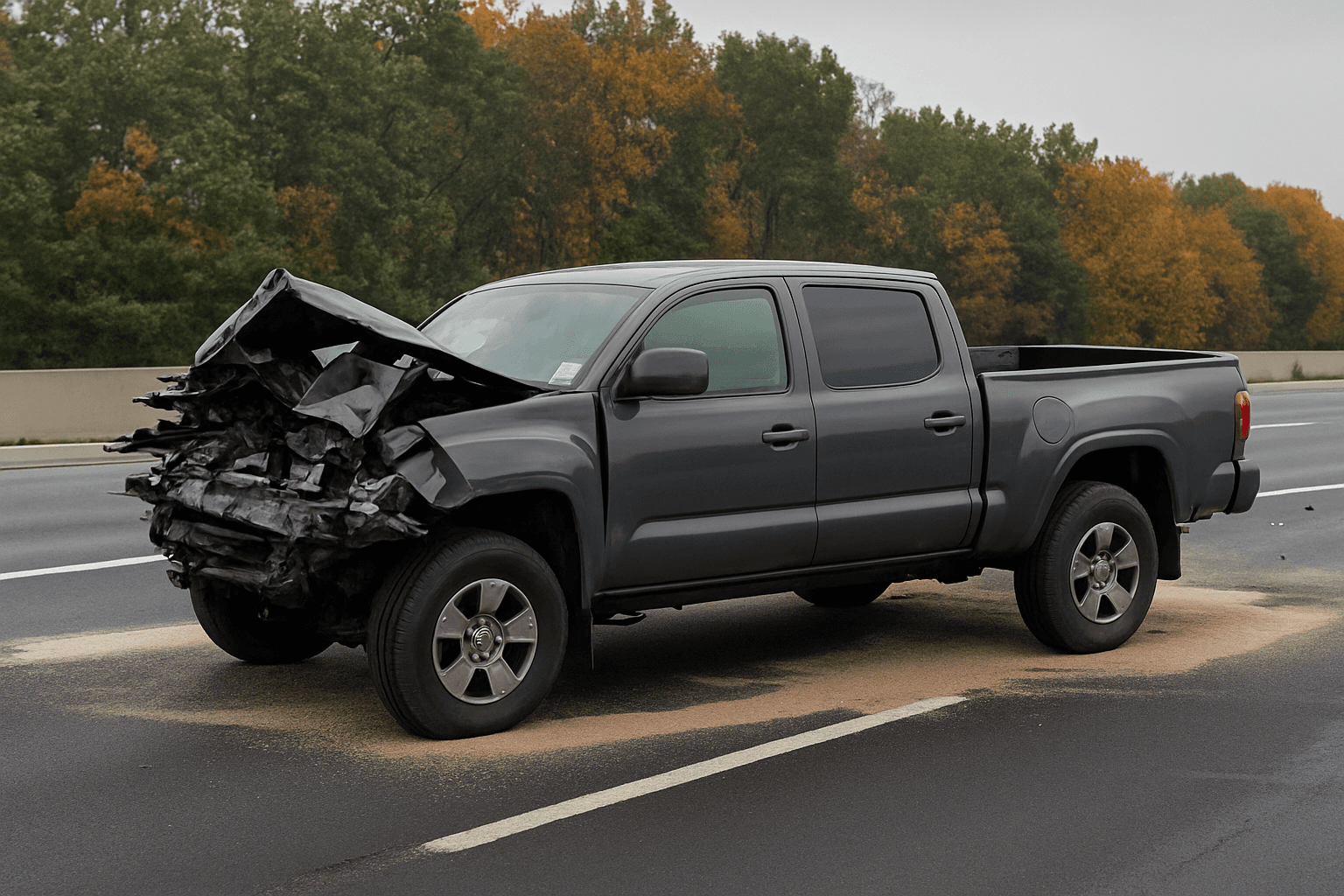
Arizona law doesn't force you to surrender a financed vehicle after a DUI, but your lender can repossess if you can't maintain required insurance coverage or miss payments during your suspension period.
Your Loan Contract Requires Continuous Full Coverage Insurance
Every auto finance agreement in Arizona includes a continuous insurance clause requiring liability, comprehensive, and collision coverage for the loan's full term. Your DUI conviction doesn't change that obligation. The lender holds a lienholder interest in the vehicle until the loan is paid off, and they protect that interest by requiring coverage that pays them if the car is totaled or stolen.
If your current carrier cancels or non-renews your policy after the DUI, you have 10 to 30 days to replace it depending on your lender's grace period. Most finance contracts specify 30 days, but some captive lenders tied to dealerships enforce shorter windows. Miss that window and the lender will force-place coverage at roughly 2 to 3 times your previous premium and add it to your loan balance.
Arizona requires SR-22 filing for 3 years after a DUI conviction, measured from your reinstatement date, not your conviction date. You must maintain that SR-22 continuously. If your SR-22 lapses even one day, Arizona MVD suspends your license again and your 3-year clock resets to zero.
Most Major Carriers Non-Renew DUI Policies at Term
State Farm, Geico, Allstate, and Progressive will file SR-22 for existing customers after a DUI, but most non-renew the policy when it expires 6 or 12 months later. They're not required to cancel mid-term in Arizona unless you miss a payment, but underwriting guidelines at these carriers flag DUI convictions as high-risk and trigger non-renewal notices sent 30 to 45 days before your policy ends.
That non-renewal forces you into the non-standard insurance market. Non-standard carriers that write DUI-SR-22 policies in Arizona include Bristol West, Dairyland, The General, GAINSCO, Safe Auto, and Acceptance. These carriers charge 70% to 130% more than your pre-DUI rate, and their financial strength ratings often sit below the A or A+ threshold your finance contract specifies.
Your lender can reject a carrier with a B+ or lower rating and demand you find a higher-rated option. If no compliant carrier will write you, the lender can accelerate the loan and demand full payment or repossess the vehicle.
Find out exactly how long SR-22 is required in your state
Arizona's Interlock-Only License Extends Your Insurance Burden
Arizona offers an interlock-restricted license immediately after DUI conviction if you install an ignition interlock device. You're eligible after serving the first 30 days of your suspension for a first-offense DUI or 90 days for a second offense. The IID stays installed for 12 months minimum, and you must maintain SR-22 filing the entire time you drive on the restricted license.
The IID requirement doesn't reduce your insurance obligation. You still need liability at Arizona's minimum 25/50/15 limits, plus comprehensive and collision if you're financing. Non-standard carriers writing DUI policies in Arizona typically quote $180 to $320 per month for full coverage on a financed vehicle with an IID endorsement. Your actual rate depends on the conviction class, your age, the vehicle's value, and whether this is a first or repeat offense.
If you choose not to install an IID, Arizona suspends your license for 90 days on a first offense or 12 months on a second offense. You can't drive at all during that window, but you must still maintain insurance on a financed vehicle to satisfy the loan contract. Letting the policy lapse triggers the lender's forced-placement clause and adds $150 to $250 per month to your loan payment.
What Happens If You Surrender or Sell the Car
Voluntary surrender stops the insurance obligation but destroys your credit and leaves you liable for the deficiency balance. The lender auctions the car, applies the sale proceeds to your loan balance, and sends you a bill for the difference plus repossession and auction fees. That deficiency typically ranges from $3,000 to $8,000 depending on how much equity you had when you surrendered.
Selling the car privately before the lender repossesses requires paying off the full loan balance at closing. If you owe more than the car is worth, you need cash to cover the gap. Most DUI drivers can't access that cash during the suspension period when they're also paying for IID installation, court fees, and DUI education classes.
If you don't own a vehicle after selling or surrendering, you still need SR-22 filing to reinstate your Arizona license. Non-owner SR-22 insurance covers you when driving borrowed or rented vehicles and satisfies Arizona MVD's filing requirement. Non-owner policies cost $40 to $80 per month in the non-standard market, significantly less than maintaining full coverage on a financed car you can't drive during suspension.
How to Protect the Car and Stay Legal
Call your current carrier within 48 hours of your DUI conviction and ask if they will file SR-22 and continue your policy. If they agree, confirm the new premium and the policy's expiration date. Set a calendar reminder 60 days before expiration to start shopping non-standard carriers so you have coverage in place before the non-renewal takes effect.
If your current carrier cancels immediately, request quotes from at least three non-standard carriers licensed in Arizona. Provide your MVD abstract, your conviction date, and your finance contract to confirm the lender's rating requirement. Compare the monthly premium to your loan payment and your IID cost. If the total exceeds 50% of your monthly income, refinancing the loan or selling the car may be unavoidable.
Install the IID as soon as you're eligible and apply for the interlock-restricted license. Arizona MVD processes IID applications in 10 to 14 business days. Once approved, your SR-22 carrier must endorse the policy to show the IID is installed. Drive only the vehicle listed on your restricted license. Driving any other vehicle, even with permission, violates your restriction and triggers a new suspension.
When Keeping the Car Doesn't Make Financial Sense
If your combined insurance, loan payment, and IID cost exceeds 60% of your monthly income, keeping the financed car forces you into a cycle of missed payments and eventual repossession anyway. Voluntary surrender earlier in that cycle minimizes the deficiency balance because the car retains more value.
Refinancing the loan to lower the monthly payment only works if your credit score hasn't dropped below 580 after the DUI. Most subprime lenders won't refinance a borrower with an active suspension or an SR-22 requirement. If you're still employed and can document stable income, some credit unions in Arizona will refinance DUI drivers after the first 90 days of compliance, but rates typically sit between 12% and 18% APR.
If you can't afford to keep the car and can't sell it without a deficiency, consult a bankruptcy attorney before surrendering. Chapter 7 bankruptcy discharges deficiency balances from voluntary repossession in Arizona, and the DUI conviction itself doesn't prevent you from filing. The bankruptcy stays on your credit report for 10 years, but so does an unpaid deficiency judgment.