Wyoming doesn't require full coverage for SR-22 filing, but your lender does if you financed your vehicle. Here's how to strip down coverage legally and what happens if you can't.
Wyoming SR-22 Requires Only Liability Coverage by Law
Wyoming law requires SR-22 filers to carry minimum liability limits of 25/50/20—$25,000 bodily injury per person, $50,000 per accident, and $20,000 property damage. The state does not mandate collision or comprehensive coverage for SR-22 compliance. If you own your vehicle outright with no loan or lease, you can legally drop full coverage the day your SR-22 filing begins and satisfy Wyoming DMV requirements with liability-only insurance.
The confusion starts when a carrier quotes you after a DUI. Most non-standard carriers bundle collision and comprehensive into their SR-22 quotes by default because financed vehicles dominate their book of business. They're not required to tell you that Wyoming itself doesn't care about full coverage—they just quote what protects their risk and your lender's collateral.
If you financed or leased your vehicle, your loan contract—not Wyoming statute—requires full coverage until the loan is paid off. Dropping to liability-only while carrying a loan violates your financing agreement and triggers force-placed insurance from your lender at rates that make SR-22 premiums look cheap. Your legal obligation to the state and your contractual obligation to your lender are separate, and the lender's rules win on your own vehicle.
What Happens When You Drop Full Coverage on a Financed Vehicle
Your lender monitors your insurance coverage electronically. When you drop collision and comprehensive, they receive a notification within 10–30 days. They will send you a demand letter requiring proof of full coverage reinstatement within 15–30 days. If you don't comply, the lender purchases force-placed collateral protection insurance and adds the premium to your loan balance.
Force-placed insurance costs 2–4 times what you'd pay for voluntary coverage and protects only the lender's interest—not your liability exposure. You still need a separate liability policy with SR-22 endorsement to satisfy Wyoming DMV, so you're now paying for two policies. The force-placed premium accrues interest at your loan rate, typically 6–18% APR for auto loans, compounding your total cost.
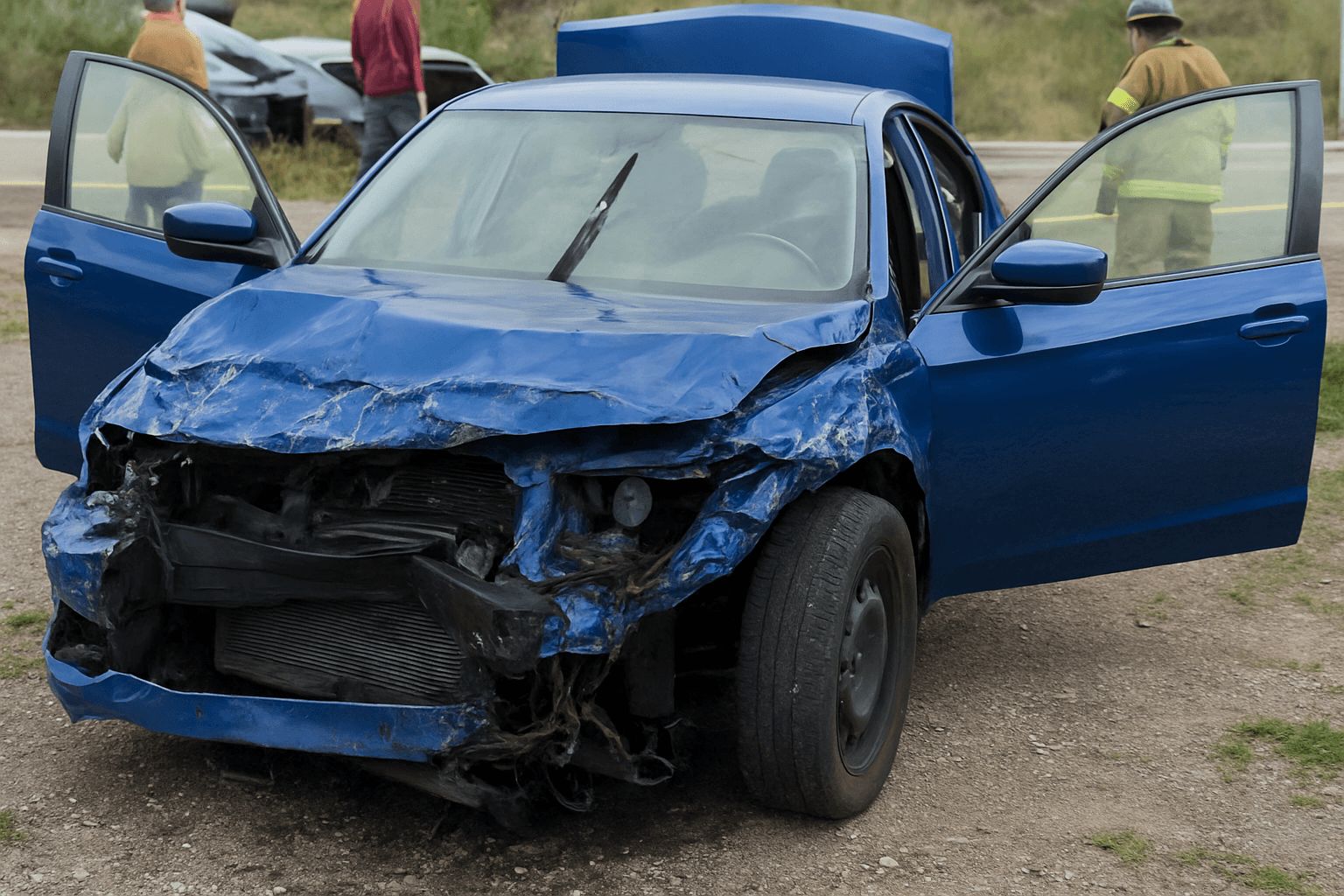
If you're already behind on payments, force-placed insurance accelerates default. Lenders use it as evidence of contract breach to justify repossession. Once the vehicle is repossessed, your SR-22 filing lapses unless you immediately switch to a non-owner SR-22 policy, which resets your 3-year filing clock in Wyoming to day zero.
Find out exactly how long SR-22 is required in your state
How to Strip Down Coverage Legally If You Own Your Vehicle
If you own your vehicle outright, call your carrier and request removal of collision and comprehensive coverage while maintaining SR-22-compliant liability limits. Your monthly premium should drop 40–60% immediately. A liability-only SR-22 policy in Wyoming after a DUI typically costs $80–$140/month with non-standard carriers like The General, Dairyland, or Bristol West, compared to $180–$320/month for full coverage.
Verify your carrier files the SR-22 correctly after the coverage change. Some carriers require a new SR-22 filing when you modify coverage mid-term, and any gap in SR-22 status—even one day—resets Wyoming's 3-year filing requirement to zero. Request written confirmation that your SR-22 remains active and that Wyoming DMV received the updated filing.
Consider your vehicle's actual cash value before dropping coverage. If your car is worth less than $3,000, paying $600–$1,200 annually for collision coverage that maxes out at the vehicle's depreciated value rarely makes financial sense. If it's worth $8,000 or more and you can't afford to replace it out of pocket after an at-fault accident, maintaining collision coverage—even with a $1,000 deductible to lower the premium—may be the better gamble.
The Non-Owner SR-22 Option If You Sell or Lose Your Vehicle
If you sell your vehicle, lose it to repossession, or total it in an accident, you can satisfy Wyoming's SR-22 requirement with a non-owner SR-22 policy. Non-owner policies provide liability coverage when you drive a vehicle you don't own—a borrowed car, a rental, or a friend's vehicle—and cost significantly less than standard policies because they exclude collision and comprehensive by design.
Non-owner SR-22 premiums in Wyoming after a DUI typically range from $30–$70/month, depending on your BAC level, whether your DUI involved an accident, and how long ago the conviction occurred. The policy does not cover any vehicle you own, lease, or regularly use, and it does not cover vehicles owned by household members. If you live with someone who owns a car and you drive it regularly, you need to be listed on their policy as a rated driver—non-owner coverage won't respond.
Switching from a standard SR-22 policy to a non-owner SR-22 policy does not reset your filing period in Wyoming as long as there is no gap in coverage. Coordinate the cancellation of your old policy and the effective date of your non-owner policy to the same day. Any lapse—even a few hours—triggers a new 3-year filing requirement from the DMV.
Why Most Carriers Won't Tell You Liability-Only Is Enough
Non-standard carriers make higher margins on full coverage policies because collision and comprehensive premiums are pure profit after the first year if you don't file a claim. Liability coverage is legally required and price-competitive; physical damage coverage is optional and priced with discretion. A DUI driver paying $2,400/year for full coverage generates far more revenue than the same driver paying $1,100/year for liability-only, even though both satisfy Wyoming's SR-22 mandate equally.
Carriers also know that high-risk drivers have limited shopping leverage. After a DUI, 70–85% of drivers stay with the first non-standard carrier that agrees to write them because they assume all SR-22 quotes will be similarly high. Carriers don't volunteer that you can strip down coverage because you're unlikely to ask, and retention rates stay higher when the conversation never happens.
If you call your current carrier and ask to drop full coverage, they may tell you it's "not recommended" or "leaves you exposed." That's true—it does leave your vehicle unprotected against physical damage. But it's not illegal in Wyoming if you own the vehicle outright, and the financial exposure of replacing a $4,000 car out of pocket is often smaller than the $1,200/year you'll save by dropping collision and comprehensive over your 3-year SR-22 period.
What to Do If You Can't Afford Either Option
If you can't afford liability-only SR-22 coverage and you don't need to drive immediately, Wyoming allows you to surrender your license and vehicle registration to avoid the SR-22 filing requirement temporarily. You won't be legal to drive, but you also won't accumulate SR-22 filing time or pay premiums during the surrender period. When you're ready to reinstate, you'll need to file SR-22 and maintain it for 3 years from that reinstatement date—not from your original DUI conviction date.
If you need to drive for work, apply for a restricted license through Wyoming courts. Restricted licenses allow driving to and from employment, DUI classes, medical appointments, and court-ordered obligations. You still need SR-22 coverage to activate the restricted license, but some carriers offer lower premiums for restricted-license holders because your mileage and exposure are legally limited.
If affordability is the barrier, get quotes from at least three non-standard carriers before deciding you can't make it work. SR-22 premiums for the same driver with the same DUI can vary by $80–$150/month between carriers in Wyoming depending on how each underwrites BAC level, prior violations, and time since conviction. Direct Auto, Safe Auto, and Acceptance all write high-risk drivers in Wyoming with different pricing models—shop all three.