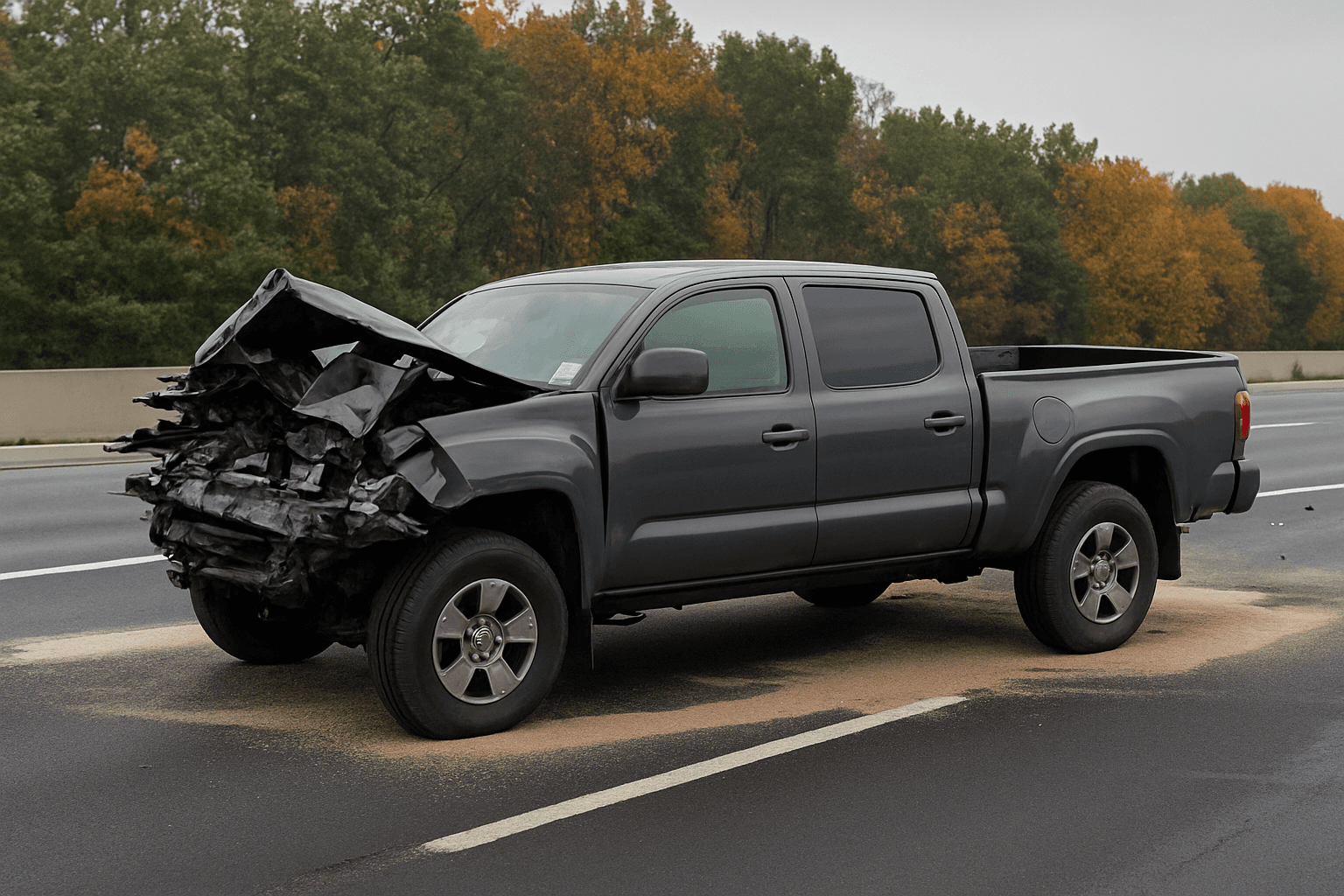
Georgia law requires liability only for SR-22 compliance, but your lender or leasing company controls whether you can actually drop collision and comprehensive. Here's what happens when those requirements collide.
Georgia SR-22 Filing Requires Liability Only, Not Full Coverage
Georgia's SR-22 statute requires proof of minimum liability coverage only: $25,000 per person for injury, $50,000 per accident for injury, and $25,000 for property damage. The SR-22 certificate itself does not mandate collision or comprehensive coverage. If you own your vehicle outright with no loan or lease, you can legally file SR-22 with liability-only coverage and satisfy the state's reinstatement requirement.
The Georgia Department of Driver Services does not care whether your car is physically protected. The SR-22 proves financial responsibility for damage you cause to others, not damage to your own property. Dropping full coverage on an owned vehicle cuts your premium by 40–60% in most cases, which can make the difference between affording SR-22 and letting your filing lapse.
Most DUI convictions in Georgia trigger a 3-year SR-22 filing requirement measured from your reinstatement date. If you dropped full coverage to liability-only and saved $80/month, that's $2,880 over the filing period. For drivers navigating DUI fines, ignition interlock costs, and reinstatement fees simultaneously, that reduction is significant.
Your Lender Controls Coverage Requirements, Not the State
If you finance or lease your vehicle, your loan or lease agreement requires full coverage regardless of what Georgia's SR-22 law says. The lienholder holds a security interest in the vehicle and mandates collision and comprehensive to protect their asset. This is a private contract obligation, not a state insurance regulation, and it supersedes your ability to drop coverage.
Dropping full coverage on a financed vehicle triggers a breach of contract. Your lender will send a notice of lapse, demand proof of reinstatement within 10–30 days, and if you don't comply, purchase forced-place insurance on your behalf. Forced-place policies cost 2–3 times the rate of voluntary coverage, cover only the lender's interest (not your liability or medical), and the lender bills you directly with interest added to your loan balance.
You cannot satisfy both the lender's coverage requirement and drop full coverage to save money. The only way out of this bind is to pay off the loan, refinance and negotiate a waiver (rare and typically denied for DUI drivers), or surrender the vehicle. Approximately 65% of DUI-SR-22 drivers in Georgia carry financed vehicles, which means most cannot legally drop full coverage even though the state allows it.
Find out exactly how long SR-22 is required in your state
What Happens If You Drop Coverage Without Paying Off Your Loan
The moment your carrier reports the coverage change to your lienholder, the lender flags your account for collateral protection deficiency. You receive a certified letter stating you have 15–30 days to provide proof of full coverage reinstatement or the lender will purchase coverage on your behalf. This notice is not optional, and ignoring it does not stop the process.
Forced-place insurance typically costs $150–$250/month for coverage that protects only the lender's financial interest in the vehicle. It does not cover your liability, does not satisfy Georgia's SR-22 requirement, and does not protect you in an accident. You still owe your original premium to your SR-22 carrier for liability coverage, plus the forced-place premium billed through your auto loan. Your monthly cost doubles or triples, and your loan balance increases by the amount of forced-place premiums plus interest.
If you continue driving without maintaining the lender's required coverage, the lender can declare the loan in default, accelerate the full balance due immediately, and repossess the vehicle. A repossession during your SR-22 filing period adds a major credit event on top of your DUI conviction, drops your credit score another 100+ points, and makes securing any vehicle financing nearly impossible for 2–3 years.
When You Can Actually Drop Full Coverage to Liability-Only
You can drop full coverage and file SR-22 with liability-only once you satisfy all lienholder obligations. This means paying off your auto loan in full, completing your lease and returning the vehicle, or refinancing with a lender that waives the collision and comprehensive requirement in writing (rare and typically unavailable to DUI drivers due to risk classification).
Once the lien is released, Georgia allows you to carry minimum liability limits and file SR-22 without penalty. Most non-standard carriers will issue liability-only SR-22 policies starting at $60–$110/month depending on your county, age, and DUI conviction class. Compare that to full coverage SR-22 policies running $180–$280/month for the same driver profile, and the savings become immediately material.
If you're early in your SR-22 filing period and still making payments, run the payoff calculation. If your remaining loan balance is $4,000 and dropping to liability-only saves you $100/month over 36 months of SR-22 filing, you save $3,600 in premiums. Paying off the loan to access liability-only coverage pays for itself within the filing window. Many DUI drivers overlook this option because they assume the loan must be kept to maintain transportation, but selling or trading the financed vehicle for an older car you own outright unlocks the liability-only path immediately.
Non-Owner SR-22 as an Alternative If You Can't Afford Full Coverage
If you cannot afford full coverage on a financed vehicle and cannot pay off the loan, a non-owner SR-22 policy satisfies Georgia's filing requirement without insuring a specific car. Non-owner policies provide liability coverage when you drive a vehicle you do not own, and they allow you to maintain continuous SR-22 compliance while you resolve the vehicle financing situation.
Non-owner SR-22 policies in Georgia typically cost $35–$70/month, significantly less than liability-only coverage on an owned vehicle and a fraction of full coverage costs. You cannot drive your financed vehicle under a non-owner policy (it provides no coverage for regularly available vehicles), but if a family member, partner, or employer owns the car you drive daily, a non-owner policy keeps your SR-22 active and your license valid.
This option works for drivers who can temporarily stop driving their financed car, let it be repossessed or voluntarily surrendered, and rely on borrowed or employer-provided transportation during their SR-22 period. It's not ideal, but it prevents the SR-22 lapse that resets your entire filing clock to zero and adds months or years to your compliance timeline.
What Non-Standard Carriers in Georgia Will Write Liability-Only SR-22
Most major carriers either refuse to write new DUI policies or require full coverage regardless of your ownership status. The non-standard market is where liability-only SR-22 availability lives. In Georgia, carriers writing liability-only SR-22 after DUI include The General, Acceptance Insurance, Direct Auto, GAINSCO, SafeAuto, and Dairyland.
Availability varies by county. Fulton, DeKalb, Gwinnett, and Cobb counties have the widest carrier selection due to population density and filing volume. Rural counties may see only 2–3 non-standard carriers willing to write liability-only SR-22, and some require you to add uninsured motorist coverage as a condition of the policy. Uninsured motorist bumps your premium by $15–$30/month but does not approach the cost of collision and comprehensive.
Get quotes from at least three non-standard carriers before selecting coverage. Rate variation for the same DUI profile and liability limits can swing $40–$60/month between carriers in the same ZIP code. Non-standard carriers reprice SR-22 policies every 6–12 months based on claims data, so a carrier offering the lowest rate at reinstatement may not hold that position a year later. Shopping annually during your filing period is standard practice for DUI drivers managing costs.