You received an aggravated DUI in North Dakota with a BAC at or above 0.16 — your SR-22 filing period is 5 years, not 3. The reinstatement paperwork doesn't always make this clear, and filing for the wrong duration resets your clock to zero.
North Dakota's Aggravated DUI Classification Extends SR-22 Filing to 5 Years
North Dakota requires 5 years of SR-22 filing for aggravated DUI convictions with a BAC of 0.16 or higher, measured from your license reinstatement date. Standard first-offense DUI convictions (BAC 0.08–0.159) carry a 3-year SR-22 requirement. The state defines aggravated DUI under N.D.C.C. § 39-08-01.4, which includes high BAC, refusal to test, DUI with a minor in the vehicle, or DUI causing serious bodily injury.
The reinstatement letter from the North Dakota Department of Transportation does not always specify which tier your conviction falls under. Most drivers assume 3 years and file accordingly. When you reach the 3-year mark and request license reinstatement, NDDOT flags the incomplete filing period and treats it as a lapse — your SR-22 clock resets to day one, and you start the 5-year requirement over.
Carriers cannot advise you on filing duration. They submit the SR-22 form to NDDOT as long as your policy is active, but they don't track conviction class or notify you when your required period ends. You must confirm your specific filing period with NDDOT before your carrier files the initial SR-22. Call the Driver License Division at 701-328-2600 and request written confirmation of your required SR-22 duration tied to your conviction date and case number.
How High BAC Aggravated DUI Affects Your Insurance Rates and Carrier Options
Aggravated DUI with high BAC triggers rate increases 90–150% higher than your pre-conviction premium, compared to 70–110% for standard first-offense DUI. The rate differential reflects loss data showing higher repeat-offense rates and claim severity among drivers convicted with BAC above 0.16. North Dakota law does not cap rate increases for DUI, and most carriers apply the aggravated surcharge for the full SR-22 filing period — meaning 5 years at elevated rates instead of 3.
Most major carriers non-renew aggravated DUI policies at term. State Farm, Progressive, Allstate, and Geico will file SR-22 for existing customers through the current policy period but typically issue a non-renewal notice 30–60 days before expiration. Your reinstatement timeline depends on securing a new policy in the non-standard market before your current policy lapses. Any gap in coverage — even one day — cancels your SR-22 filing and resets your 5-year requirement to zero.
Non-standard carriers writing aggravated DUI SR-22 policies in North Dakota include Dairyland, Progressive (non-standard division), The General, and Bristol West. Availability varies by county. Fargo and Bismarck have the widest carrier selection; rural counties often require appointed agents who place policies through surplus lines carriers. Expect monthly premiums between $180–$280 for state minimum liability coverage with SR-22 endorsement, depending on your age, vehicle, and whether you're required to install an ignition interlock device.
Find out exactly how long SR-22 is required in your state
When Your 5-Year SR-22 Filing Period Starts and How to Track It
Your 5-year SR-22 filing period starts the day NDDOT reinstates your driving privileges, not your conviction date or the day you first purchase SR-22 insurance. North Dakota suspends your license immediately upon DUI arrest under implied consent law. If you're convicted 6 months later and eligible for reinstatement 30 days after conviction, your SR-22 clock starts on that reinstatement date — not when you bought the policy while suspended.
Most drivers lose weeks or months because they count from the wrong date. You buy SR-22 insurance while your license is still suspended, file the form, pay reinstatement fees, and assume the clock started when the carrier filed. NDDOT's system only logs the SR-22 start date once your license moves from suspended to valid restricted or full status. If reinstatement is delayed because you haven't completed DUI education or paid court fines, the SR-22 filing period does not begin until all reinstatement conditions are satisfied.
Request a certified driving record from NDDOT 60 days before you believe your 5-year period ends. The record will show your reinstatement date, required SR-22 end date, and any lapses that reset the clock. Order online through the NDDOT Driver Record portal or by mail with form SFN 51680. If your record shows a lapse you didn't know occurred — a missed payment, a carrier that withdrew coverage without notifying you, or a filing gap during a policy switch — you're still responsible for completing the full 5 years from the most recent lapse date.
Ignition Interlock Requirements Stack on Top of SR-22 Filing
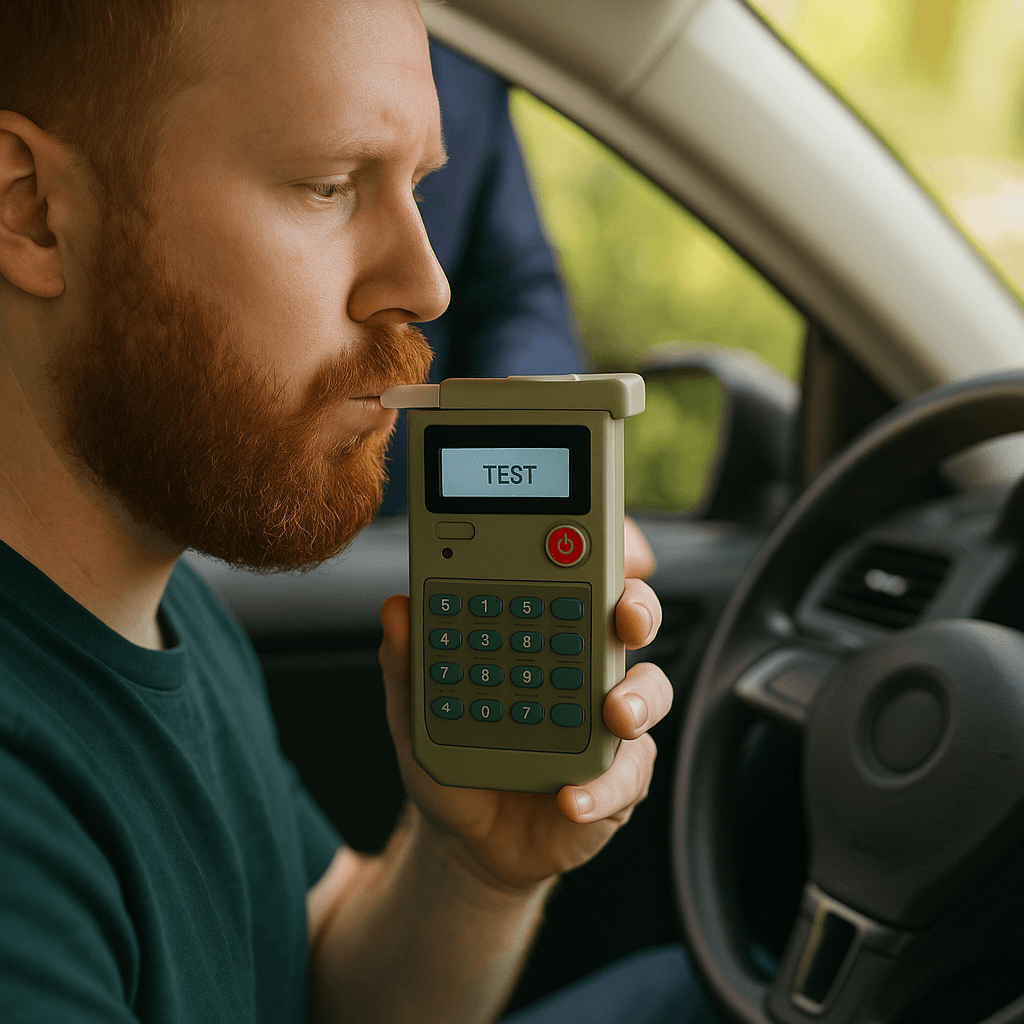
North Dakota requires ignition interlock device installation for all aggravated DUI convictions under N.D.C.C. § 39-20-01. The IID requirement runs concurrently with your SR-22 filing period but operates under separate compliance tracking. You must maintain the IID for the full duration ordered by the court — typically 1 year for first-offense aggravated DUI, 2–5 years for repeat offenses. Your SR-22 filing period continues after IID removal unless both periods end simultaneously.
Your insurance carrier must add an IID endorsement to your SR-22 policy if the court orders interlock installation. The endorsement confirms to NDDOT that your vehicle is equipped with a functioning device and that you're insured while driving it. Not all non-standard carriers offer IID endorsements in North Dakota. If your carrier won't add the endorsement, you must switch to one that will — and any coverage gap during the switch cancels your SR-22 and resets your filing period.
IID monthly costs run $70–$110 for device lease, calibration, and monitoring, separate from your insurance premium. Smart Start and Intoxalock are the two state-approved providers in North Dakota. The court orders installation through one provider, and you cannot switch without court approval. Budget $250–$350 monthly total for SR-22 insurance plus IID costs during the overlap period. Both obligations must remain active with zero lapses — a failed IID calibration or a skipped monitoring appointment can trigger a violation report to NDDOT, which treats it the same as an SR-22 lapse.
What Happens If You Let Your SR-22 Lapse Before 5 Years
Any lapse in SR-22 coverage before your 5-year requirement ends cancels your filing and suspends your license immediately. North Dakota law requires continuous proof of financial responsibility for the full court-ordered period. NDDOT receives electronic notification from your carrier within 24 hours of policy cancellation, non-payment, or non-renewal. Your license suspension is automatic — no hearing, no grace period, no warning letter.
The 5-year clock resets to day one from the date you refile SR-22 and reinstate your license after the lapse. If you completed 4 years and 10 months of your requirement, missed a premium payment, and your carrier cancelled coverage, you now owe a new 5-year filing period starting from your second reinstatement date. NDDOT does not prorate or credit time served before a lapse. The statute treats each SR-22 filing period as a single continuous obligation — any break voids the entire period.
Reinstatement after a lapse requires a $50 reinstatement fee, proof of current SR-22 insurance, payment of any outstanding court fines or IID fees, and in some cases completion of a driver improvement course if the lapse exceeded 90 days. Carriers view a lapsed SR-22 as a higher underwriting risk. Expect rate increases of 15–30% on the new policy compared to what you were paying before the lapse, even if nothing else on your record changed. Some non-standard carriers will not rewrite a policy for a driver with a prior SR-22 lapse in the same filing period.
How to Find Non-Standard Carriers That Will File SR-22 for Aggravated DUI
Not all non-standard carriers write aggravated DUI policies in North Dakota, and not all that do offer SR-22 filing. Dairyland and The General write statewide with SR-22 endorsement available at policy issue. Progressive's non-standard division writes aggravated DUI but requires manual underwriting review — approval takes 3–5 business days, and not all applicants are accepted. Bristol West writes through appointed independent agents only; you cannot buy directly online or by phone.
Call the North Dakota Insurance Department's consumer hotline at 800-247-0560 for a list of licensed non-standard carriers writing SR-22 policies in your county. The department does not recommend specific carriers but maintains a database of active licensees and their approved coverage types. If you live in a rural county with limited carrier options, ask whether surplus lines carriers are available — these are out-of-state insurers approved to write high-risk policies in North Dakota when standard market capacity is exhausted.
Do not let your current policy lapse while shopping for a new carrier. Secure the new policy with an effective date that overlaps your current policy's expiration date by at least one day. Confirm the new carrier has filed SR-22 with NDDOT before you cancel the old policy — call NDDOT's Driver License Division and verify the new filing appears in their system. Verbal confirmation from the carrier is not sufficient. NDDOT's system updates within 24–48 hours of electronic filing, but processing delays occur. A same-day policy switch with no overlap creates a lapse risk even if both policies were technically active.
When You Can Drop SR-22 After Completing Your 5-Year Requirement
You can request SR-22 removal the day after your 5-year filing period ends, but your carrier will not drop the endorsement until NDDOT confirms completion and sends written clearance. Call NDDOT 10 business days before your end date and request a compliance verification letter. The letter confirms your filing period is complete, your record shows no lapses, and you're authorized to operate without SR-22. Your carrier requires this letter before removing the endorsement — they cannot remove it based on your self-reported end date.
Once NDDOT clears you, contact your carrier and request SR-22 removal effective the day after your requirement ends. Most carriers process the removal within 48 hours and issue a new policy declaration page showing standard liability coverage without the SR-22 endorsement. Your premium will drop 15–35% immediately upon removal, depending on how your carrier prices the SR-22 surcharge. Some carriers recalculate your entire risk profile at renewal and move you from non-standard to standard underwriting if your record has been clear for the full 5 years.
The aggravated DUI conviction remains on your North Dakota driving record for 7 years from the conviction date, even after SR-22 filing ends. Carriers will continue to surcharge your premium for the conviction — typically 30–60% above a clean-record driver — until the conviction ages off your record. At the 7-year mark, request a new certified driving record and shop your policy aggressively. Carriers that wouldn't write you during the SR-22 period may accept you once the conviction is no longer visible on your motor vehicle report.